




The concept of data centres in space sounds like science fiction, but it's quickly becoming a commercial reality. As companies look to orbit to solve Earth's growing energy demands for AI, astronomers are raising alarms about a sky already too bright.
Why Put Data Centres in Space?
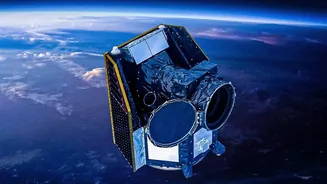
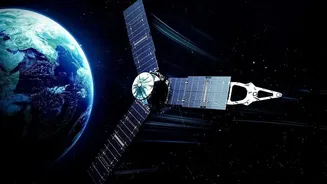
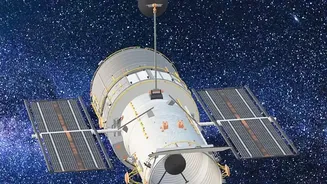
The explosive growth of artificial intelligence is creating an insatiable demand for energy. Terrestrial data centres, the backbone of the digital world, require immense electrical power and generate significant controversy over their environmental footprint and strain on local power grids. In response, a number of tech giants and startups—including SpaceX, Google, and Orbital—are proposing a novel solution: move the data centres into space. The logic is compelling; in orbit, large solar arrays can harvest near-constant, powerful sunlight, providing a cheap and sustainable energy source. Proponents argue that this move would not only alleviate pressure on Earth's resources but also offer enhanced security and, for some applications, lower latency by processing data that originates in orbit.
A Sky Already Under Siege
The prospect of orbital data centres doesn't exist in a vacuum. It lands in an environment where astronomers are already battling the consequences of so-called satellite 'mega-constellations'. Networks like SpaceX's Starlink, designed to provide global internet, have already introduced thousands of new objects into low-Earth orbit. These satellites, while revolutionary for connectivity, have created significant problems for scientists. They reflect sunlight, creating bright streaks across long-exposure images and increasing the overall brightness of the night sky. The International Astronomical Union has warned that this light pollution has already crossed a critical threshold, threatening our ability to observe the cosmos from the ground.
A New Order of Interference
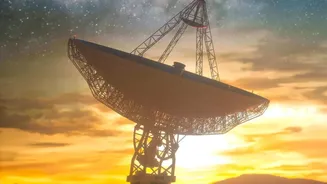
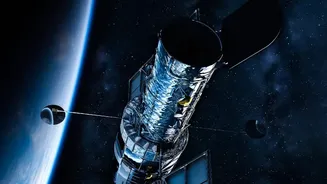
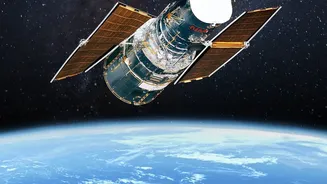
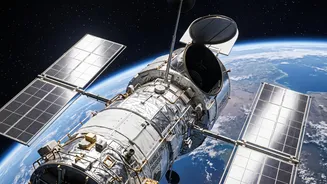
Orbital data centres represent a new and more severe threat. To power their massive computing racks, these satellites would require solar arrays far larger than those on existing communication satellites—some potentially spanning kilometres. Studies suggest these structures could be 100 times brighter than the brightest stars, appearing as large, moving objects in the twilight sky. This would create what the European Southern Observatory (ESO) calls 'devastating consequences' for astronomy. The interference is twofold. First, the reflected sunlight, or 'sky glow', raises the background brightness, making it harder to detect faint, distant objects. Second, the satellites themselves would leave bright trails across images, corrupting data. Furthermore, the radio transmissions from these data centres could overwhelm the extremely faint cosmic signals that radio astronomers study, effectively blinding their telescopes.
The Scientific Stakes
The issue extends beyond just losing aesthetically pleasing images of space. Ground-based telescopes are critical tools for fundamental science. They are used for everything from tracking potentially hazardous asteroids to studying dark energy, the mysterious force accelerating the expansion of the universe. Widefield survey telescopes are particularly vulnerable, as their long exposures and broad views make them highly susceptible to contamination from satellite trails. The ESO has warned that if the most ambitious plans for a million-satellite constellation come to pass, it could reach a point where operating groundbased telescopes is no longer viable because 100 percent of the data would be corrupted. This would effectively shutter our window to the universe from the surface of our own planet.
The Search for a Sustainable Solution
The astronomical community is not arguing for a halt to technological progress but is urgently calling for regulation and collaboration. International bodies like the UN Committee on the Peaceful Uses of Outer Space (COPUOS) have recently agreed to formally address the issue, a move seen as a significant diplomatic step. Potential mitigations are being explored, such as developing lessreflective coatings for satellites, designing them to have a smaller profile facing Earth, and establishing operational guidelines to minimize their brightness. Companies have shown some willingness to engage, but astronomers stress that without a binding international regulatory framework, individual efforts may not be enough to prevent irreversible harm to science. The challenge lies in balancing commercial innovation with the preservation of the night sky as a shared global heritage.