





The Myth of the Consistent Seat
Many travellers assume that flight number BA256 from Delhi to London will always use the same type of plane with the exact same layout. This is a costly mistake. Airlines frequently swap aircraft based on demand, maintenance schedules, or operational
needs. The Boeing 787 that flew the route last month might be replaced by a Boeing 777 this month. Even within the same aircraft model, like the popular Airbus A320 used by many Indian carriers, airlines operate multiple configurations. An A320 configured for a short domestic hop will have a different seat map from one intended for a longer international route. This means your reliable seat 15A could have a great view on one flight but be missing a window entirely on another.
Anatomy of a 'Bad' Seat
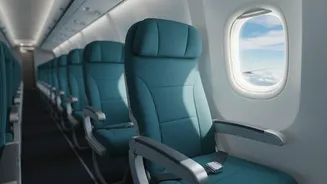
What makes a seat undesirable? The obvious answers are middle seats and those right next to the lavatories, which come with constant foot traffic, noise, and potential odours. But the list of seats to avoid is much longer. Seats in the last row often have limited or no recline and can feel more turbulence. Similarly, the row directly in front of an exit row may not recline to ensure safe evacuation paths. Bulkhead seats offer more legroom but come with trade-offs: there is no under-seat storage for your personal items during takeoff and landing, and these rows are often where baby bassinets are placed. Some window seats have misaligned windows, and others have an entertainment equipment box underneath, stealing precious foot space.
How to Become a Seat Map Expert
Thankfully, you don't need to be an aviation geek to avoid a bad seat. The first step is to check the seat map provided by the airline during the booking or check-in process. However, these maps can be generic. For a much more detailed view, use specialised websites. While SeatGuru was once the standard, it has not been updated in years and is now defunct. The modern, more accurate alternative is AeroLOPA. This site features detailed, to-scale architectural drawings of aircraft cabins, showing the precise location of windows, galleys, and lavatories. You can find your specific aircraft by knowing the airline and plane type (e.g., Air India, Boeing 787-8), which is usually listed in your booking details.
Decoding the Details
When you look at a detailed seat map on a site like AeroLOPA, you're looking for potential problems. Does the seat you're considering align perfectly with a window, or is it next to a solid wall? Is it close to a noisy galley where the crew prepares meals and chats throughout the flight? Is there an exit door that might bulge into your legroom or make the seat colder? These are the small details that generic airline maps won't show you. Knowing this information allows you to make an informed choice rather than a guess. For example, on some Boeing 777s, the curvature of the fuselage in the rear means the last few window seats are further from the wall, making it impossible to lean against it to sleep.
Your Pre-Flight Checklist
Before your next flight, follow these simple steps. First, find out the aircraft type from your booking confirmation. Second, use a reliable seat map website like AeroLOPA to look up your airline and aircraft model. Third, analyse the layout, paying close attention to the rows near exits, galleys, and lavatories. Check for comments about limited recline or misaligned windows. Finally, use the airline's 'Manage My Booking' portal to select the best available seat based on your research. If your ideal seat is taken, you can even use services like ExpertFlyer to set an alert that notifies you if it becomes available. A few minutes of prep can be the difference between a restful journey and several hours of discomfort.