





The Hilsa Festival, West Bengal
For Bengalis, the monsoon is synonymous with Ilish, or Hilsa, the undisputed king of fish. During the rainy season, these fish swim from the sea into rivers to breed, and their arrival is celebrated with gusto. The Sundarban Hilsa Festival, held between
July and September, is a culinary pilgrimage. Here, you can savour countless preparations, from the iconic Ilish Bhapa (steamed in a pungent mustard paste) to Ilish Paturi (wrapped in banana leaf and roasted). This experience is more than a meal; it’s a cultural immersion into Bengal’s deep love for its 'silver harvest'.
Ghevar for Teej, Rajasthan
When the arid landscapes of Rajasthan welcome the rain, the sweet shops fill with Ghevar. This disc-shaped, honeycomb-like dessert is a monsoon specialty, intrinsically linked to the Teej festival. Made by deep-frying a flour batter in ghee until a crisp, porous cake is formed, it's then drenched in sugar syrup. The moisture in the monsoon air is considered essential for achieving its perfect spongy texture. Topped with rabri or nuts, each bite is a rich, complex celebration of the season of renewal.
Karkidaka Kanji, Kerala
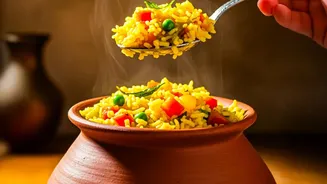
In Kerala, the monsoon month of Karkidakam is a time for rejuvenation, guided by Ayurvedic principles. At the heart of this wellness tradition is Karkidaka Kanji, a medicinal rice porridge. This is not an ordinary gruel; it's a carefully prepared dish made with Njavara rice, a special medicinal variety, and infused with a blend of herbs and spices like fenugreek and ginger. This warm, nourishing porridge is designed to boost immunity and aid digestion when the body is considered most vulnerable during the heavy rains.
Patrode, Coastal Karnataka
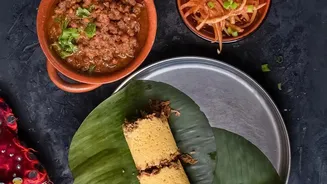
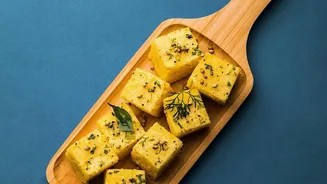
Along the coasts of Karnataka, the monsoon brings an abundance of lush colocasia leaves (Kesuvina ele). These large, heart-shaped leaves become the star ingredient for Patrode, a savoury steamed cake. The leaves are smeared with a spicy, tangy, and slightly sweet paste made from rice flour, coconut, jaggery, and tamarind. They are then rolled into tight logs and steamed. The resulting rolls can be sliced and eaten as is with a drizzle of coconut oil, or pan-fried for a crispy texture. It's an earthy, complex snack that perfectly captures the flavour of the Konkan coast during the rains.
Bhatt ki Churkani, Uttarakhand
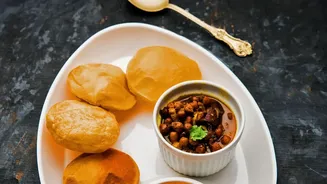
In the cool, misty hills of Kumaon, the monsoon calls for something hearty and warming. Bhatt ki Churkani is a soulful black soybean curry that serves exactly this purpose. Unlike other dals, the black soybeans (bhatt) are first roasted in an iron pan, which gives the dish a unique, nutty aroma. They are then slow-cooked into a dark, thick gravy thickened with rice or wheat flour. Traditionally cooked in an iron kadai, which imparts a deep black colour, this highly nutritious curry is typically eaten with steamed rice, offering robust comfort against the mountain chill.
Roasted Bhutta, All Over India
Perhaps the most democratic of all monsoon experiences is the humble bhutta, or roasted corn on the cob. While not tied to one region, the sight and smell of a roadside vendor fanning hot coals under fresh corn is a quintessential Indian monsoon scene. Whether you're on a city street or a misty hillside viewpoint, the experience is universal. The corn is roasted until lightly charred, then rubbed generously with a mix of lemon juice, salt, and chilli powder. It's a simple, smoky, and tangy snack that feels like the perfect companion to a rainy day.
Thukpa, Himalayan Regions
As the rain sweeps across the Himalayan regions of Sikkim, Ladakh, and Arunachal Pradesh, a steaming bowl of Thukpa becomes the ultimate comfort food. This Tibetan-style noodle soup is a complete meal in itself. It features a flavourful broth, simmered with ginger, garlic, and seasonal vegetables, and is often fortified with chicken or other meats. The soft noodles and warm, nourishing broth provide a much-needed respite from the damp and chilly weather, making it an ideal dish to enjoy while watching the rain blanket the mountains.