




India's Most Ambitious Lunar Mission Yet
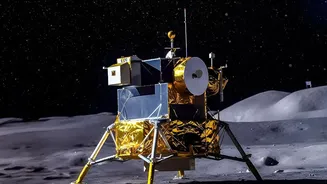
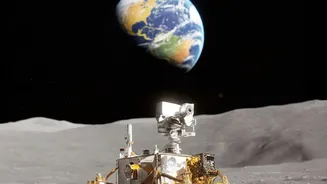
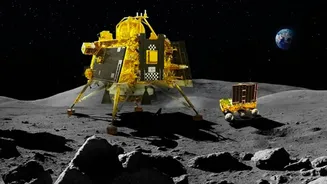
Chandrayaan-4 represents a monumental leap in complexity for India's space program. While landing on the Moon is a significant achievement, a sample return mission is in a league of its own. It requires not just a soft landing, but also the ability to
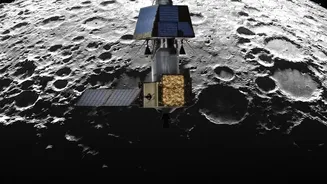
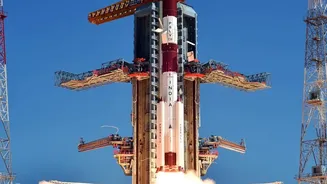
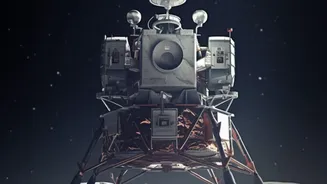
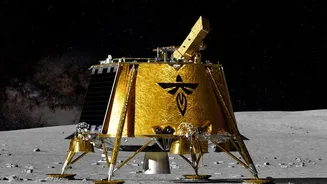
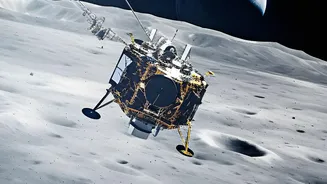
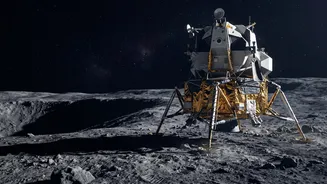
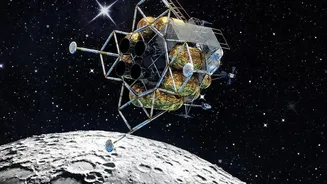
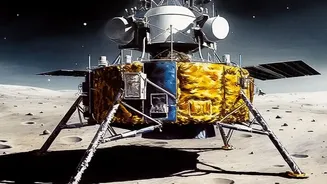
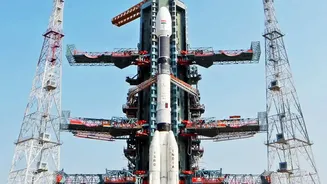
collect soil, launch off the lunar surface, travel back to Earth, and survive a fiery re-entry. The mission architecture is a multi-stage ballet of advanced engineering, involving five separate modules: a descender to land, an ascender to take off again, a transfer module, a re-entry module, and a propulsion module to guide the journey. Due to its complexity and weight, the mission will require two separate heavy-lift LVM3 rocket launches to send all the components to space. A successful mission, slated for around 2028, would make India only the fourth country to accomplish this feat, after the former Soviet Union, the United States, and China.
The Moon's Surface: A 4.5-Billion-Year-Old Diary
Why go to all this trouble for some dust and rocks? Because the Moon's soil, or regolith, is a pristine historical archive. Unlike Earth, which is geologically active with an atmosphere, weather, and shifting tectonic plates that erase ancient history, the Moon is a time capsule. Its surface has been passively collecting evidence for billions of years. The soil is a mixture of rock fragments, minerals, and glass particles formed by the continuous bombardment of micrometeorites. These samples contain trapped particles from the solar wind, clues about distant volcanic events, and a record of the asteroid and comet impacts that shaped the early Solar System. By bringing these samples into advanced laboratories on Earth, scientists can use instruments far too large and power-hungry to send to space, allowing for unprecedented analysis.
Unlocking the Secrets of the South Pole
The mission's proposed landing site adds to its scientific significance. ISRO is targeting the Moon's south polar region, specifically a site near Mons Mouton, which was carefully selected using high-resolution data from the Chandrayaan-2 orbiter. This mountainous region is scientifically valuable because it is near permanently shadowed craters, where scientists believe water ice could be trapped. Analyzing soil from this area could confirm the presence and composition of this water, a vital resource for future long-term lunar habitation. The samples from this largely unexplored region could provide different geological information compared to the materials returned by the Apollo and China's Chang'e missions, offering a new piece of the lunar puzzle.
A Treasure Trove of Scientific Questions
Returning lunar soil will allow scientists to tackle some of the biggest questions in planetary science. Analysis can help determine the precise age of different parts of the lunar surface, refining our understanding of the timeline of bombardment in the early Solar System—a history the Earth shared but has since lost. It can shed light on the Moon's volcanic past, revealing how long it remained geologically active. Recent discoveries in samples from other missions have even found new minerals that act like magnetic fossils, helping reconstruct the Moon's long-lost magnetic field. Furthermore, the lunar soil may contain particles from Earth's ancient atmosphere, blasted into space and deposited on the Moon, potentially giving us a glimpse of our own planet's distant past.
Paving the Way for Future Exploration
Beyond the immediate scientific returns, Chandrayaan-4 is a critical stepping stone for India's future in space. The technologies developed for this mission—including robotic collection, automated docking in lunar orbit, and sample transfer between modules—are essential for more complex endeavours. This mission will directly inform and enable India's long-term goal of sending astronauts to the Moon. By mastering the round-trip journey, ISRO demonstrates a capability that not only enhances national prestige but also opens the door to collaborative international missions and cements India's role as a major power in the new era of space exploration.