


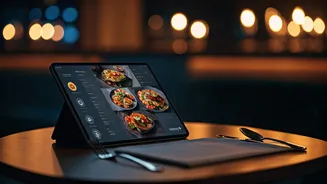


The Old World of Static Screenshots
Not long ago, using ChatGPT for design felt like a brainstorming session that ended abruptly. You could prompt your way to a stunning website layout, a clever app interface, or a beautiful graphic, but the final output was a flat image. This screenshot
could be shared in a presentation or used as a visual reference, but it wasn't a functional asset. To bring the design to life, a developer or designer would have to painstakingly recreate it from scratch. This workflow was fragmented, time-consuming, and often led to details being lost in translation between the AI-generated concept and the final product.
A Major Leap: The Interactive Canvas
The first significant shift away from static images was the introduction of ChatGPT Canvas. This feature changed the interface from a simple chatbox into a more versatile, project-based workspace. Instead of a linear conversation that you had to scroll through, Canvas provides an environment where you can write, edit, and organize code or text more effectively. For designers and developers, this was a foundational change. It created a space where an idea could be iteratively refined. You could generate code, ask for modifications, and see the changes in a structured editor, all within a single view.
Seeing is Believing: Live Previews
The true game-changer arrived when Canvas evolved to include live previews for code. This is where the promise of moving 'beyond screenshots' becomes a reality. Now, a user can ask ChatGPT to build a prototype for a webpage using HTML and React, and the AI will not only generate the code but also render a functional preview of it directly in the interface. You can see your design come to life, click on buttons, and interact with the elements. If something isn't right, you can simply ask for an adjustment in plain language, and the code and the preview will update. This transforms ChatGPT from a code generator into a rapid prototyping tool, dramatically speeding up the process of validating ideas.
From Prototype to Production-Ready Assets
Once you have an interactive prototype you're happy with, the next step is getting it out of ChatGPT in a usable format. Previously, this meant a lot of careful copying and pasting. Now, export options are built directly into the workflow. With recent updates, users can export their work from Canvas into a variety of practical formats, including runnable code files like .js or .py, as well as documents like PDFs and .docx. This means a developer can take the exported code straight into their preferred development environment, or a project manager can circulate a polished report without extra formatting steps. This closes the gap between AI-assisted creation and real-world application, making workflows much more efficient.
A Unified Creative Workspace
These capabilities are part of a broader trend of ChatGPT becoming a more integrated creative suite. The AI is now truly multimodal, capable of understanding uploaded images, handwritten notes, and PDFs to inform its designs. You can even sketch a website layout on a napkin, upload a photo, and have the AI turn it into functional code. Furthermore, the image generation capabilities have seen massive improvements, allowing for the creation of complex layouts like infographics and magazine spreads with accurate text, something previous models struggled with. This allows creators to generate finished visual assets, not just concepts. By combining advanced image generation, live prototyping, and seamless export options, ChatGPT is positioning itself as an all-in-one workspace for digital creators.