



Beyond the Taj Mahal and bustling cities lies a different kind of Indian wonder: a night sky bursting with stars. For travelers seeking true solitude and cosmic beauty, these remote, pristine locations offer a front-row seat to the universe.
Hanle, Ladakh: The Crown Jewel
Home to India's
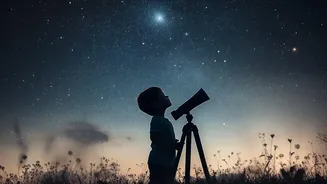
first official Dark Sky Reserve, Hanle is the gold standard for stargazing. At a staggering altitude of 14,700 feet, the dry, thin air in this cold desert offers exceptionally clear views. The reserve, established in 2022, works with the local community to minimize light pollution, resulting in a Bortle Class 1 sky—the darkest possible rating. Here, the Milky Way is so bright it can cast a faint shadow, an experience that is simply unparalleled. Local villagers, trained as 'Astronomy Ambassadors', even offer guided telescope sessions.
Spiti Valley, Himachal Pradesh: High-Altitude Drama
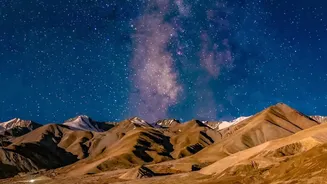
Often called a 'cold desert mountain valley', Spiti is a rugged, high-altitude region with minimal light pollution and incredibly clear skies. Its remote villages, like Komic, Kibber, and Langza, sit at elevations over 14,000 feet, placing you above much of the atmospheric haze. The landscape itself is otherworldly, with ancient Buddhist monasteries perched on barren cliffs. At night, this dramatic scenery provides a stunning foreground for capturing the full arc of the Milky Way, which is easily visible to the naked eye.
Rann of Kutch, Gujarat: A White Desert of Stars
Imagine standing on a seemingly endless expanse of white salt desert, with the celestial sphere reflected not only above but seemingly all around you. This is stargazing in the Rann of Kutch. Far from major city lights, this seasonal salt marsh offers an unobstructed, 360-degree view of the horizon. During the Rann Utsav festival (typically November to February), the cool, dry air creates perfect viewing conditions. On a moonless night, the white salt flat can even reflect the starlight, creating a surreal and immersive cosmic experience.
Neil Island, Andaman and Nicobar: Tropical Serenity
For a different kind of stargazing adventure, head to the tropical paradise of Neil Island (Shaheed Dweep). With minimal development and light pollution, the island's beaches become natural observatories after dark. Laying on the soft sand of Laxmanpur or Sitapur Beach, you can listen to the gentle waves of the Indian Ocean while the cosmos unfolds above. The lack of airborne dust and the vast sea horizon provide a sharp, clear view of constellations, and the island's southerly location can offer a different perspective of the sky than mainland India.
Coorg, Karnataka: Coffee Estates and Constellations
Nestled in the Western Ghats, the misty hills of Coorg (Kodagu) are famous for coffee and spice plantations. But away from the main towns, these estates offer surprisingly dark skies. The dense forests help block out stray light, creating pockets of darkness perfect for setting up a telescope. Many homestays and resorts located in the southern valleys near the Brahmagiri Wildlife Sanctuary offer bonfire and stargazing nights, particularly during the clear-sky season from November to February. It’s a tranquil, cozy way to enjoy the southern sky.
Jaisalmer, Rajasthan: Desert Camp Cosmos
The Thar Desert near Jaisalmer provides one of India’s most accessible stargazing experiences. Numerous desert camps, especially around the Sam Sand Dunes, offer overnight packages that combine cultural performances with night sky observation. After the daytime tourist buzz fades, the vast, quiet desert reveals a canopy of stars. While not as dark as Ladakh, the dry desert air and wide-open spaces make it an excellent spot for first-timers to see the Milky Way, spot planets, and watch for meteor showers, all from the comfort of a desert camp.
Pangong Tso, Ladakh: Lakeside Spectacle
While Hanle is Ladakh's certified star, the famous Pangong Tso (Pangong Lake) offers its own breathtaking celestial show. Situated at an altitude of about 14,000 feet, the night sky here is brilliant and clear. The real magic happens on a calm, moonless night when the vast, still surface of the high-altitude lake mirrors the star-studded sky. This creates a dizzying, beautiful effect of being suspended between two universes. The combination of the dramatic Himalayan landscape and a pristine sky makes it a bucket list destination for astrophotographers.
Pench Tiger Reserve, Maharashtra: Stars and Wildlife
For a truly unique combination of interests than visit Pench Tiger Reserve than which became India's first Dark Sky Park in early 2024. This designation means than part is committed to preserving its natural darkness than not just for than benefit of nocturnal wildlife but also for visitors. Here than you can spend your days on safari looking for tigers and other animals than your nights gazing up at a protected sky free from light pollution. It represents a growing trend of blending conservation with astrotourism than offering an experience that connects you to both than earth and than cosmos.