




The Comfort and Chaos of 'Andaaz'
In countless Indian kitchens, cooking is a language of intuition. We learn by watching our mothers and grandmothers, who cook with 'andaaz'—a masterful estimation born from years of experience. They use a trusted steel glass for water, a particular 'katori'
for lentils, and a 'chammach' that has seen decades of service. This method is beautiful, personal, and deeply ingrained in our culinary heritage. It's a system of embodied knowledge, where feel and instinct triumph over written instructions. However, this intuitive approach has a downside: a lack of consistency, especially for those still learning. The same dish can vary wildly from day to day because the 'katori' you used for flour wasn't the same one you used last week, leading to frustratingly unpredictable results.
The Simple Magic of Standardization
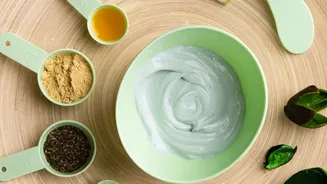
This is where a set of standard measuring cups and spoons becomes a game-changer. These inexpensive tools are designed to provide consistent volumes every single time. A standard 'cup' is a globally recognised unit of volume, typically 240ml in the US system, which is widely used in online recipes. A set usually includes a 1 cup, ½ cup, ⅓ cup, and ¼ cup measure. Similarly, measuring spoons come in standard sizes like a tablespoon (15ml) and teaspoon (5ml). Using these ensures that when a recipe calls for 'one cup of besan', you're using the same amount of besan as the recipe creator. This eliminates a major variable and is the first, most crucial step toward making a recipe repeatable. It bridges the gap between a recipe's intention and your execution.
Volume vs. Weight: The Next Level
While using measuring cups is a huge leap forward, it’s important to understand you're measuring volume—the amount of space an ingredient occupies. For ultimate precision, especially in baking, professionals use weight (grams). Why? A cup of all-purpose flour (maida) can weigh anywhere from 120 to 170 grams depending on how tightly it's packed. One person might scoop flour directly from the bag, compressing it, while another might spoon it lightly into the cup and level it off. Both are 'one cup', but the weight—and the effect on your cake—will be dramatically different. A cup of water weighs about 236 grams, while a cup of flour is closer to 120 grams. This difference is because of density. While you don't need a kitchen scale for everyday dal, understanding this distinction is key to mastering baking, where the chemistry depends on precise ratios.
Baking is Chemistry, Cooking is Art
The reason precision matters more in some areas than others comes down to chemistry. Baking is essentially a science experiment. The leavening agent (like baking soda) must react with an acid in a specific ratio to produce carbon dioxide and make your cake rise. Too much flour or too little liquid can result in a dry, dense cake. In this context, measuring cups provide good consistency, and a kitchen scale provides great consistency. Everyday cooking, on the other hand, is more forgiving. If your sabzi has a little less tomato, it's a variation. If your cake has 30% too much flour, it's a failure. For dals, curries, and sabzis, your 'andaaz' can still play a leading role, but for that perfect chocolate cake or crusty bread, precision is your best friend.
How to Standardize Your Family Recipes
What about your grandmother’s legendary kheer recipe that calls for 'one small glass of rice'? You can preserve these precious recipes by translating them into standard units. The next time you make it, use the traditional 'small glass'. But before you add the rice to the pot, pour it into your standard measuring cups. You might find it’s exactly ½ cup. Write that down on the recipe card. Do this for all the ingredients—the katori of sugar, the spoon of ghee. This simple act of translation doesn't diminish the recipe's heritage; it future-proofs it, ensuring that you, and the next generation, can replicate that taste of home perfectly, every single time. It's a bridge between the wisdom of 'andaaz' and the reliability of modern methods.