

What Exactly Is Microgravity?
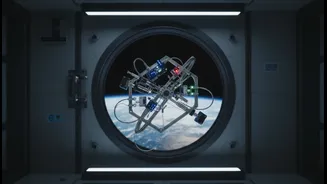
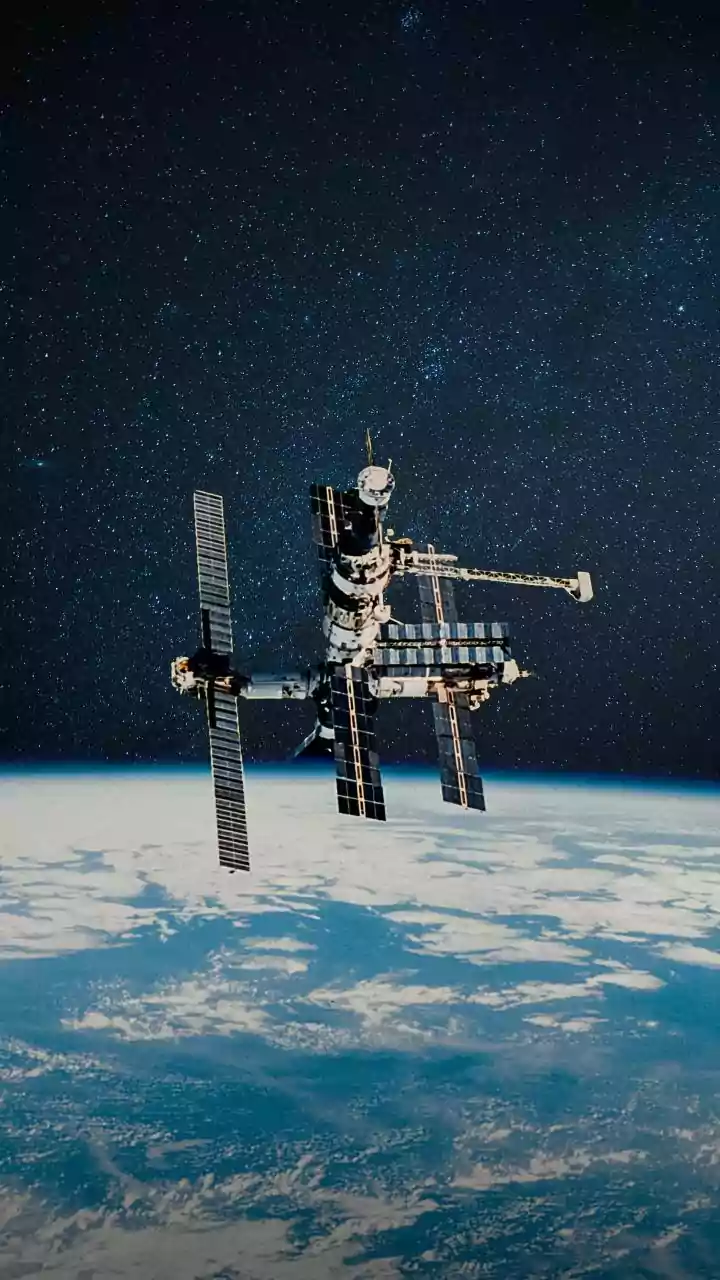
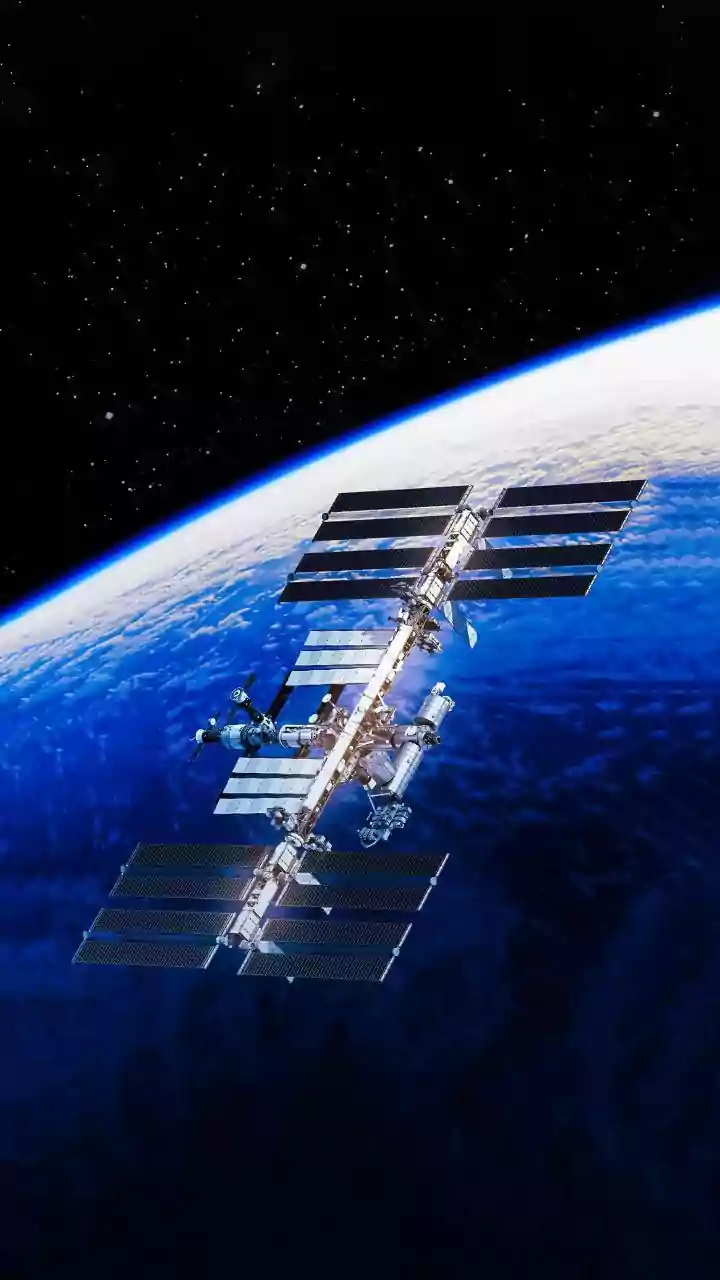
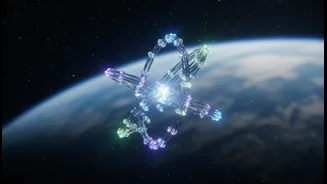
Often mistaken for 'zero gravity', microgravity is more accurately described as a state of continuous free-fall. Aboard the International Space Station (ISS) or any orbiting spacecraft, objects and astronauts are constantly falling toward Earth. However,
because they are also moving sideways at immense speed, they continuously 'miss' the planet, creating the sensation of weightlessness. Gravity is still present—about 90% as strong as on the surface—but its effects are dramatically reduced. This environment is invaluable for research because it strips away phenomena that complicate processes on Earth, such as buoyancy (where hotter, less dense fluids rise) and sedimentation (where heavier particles settle). In microgravity, these forces become negligible, allowing scientists to observe the fundamental behaviour of materials and biological systems in a way that is otherwise impossible.
Forging the Materials of Tomorrow
On Earth, gravity influences how materials form. When creating metal alloys, for instance, denser elements tend to sink, preventing a perfectly uniform mixture. In microgravity, this doesn't happen, allowing for the creation of unique alloys with superior strength and consistency. Similarly, the environment is a game-changer for growing crystals, which are fundamental to semiconductors and drug development. Without gravity-driven convection disturbing their formation, crystals can grow larger, purer, and with fewer defects. This has significant implications for producing next-generation fiber optics, like ZBLAN, which is notoriously difficult to manufacture on Earth but shows immense promise for faster data transmission. By studying and eventually manufacturing materials in space, ISRO could unlock advancements for India's telecommunications, electronics, and defence industries.
A New Frontier for Biology and Health
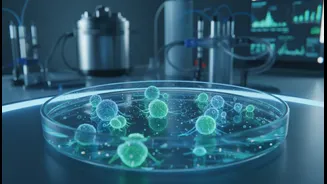
The human body is exquisitely adapted to Earth's gravity, and its absence triggers profound changes. Astronauts experience accelerated bone density loss and muscle atrophy, similar to osteoporosis and muscle wasting diseases on Earth. Studying these effects in space provides a unique model to understand disease progression and develop countermeasures. For instance, researchers can observe how human cells, including cardiac and stem cells, grow into more realistic 3D structures in microgravity, offering better models for testing drugs and understanding diseases like cancer and heart disease. ISRO has already planned experiments to study the effects of microgravity on human muscle regeneration (Myogenesis) and the resilience of organisms like tardigrades. This research not only paves the way for keeping astronauts healthy on long-duration missions, like the planned Gaganyaan flights, but also translates into direct health benefits on Earth.
Advancing India’s Space Technology
Microgravity research is not just about new discoveries; it is also crucial for refining the technology needed for space exploration itself. Understanding how fluids behave without gravity is essential for designing reliable fuel systems and life support for spacecraft and future space stations. How do you manage fuel sloshing in a tank where it doesn't settle at the bottom? How do you create efficient water purification or air circulation systems? These are challenges that must be solved by testing in a microgravity environment. Furthermore, this research helps in developing and validating new equipment, from 3D printers that can create spare parts in orbit to sensitive medical devices designed for astronauts. As ISRO plans for its Bharatiya Antariksh Station by 2035, mastering these technologies through microgravity experimentation is a non-negotiable step.
ISRO’s Vision for a Microgravity Ecosystem
ISRO is actively moving to build a robust microgravity research ecosystem in India. In July 2026, the Human Space Flight Centre (HSFC) held a national workshop to bring together academia, industry, and startups to foster collaboration. Through its Indian Microgravity Experiments (IMEx-2026) initiative, ISRO has invited proposals for experiments to be conducted during Gaganyaan missions and eventually on the Bharatiya Antariksh Station. The agency has already shortlisted seven Indian experiments to be conducted by an Indian astronaut on the ISS during the upcoming Axiom-4 mission, covering fields from biotechnology to materials science. This demonstrates a clear strategy: to evolve from demonstrating technological capability to establishing a sustained, cutting-edge scientific research program in space.