



An Ambitious Journey to the Asteroid Belt
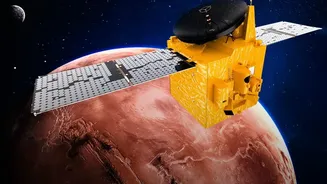
Following the success of its Hope Probe mission to Mars, the UAE is embarking on an even more complex interplanetary challenge. The Emirates Mission to the Asteroid Belt (EMA) is a multi-year project designed to explore seven different asteroids. The spacecraft,
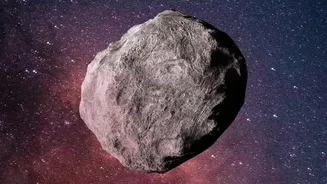
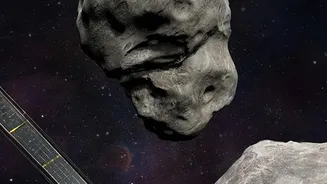
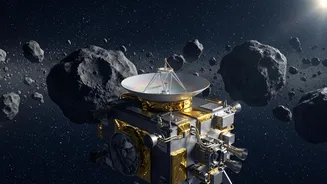
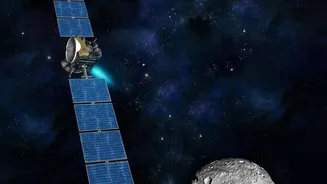
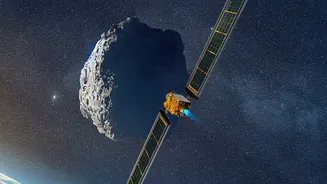
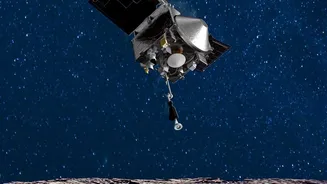
named the 'MBR Explorer' after Sheikh Mohammed bin Rashid Al Maktoum, is scheduled for launch in March 2028. It will undertake a five-billion-kilometre journey, using gravity assists from Venus and Earth to propel it toward the main asteroid belt located between Mars and Jupiter. The mission plans to conduct fly-bys of six asteroids before attempting to orbit and land a probe on the seventh and final target, an intriguing, reddish-hued asteroid named (269) Justitia, in the mid-2030s. The primary scientific goals are to understand the origins of water-rich asteroids and assess their potential for future resource utilisation.
Meet the New Partner: HEX20
HEX20 is a space-technology startup that is making a name for itself in the small satellite market. While it operates globally with a presence in Australia, the UAE, and Taiwan, the company has deep Indian roots. It was founded by a group of Malayali engineers and entrepreneurs and maintains a significant engineering facility at Technopark in Thiruvananthapuram. The company specialises in creating the foundational components of spacecraft, such as satellite platforms, onboard computers, power systems, and mission software. This selection marks a historic moment, as HEX20 is the first private Indian company to be chosen for a deep-space mission by the UAE. The partnership is a result of a selection process by the UAE Space Agency and the Technology Innovation Institute (TII) that concluded in late 2024.
A Crucial Role in Deep Space
HEX20's role in the mission is vital. The company was responsible for developing the spacecraft bus for the lander probe that will ultimately touch down on asteroid Justitia. The bus is the main body or chassis of the spacecraft that holds all the scientific instruments and critical systems together. HEX20 also developed the mission-specific software, an onboard computer, and power systems robust enough to survive the extreme conditions of deep space. The lander probe, which was assembled in Abu Dhabi, will separate from the main MBR Explorer spacecraft and perform an autonomous descent to the asteroid's surface. This means it will have to rely entirely on the software and systems developed by HEX20 and other partners, without real-time input from Earth. HEX20 successfully delivered the complex systems within a tight 15-month timeline, demonstrating its capability for handling demanding space missions.
Why This Partnership Matters
This collaboration is significant on multiple fronts. For the UAE, it demonstrates a strategic push to build a robust domestic and international space ecosystem, moving beyond reliance on a single partner and fostering innovation through entities like TII. By bringing in specialized international partners like HEX20, the UAE Space Agency accelerates its technological capabilities for increasingly complex missions. For HEX20 and India's burgeoning private space sector, this is a landmark achievement. Contributing to a flagship interplanetary mission for another nation provides invaluable flight heritage—the ultimate proof of reliability in the space industry. It showcases Indian engineering talent on a global stage and opens the door for further international collaboration in deep-space exploration. The probe's systems will now travel to Colorado for final integration with the MBR Explorer spacecraft, bringing this ambitious international effort one step closer to its 2028 launch.