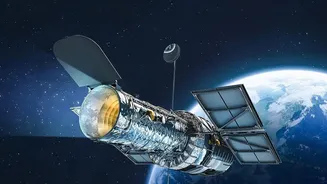

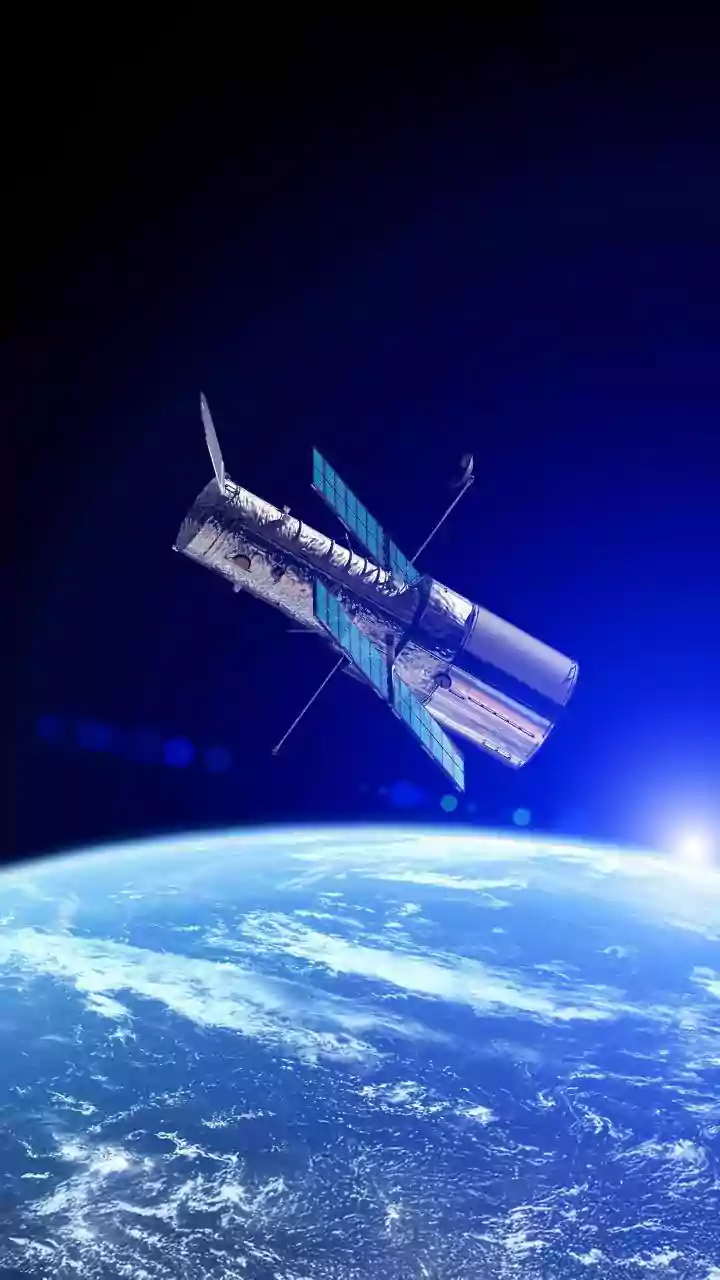
For millennia, we have wondered if we are alone in the universe. Now, from millions of kilometres away, science is providing a way to find out. Powerful space telescopes are peering at distant worlds, reading the very air to search for signs of life.
A Cosmic Shadow Play
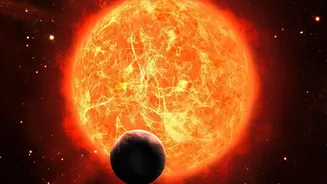
The first step in analysing a distant planet's atmosphere is catching it at the right moment. Most exoplanets are detected using the 'transit method'. This is a bit like watching a tiny moth fly in front of a bright streetlight. When an exoplanet passes directly between its star and our telescope, it blocks a minuscule amount of starlight, causing a slight, temporary dip in the star's brightness.
By observing these transits, astronomers can not only confirm the planet's existence but also calculate its size and how long its year is. But the real magic happens in those few hours when the planet is backlit by its star. That's because a tiny fraction of the starlight doesn’t just get blocked; it gets filtered through the planet's atmosphere, and that's the key to everything.
Decoding the Starlight Filter
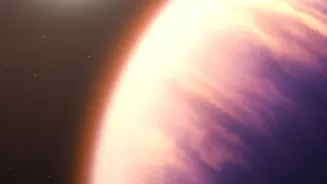
Imagine sunlight streaming through a stained-glass window. The glass absorbs some colours and lets others pass through, creating a pattern on the floor. An exoplanet's atmosphere does something similar to starlight during a transit. This process is called transmission spectroscopy.
As the star’s light passes through the atmosphere ringing the planet, the different gases present absorb very specific colours, or wavelengths, of that light. Every gas, whether it's oxygen, methane, or water vapour, has a unique absorption 'fingerprint'. By capturing the light that makes it through and seeing which colours are missing, scientists can work backwards to figure out exactly what gases are in that alien air.
The Infrared Advantage
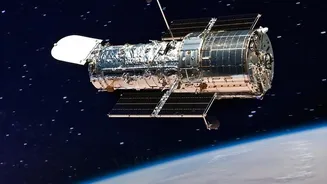
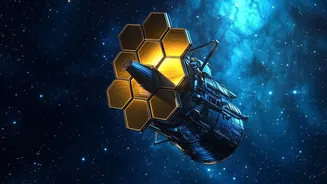
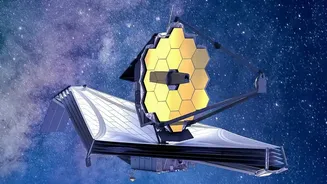
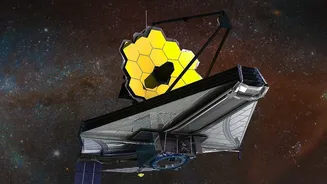
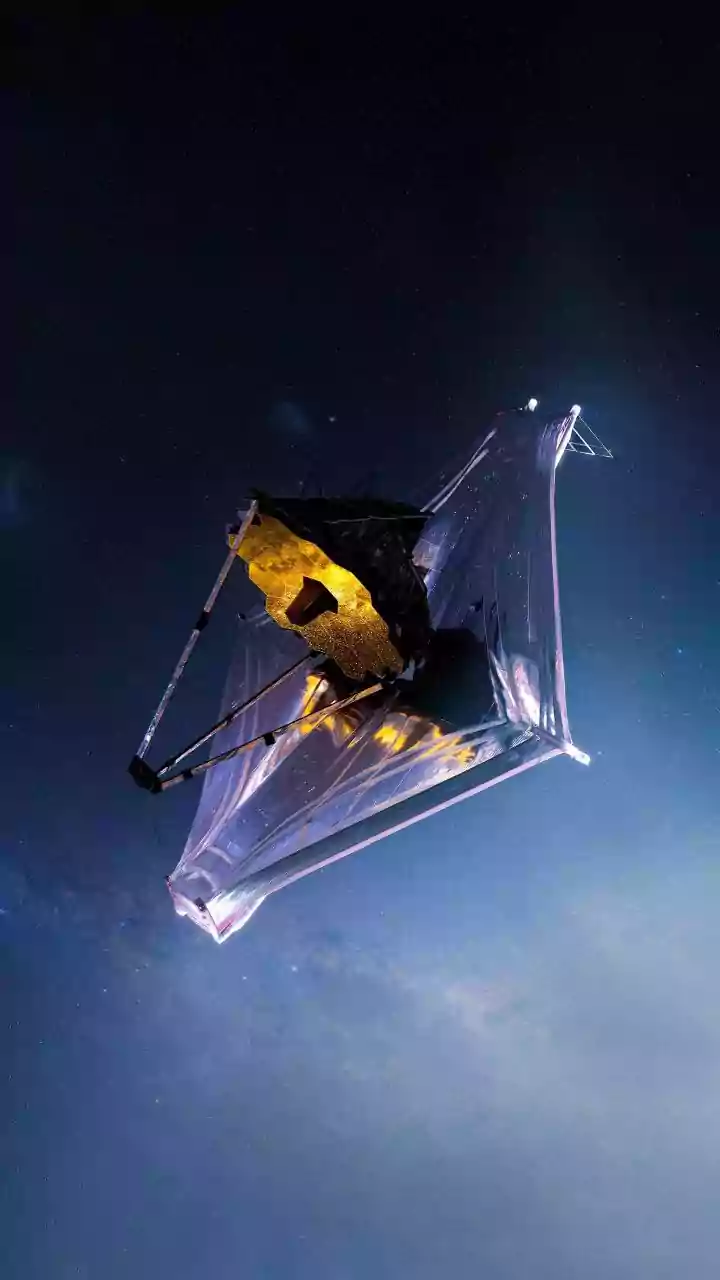
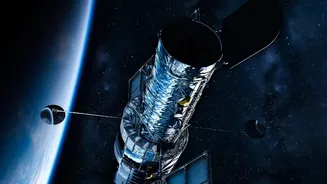
While this can be done across the light spectrum, the infrared range is where the real action is for atmospheric analysis. Molecules, the building blocks of gases like methane and water, are particularly good at absorbing infrared light. This is where high-resolution infrared instruments on telescopes like the James Webb Space Telescope (JWST) become game-changers.
JWST is designed to see the universe in infrared with breathtaking clarity. It can spread the filtered starlight into a detailed spectrum—essentially a chemical barcode of the exoplanet’s atmosphere. The dips in this barcode show precisely which molecules are present and even in what rough quantities, giving us an unprecedented look into the atmospheric chemistry of worlds light-years away.
The Barcode of Life
So what are scientists hoping to find in these atmospheric barcodes? They're searching for 'biosignatures'—gases that are likely produced by living organisms. On Earth, life has filled our atmosphere with oxygen, a highly reactive gas that wouldn't last long on its own. Seeing abundant oxygen and methane together on a rocky planet, for example, would be a very strong hint of biological activity, as these gases tend to destroy each other and require a constant source, like life, to be replenished.
Other potential biosignatures include water vapour, nitrous oxide, and even gases like dimethyl sulphide (DMS), which on Earth is produced almost exclusively by marine life. The challenge is that some of these gases can also be created by geological or chemical processes without life, so context is crucial. Scientists look for combinations of gases that seem out of balance and are hard to explain without a biological source.