


The Official Stance: A Frozen Relationship
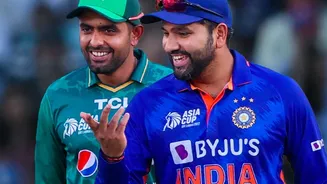
Bilateral trade relations have been formally suspended since 2019, a decision Pakistan made after India revoked Article 370 of its Constitution, which pertained to the special status of Jammu and Kashmir. The relationship deteriorated further following
the Pahalgam terror attack in April 2025, after which India banned all direct or indirect imports from Pakistan and closed the Attari-Wagah land border for trade. In response, Pakistan also prohibited all trade with India, including shipments routed through third countries. This diplomatic deep-freeze brought official commerce, which had already plummeted after the 2019 Pulwama incident, to a virtual halt.
The Reality: A 69% Surge in Imports
Despite the formal bans, recent figures from the State Bank of Pakistan reveal a startling trend. In the first quarter of the 2026-27 financial year (July-September 2026), Pakistan's imports from India reached $61.74 million, a 69% increase compared to the same period last year. During this time, Pakistan recorded zero exports to India. This one-way flow of goods has prompted significant questions about how these products are reaching Pakistani markets if direct channels are closed.
The Third-Country Route: Trade's Backdoor
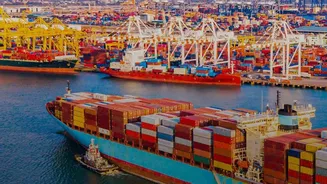
The most cited explanation for this discrepancy is the use of third-country trade routes. According to economic think tanks and former trade officials, Indian goods are shipped to regional trading hubs like Dubai, Singapore, or Colombo. In these locations, the goods are offloaded into bonded warehouses, their documentation and labels are altered to show a new country of origin—such as 'Made in UAE'—and they are then re-exported to Pakistan. This indirect method allows businesses to bypass the bilateral restrictions. While the official data records the country of origin as India, the shipments themselves arrive from an intermediary port, creating a grey area in trade policy.
The Economic Imperative: Necessity Over Politics
The demand for Indian products in Pakistan is driven by powerful economic factors. Key sectors in Pakistan, particularly pharmaceuticals and textiles, have historically relied on raw materials and inputs from India due to competitive pricing, quality, and geographical proximity. Pharmaceuticals and organic chemicals make up the vast majority of these imports, with Pakistan's pharma industry sourcing essential active pharmaceutical ingredients (APIs) from India. Sourcing these same materials from more distant markets can reportedly increase costs by 40-50%, a significant burden on an already strained economy. This economic dependency creates a strong incentive to find ways around the political restrictions.
A Growing Chorus for Normalisation
The high cost of the trade suspension has not gone unnoticed within Pakistan. The country's business community has been increasingly vocal in urging the government to reconsider the ban and resume direct trade with India. Business leaders have pointed to estimated economic losses of up to $40 billion since 2019 due to higher import costs and logistical challenges. They argue that restoring trade would not only benefit Pakistan's industries but also help stabilise its economy. In recent months, prominent figures, including Pakistan's Foreign Minister, have acknowledged these calls and stated that the government would 'seriously' consider the matter, indicating a potential, albeit cautious, shift in thinking.