





As the post-monsoon haze clears, November offers some of the best skies for stargazing in India. You don't need a fancy telescope or a degree in astrophysics—just a clear night, a little patience, and a guide to the celestial jewels on display.
First, Find Your Spot
Before
you start looking for specific stars, set yourself up for the best possible view. The most important rule of stargazing is to get away from city lights. Light pollution washes out all but the brightest objects. Find a dark terrace, a park, or drive a short distance away from urban centres. Give your eyes at least 15-20 minutes to fully adjust to the darkness. During this time, avoid looking at your bright phone screen. If you need a light, use a red torch, as it interferes less with your night vision. Many smartphones have a red screen filter you can enable for this purpose.
The King of Planets: Jupiter
The brightest 'star' you see in the evening sky is very likely not a star at all, but the planet Jupiter. Throughout November, this gas giant will be a brilliant, unblinking point of light visible for most of the night. Look towards the eastern sky after sunset; you simply cannot miss its steady, commanding glow. Jupiter is so bright it’s often the first object to appear after the sun goes down. Even a basic pair of binoculars might reveal its four largest moons—Io, Europa, Ganymede, and Callisto—appearing as tiny pinpricks of light lined up on either side of the planet.
The Ringed Wonder: Saturn
Not as dazzling as Jupiter but equally majestic, Saturn will also be visible in the evening sky. Look for a steady, yellowish-white light. In early November, it will be higher in the southern sky as darkness falls and will set in the west later in the night. While its famous rings are only visible through a telescope, knowing that you are looking at the ringed planet with your own eyes is a thrill in itself. Using a stargazing app on your phone (in night mode!) can help you confirm its position relative to the surrounding stars.
The Hunter Rises: Orion
If there is one constellation every beginner should learn, it's Orion, the Hunter. In November, it begins its reign in the winter sky, rising in the east a few hours after sunset. Its most recognizable feature is Orion's Belt: a short, straight line of three bright stars. This belt is an easy pointer to other celestial sights. The bright, reddish star to the upper left of the belt is Betelgeuse, a red supergiant. To the lower right is the brilliant blue-white star Rigel. Once you can spot Orion, you can navigate your way across the entire winter sky.
The Bull and the Seven Sisters
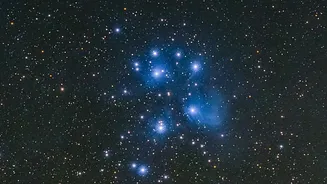
Following Orion into the sky is the constellation Taurus, the Bull. Look for a V-shaped pattern of stars that forms the bull's face. The bright, orange-hued star at one end of the 'V' is Aldebaran, the 'eye' of the bull. Perhaps the most beautiful object within Taurus is a tiny, dipper-shaped cluster of stars known as the Pleiades, or the Seven Sisters. To the naked eye, it looks like a faint, shimmering patch of light. From a dark location, you should be able to make out six or seven individual stars. In Indian mythology, this cluster is known as Krittika.
Bonus : Shooting Stars
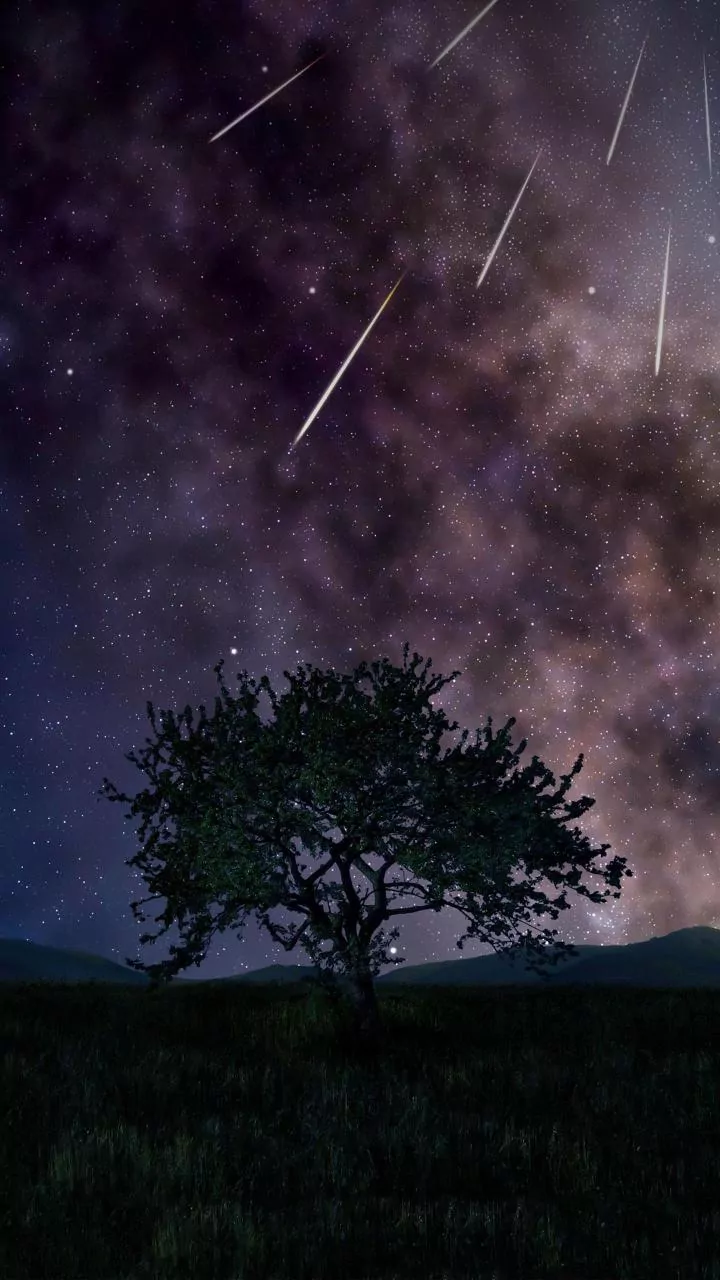
November is a great month for meteor showers. The Taurid meteor shower is active throughout the month and is known for producing occasional bright 'fireballs'. While the hourly rate is low, the spectacle is worth it. The more famous Leonids meteor shower is set to peak around November 17–18. On the peak night, find a dark spot after midnight, lie back, and look up. You could see anywhere from 10 to 15 meteors or 'shooting stars' per hour streaking across the sky, appearing to originate from the constellation Leo.