






What is FSSAI's Big Move?
The Food Safety and Standards Authority of India (FSSAI) has launched a significant enforcement drive against misleading information on packaged foods. In recent months, it has issued over 150 notices to food companies, including major players like Nestle,
PepsiCo, Mondelez, and Coca-Cola, for questionable labels, false advertisements, and unsubstantiated health claims. This isn't just a warning; the regulator has also seized products in several cases. The goal is to ensure that the information presented to consumers is truthful, unambiguous, and scientifically supported, bringing an end to deceptive marketing practices that can influence buying decisions.
The End of '100%' and Vague Health Claims
One of the most visible changes is the crackdown on absolute claims. FSSAI has specifically targeted the use of terms like '100% Pure' or '100% Natural' on labels. The regulator argues that such claims are often impossible to verify and can mislead consumers into believing a product has absolute purity or superiority. As a result, companies like Amway have had to remove the '100%' claim from their coconut oil packaging. Similarly, words like "natural," "fresh," and "healthy" are under review, compelling brands to be more precise. For instance, The Whole Truth, a snack brand, removed 'No Added Sugar' from its chocolate bars, replacing it with a clearer description of its ingredients, such as '55% Cocoa, 45% Dates'.
From 'Health Drinks' to Caffeinated Beverages
The popular 'health drink' category is also being dismantled. FSSAI has prohibited the use of the term 'health drink' on dairy and cereal-based beverages. A prime example is Mondelez's Bournvita, which faced scrutiny for its health claims and sugar content, leading the company to withdraw certain advertisements. The action extends to energy drinks as well. Brands have been instructed to stop using the term 'Energy Drink' for products licensed as 'caffeinated beverages'. Amway, for instance, is removing the word 'Energy' from its XS product line, with new packaging rolling out from August 2026.
Why is This Happening Now?
This regulatory push is driven by growing concerns over public health and the rise of lifestyle diseases. FSSAI aims to empower consumers to make informed choices by providing clearer information about key nutrients like sugar, salt, and saturated fat. The Supreme Court has also weighed in, directing the FSSAI to seriously consider mandatory front-of-pack warning labels, noting that it advances the citizen's constitutional right to health. Furthermore, with the rise of e-commerce, the regulator is extending its oversight to online platforms like Flipkart, Zomato, and Swiggy, ensuring that product listings are accurate and not misleading.
What Does This Mean for You?
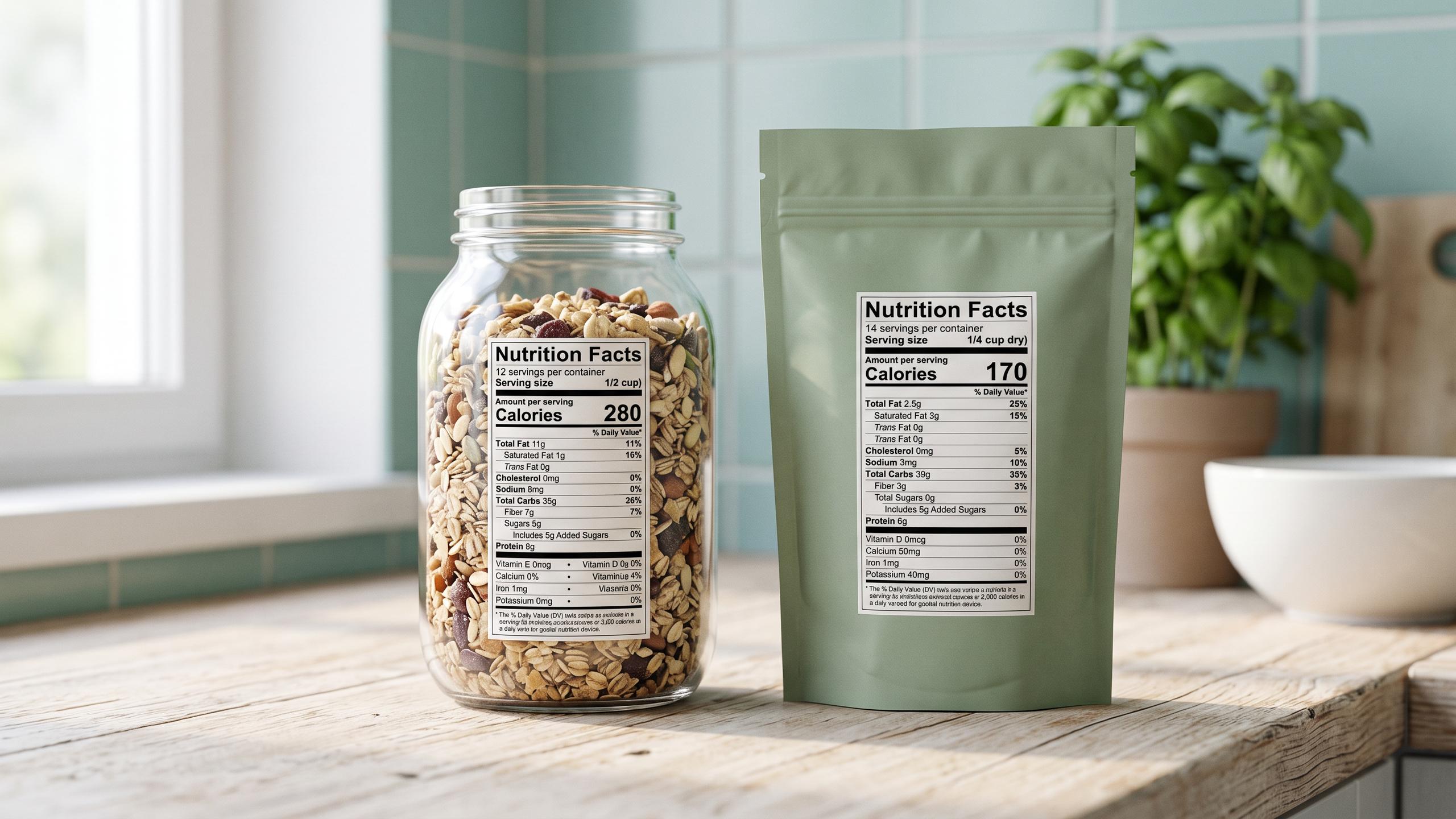
For consumers, these changes promise more transparency in the grocery aisle. You can expect to see more straightforward labels that focus on facts rather than marketing fluff. For example, instead of a vague 'healthy' promise, you'll get clearer nutritional data and ingredient lists. The Indian Nutrition Rating (INR), a star-based system from ½ star (least healthy) to 5 stars (healthiest), is also being introduced to help you quickly assess a product's nutritional value. This system requires companies to be accountable for their claims, with penalties for non-compliance reaching up to ₹10 lakh, along with potential suspension of licenses. Ultimately, this initiative encourages you to look beyond the flashy claims and make choices based on what's actually inside the package.