


Choose Your Floral Palette
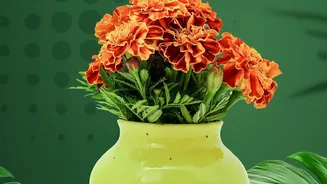
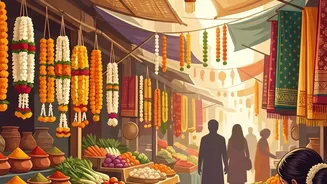
The foundation of a stunning flower rangoli is your choice of petals. For a vibrant and traditional look, marigolds are a perfect choice, offering brilliant shades of orange and yellow. Roses can provide deep reds and soft pinks, while chrysanthemums
are excellent for whites and yellows. Don't be afraid to mix and match. The beauty is in the contrast. Consider using whole flowers, loose petals, and even green leaves to add texture and define borders. To start, simply gather your fresh flowers and gently separate the petals, keeping each colour in a separate container for easy access while you design. This preparation makes the creative process much smoother.
Simple Design Hacks for Beginners
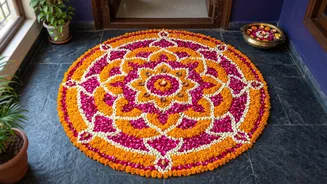
You don't need to be an artist to create an eye-catching design. Start with a clean, dust-free surface. A simple hack is to use chalk to lightly sketch your pattern on the floor first. This guide will be covered by petals later. For perfectly symmetrical shapes, look no further than your kitchen. A large plate can serve as a template for a perfect outer circle, while bangles or small bowls can create smaller concentric circles inside. Even cookie cutters can be used to press shapes into your base layer of petals. Simple geometric patterns, a central circular mandala, or a floral motif are all classic, easy options for beginners that look incredibly elegant.
The Art of Arranging Petals
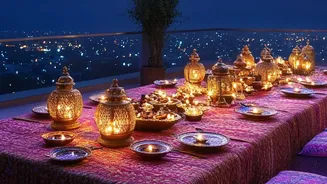
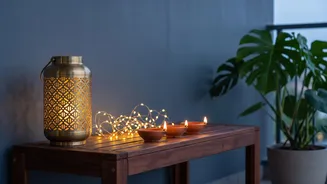
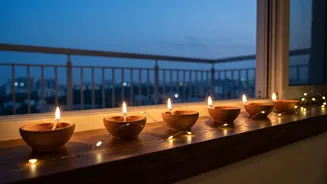
How you place the petals can make a huge difference. A common technique is to start from the center and work your way outwards, or vice versa, to avoid smudging your design as you work. Gently lay the petals down, arranging them closely to avoid leaving gaps where the floor shows through. For a more dynamic look, create a colour gradient by arranging petals from dark to light. You can also mix different coloured petals together for a speckled effect. For a bold centerpiece or border, use whole flowers like marigolds or place diyas (earthen lamps) at strategic points.
Eco-Friendly Fillers and Accents
To make your rangoli even more interesting and eco-friendly, incorporate other natural materials. Rice flour is a traditional and biodegradable option for creating fine white lines and outlines. For colours, you can use kitchen staples like turmeric powder for a vibrant yellow and kumkum for red. Don't stop there; whole spices like cloves or cardamom can add texture, while colourful lentils and grains can be used to fill sections. Fresh green leaves provide a wonderful natural border that makes the colours of the flowers pop even more. These natural additions enhance the rangoli's beauty while staying true to its eco-friendly spirit.
Tips to Keep Your Rangoli Fresh
A fresh flower rangoli is temporary, which is part of its charm, but there are ways to prolong its beauty. Firstly, try to place your rangoli in a shaded area, away from direct sunlight and strong wind, which can cause the petals to dry out and blow away. To keep the petals looking vibrant for a day or two, you can lightly sprinkle them with water from a spray bottle. This helps them stay hydrated. Some creators even lay a thin, moist base of soil to help retain moisture for longer. If any flowers start to wilt, you can simply replace them with fresh ones to maintain the design.