




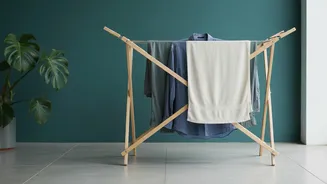

Choose Your Drying Zone Wisely
The first step is selecting the right location. Don't just default to the most convenient empty corner. The ideal spot for your drying zone has good ventilation to prevent the buildup of moisture that leads to musty smells and mould. A spare room, a covered
balcony protected from rain, or even a hallway can work. Try to choose a space with a window you can crack open or an exhaust fan. Air circulation is more crucial than heat for effective indoor drying. By designating one area for all your wet items, you contain the moisture and keep the rest of your home from feeling damp. This prevents the common problem of clothes being left in poorly ventilated rooms, which slows drying and causes odour.
Assemble Your Drying Toolkit
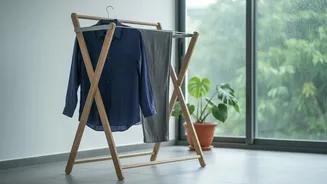
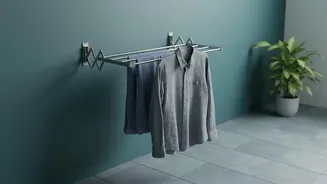
You don't need expensive equipment, but a few key items will make a world of difference. A sturdy, foldable drying rack is non-negotiable. Choose the largest one your space can accommodate; overcrowding a rack is a common mistake that traps moisture and slows drying. Hangers are also essential. Hanging shirts and blouses on hangers allows them to retain their shape and lets air circulate more freely. A pedestal or table fan is your most powerful ally. Pointing a fan at your drying rack significantly speeds up the process by keeping air moving. If you live in a particularly humid area, a dehumidifier is a worthwhile investment. It pulls moisture directly from the air, creating a drier environment that helps clothes dry faster and prevents mould. For an extra boost, placing the dehumidifier under the drying rack can be especially effective.
The Art of Arranging Laundry
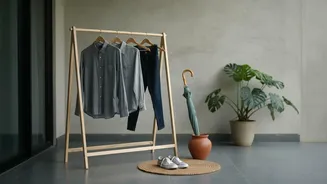
How you hang your clothes is just as important as where you hang them. First, ensure your washing machine's spin cycle has removed as much excess water as possible; some experts even suggest a second spin cycle. Before hanging, give each item a good shake to open up the fabric. When loading the rack, leave ample space between garments. If items are touching, air can't circulate, and that's when musty odours develop. A good strategy is to alternate thicker items like jeans with thinner ones like t-shirts to improve airflow. Use hangers for shirts, dresses, and delicate items to help them dry faster and reduce wrinkles.
Don't Forget Footwear and Umbrellas
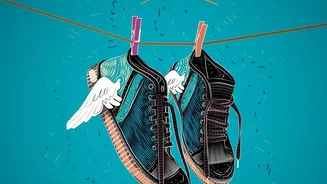
A true monsoon drying zone accounts for more than just laundry. Wet shoes are a common problem and need proper care to avoid damage and odour. Never place them near direct heat like a radiator, as this can cause materials like leather to crack or shrink. Instead, start by removing the insoles, which can be dried separately. Loosen the laces and stuff the shoes with crumpled newspaper, which is highly absorbent. Replace the newspaper every few hours. For faster results, place the shoes in front of a fan. Dripping umbrellas should be left partially open in a bucket or a corner of the bathroom to drain before being opened fully to air dry in your designated zone.
Battle Dampness and Prevent Odours
Even with a good setup, high humidity can lead to a persistent damp smell. Proactive measures can keep your clothes smelling fresh. Running a fan is the most effective way to combat stagnant, humid air. If you notice a musty smell developing, you can rewash the items with a small amount of white vinegar or baking soda added to the cycle; both are effective at neutralizing odours. For long-term prevention, ensure your wardrobe is not damp by using moisture absorbers like silica gel pouches. Finally, make sure every single item is completely dry before you store it away. Even slightly damp clothes can quickly develop mildew when packed into a drawer or closet.