





As temperatures drop, do your strands lose their lustre and start to feel dry and fragile? You're not imagining it. The combination of cold outdoor air and dry indoor heat creates a perfect storm for hair damage.
The Science of Winter Hair Damage
The primary culprit behind winter hair
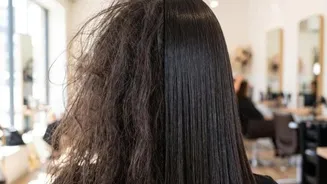
woes is a lack of moisture. Cold air holds significantly less humidity than warm air. When you step outside, this dry air actively pulls moisture from your hair strands. To make matters worse, we then retreat into artificially heated homes and offices, where the air is also incredibly dry, further stripping hair of its natural hydration. This constant moisture loss causes the hair's outer layer, the cuticle, to lift and become rough. A lifted cuticle can't effectively hold in moisture or lie flat, leading to strands that feel brittle, look dull, and are much more susceptible to breakage, frizz, and static electricity.
Friction, Heat, and Hot Showers
Environmental factors are only part of the story. Our winter habits also contribute to the damage. Cosy wool hats, scarves, and high-collared coats create constant friction against your hair, which can fray the hair fibre and lead to tangles and split ends. We also tend to rely more on heat styling tools like blow dryers and flat irons during the colder months, which can scorch already-parched strands. Even a long, steaming hot shower, which feels like a blessing on a cold day, can be harsh. The hot water can strip your scalp and hair of the natural oils they desperately need, exacerbating dryness.
Swap to a Hydrating Shampoo
Your first line of defence is to switch your cleansing products. Many shampoos, especially clarifying formulas, can strip away the natural oils that protect your hair. In winter, you want to preserve as much of that moisture as possible. Look for gentle, sulphate-free shampoos labelled as 'hydrating' or 'moisturising'. These formulas cleanse without being overly harsh, helping your scalp maintain its natural moisture balance, which is crucial when the air around you is trying to dry it out.
Never Skip Conditioner
Conditioner is non_negotiable in the winter. It works by smoothing the hair cuticle, which helps to seal in moisture, reduce frizz, and protect strands from breakage. Consider using a richer conditioner than you would in the summer, looking for ingredients like ceramides, natural oils, or shea butter. For an extra boost, add a deep conditioning mask or treatment to your routine once a week. Let it sit for at least 10_15 minutes to allow the nourishing ingredients to penetrate deeply.
Embrace Leave_In Products and Oils
Think of leave_in conditioners and hair oils as the winter coat for your hair. After washing and conditioning, applying a leave_in product adds an extra layer of protection against dry air. It helps to keep the cuticle sealed throughout the day, preventing moisture loss. Hair oils can be applied to the mid_lengths and ends of dry hair to instantly tame frizz, add shine, and provide a protective barrier. A pre_wash oil treatment can also help protect fragile strands from the stripping effects of shampoo.
Rethink Your Washing and Drying Habits
Try to wash your hair less frequently—perhaps two to three times a week instead of daily. This gives your scalp's natural oils a chance to coat and protect your hair. When you do wash, use lukewarm water instead of hot. Afterwards, be gentle. Wet hair is more fragile, so avoid aggressive towel rubbing. Instead, gently squeeze out excess water. Air drying is the best option, but if you must use a blow dryer, apply a heat protectant first and use the lowest heat setting possible.
Simple physical barriers can make a huge difference. When you go outside, wear a hat, but consider one lined with silk or satin, as wool and coarse cotton can cause friction and snagging. At night, swapping your cotton pillowcase for a silk or satin one can significantly reduce friction and prevent your hair from drying out while you sleep. Protective styles like loose braids or buns can also minimise tangling and breakage caused by rubbing against collars and scarves.