

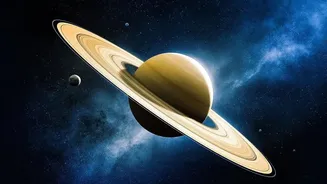


The Easiest Signpost in the Sky
For anyone who has ever tried to find a specific planet or star and felt overwhelmed, this event is for you. The biggest challenge for novice astronomers is simply knowing where to point their eyes. On the evening of October 19, 2026, that problem solves
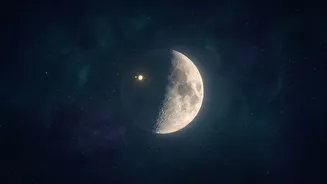
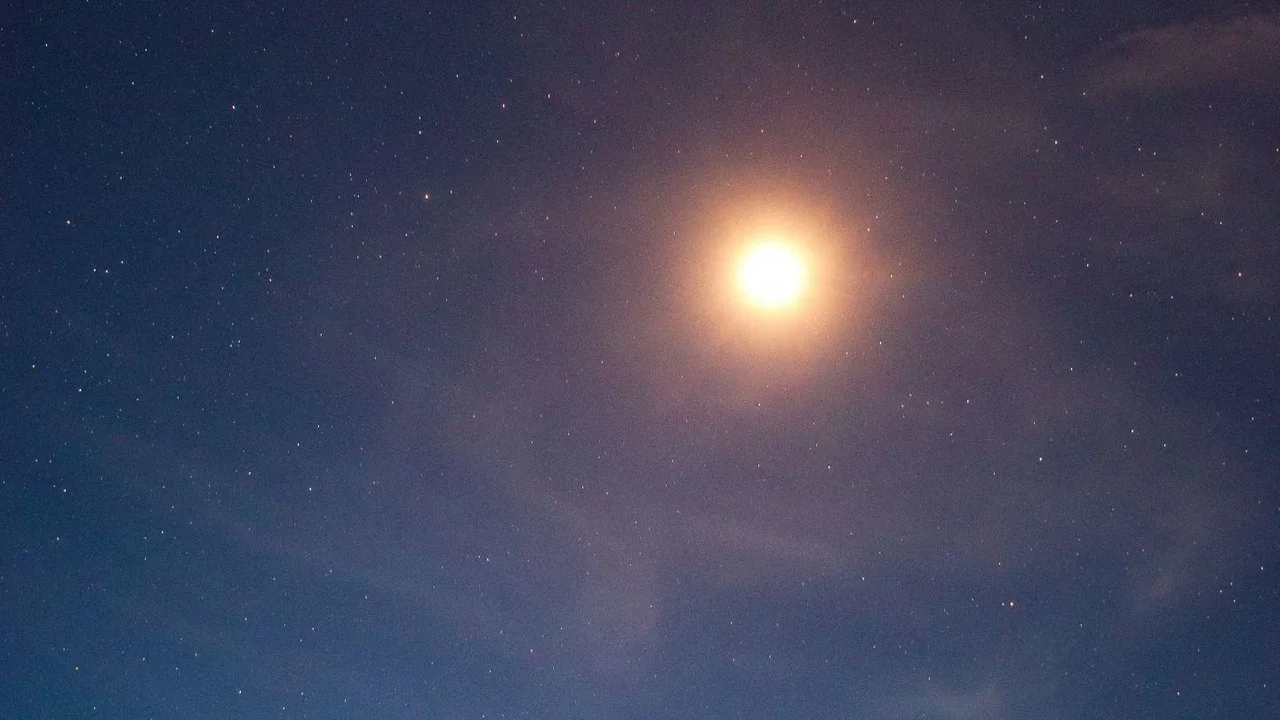
itself. The Moon, our sky’s brightest and most familiar object, will serve as a brilliant signpost, guiding you directly to Saturn. The two will appear incredibly close together in our sky, making the otherwise tricky task of identifying the planet almost effortless. You won’t need a star chart or complex app to find your way; just find the Moon, and you’ve found Saturn.
Mark Your Calendar: When and Where to Look
The main event takes place on the evening of Monday, October 19, 2026. Look for the celestial pair in the southeastern sky as dusk begins to fade. From India, they will become visible around 6:55 PM (IST), positioned at a good height above the horizon. The duo will journey across the night sky for over six hours before setting after midnight, giving you a very generous window to step outside and enjoy the view. They will be located in the constellation of Aquarius, with Saturn shining brightly at a magnitude of 0.5. This steady, extended visibility makes it a low-pressure event, ideal for fitting into your evening schedule.
What Exactly is a Conjunction?
While it may look like the Moon and Saturn are about to have a cosmic meeting, a conjunction is really a line-of-sight illusion. The two objects are not physically close to one another at all. On that night, the Moon will be at its usual distance of about 400,000 kilometres from Earth, while Saturn will be more than 1.4 billion kilometres away. A conjunction simply means that from our perspective on Earth, they appear to be in the same small patch of sky. This alignment provides a wonderful visual treat and a practical marker for locating celestial bodies that are much farther away.
Your Eyes Are All You Need
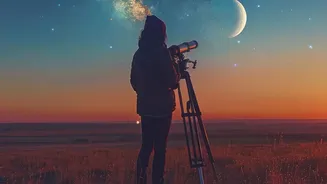
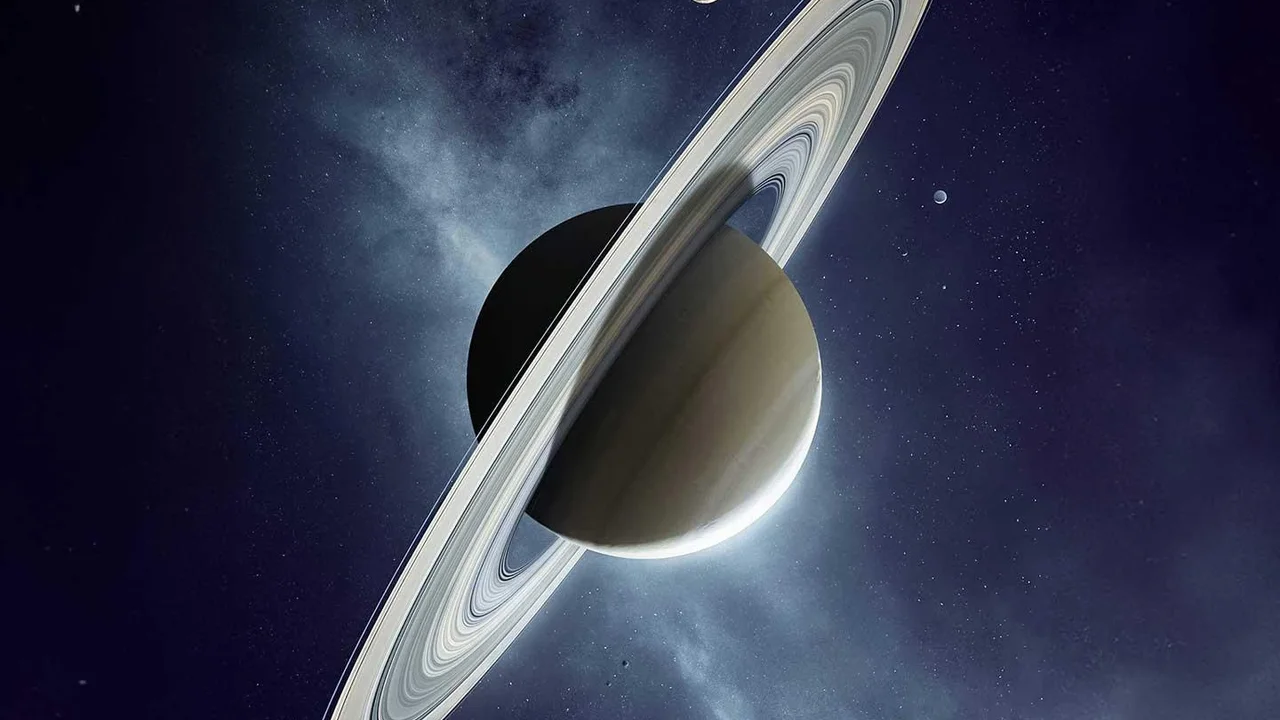
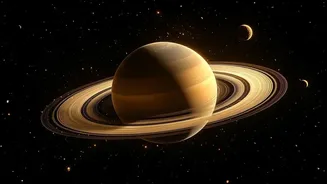
One of the best things about this event is its accessibility. You do not need an expensive telescope or any special equipment to see it. The Moon and Saturn will both be clearly visible to the naked eye. Saturn will look like a bright, steady, yellowish star right next to the Moon. If you have a pair of binoculars, bring them along. While they won't have enough power to resolve Saturn's famous rings, they will enhance the view significantly. Through binoculars, Saturn will appear as a small, slightly elongated golden orb, distinguishing it clearly from the pinprick of a distant star. Binoculars are also perfect for scanning the surface of the Moon itself.
A Few Tips for the Best View
To make the most of this celestial show, a little preparation goes a long way. The biggest enemy of stargazing, especially in urban areas, is light pollution. If possible, try to find a spot away from bright streetlights, like a local park, a terrace, or the outskirts of town. Once you are in a darker spot, give your eyes about 15 to 20 minutes to fully adapt to the darkness. This process, known as dark adaptation, dramatically increases your ability to see fainter objects in the sky. Avoid looking at your bright phone screen, as this will reset your night vision. If you need a light, use a torch with a red filter if you have one.