








What is Vikram-1?
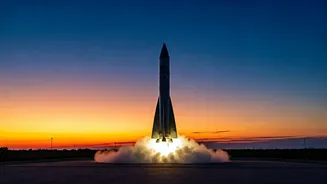
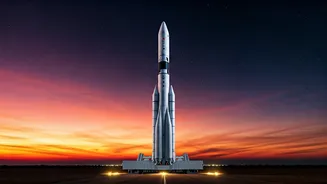
Vikram-1 is a multi-stage orbital launch vehicle developed by the Hyderabad-based startup, Skyroot Aerospace. Named in honor of Dr. Vikram Sarabhai, the father of the Indian space program, the rocket stands as tall as a seven-story building. It has been
engineered with cutting-edge technology, including an all-carbon composite structure, 3D-printed engines, and high-thrust solid-fuel boosters. Unlike its suborbital predecessor, Vikram-S, which completed a successful test flight in November 2022, Vikram-1 is designed to achieve orbit. Its primary mission is to deliver small satellites, with a capacity to carry payloads of up to 350 kilograms into a Low Earth Orbit (LEO) around 450 kilometers above Earth. This capability places it in a competitive global market for small satellite launches, a rapidly growing segment of the space economy.
Meet the Trailblazer: Skyroot Aerospace
Skyroot Aerospace is at the forefront of India's private space revolution. Founded in 2018 by former ISRO engineers Pawan Kumar Chandana and Naga Bharath Daka, the company's mission is to open up space for all by making rocket launches reliable, affordable, and frequent. The company made headlines in 2022 with the successful launch of Vikram-S, the first-ever rocket built and launched by a private Indian firm. That mission, named 'Prarambh' (The Beginning), was a suborbital flight that validated the core technologies of their launch systems. Now, with Vikram-1, Skyroot is taking a giant leap forward. The company has worked closely with the Indian Space Research Organisation (ISRO) and IN-SPACe, the government agency created to regulate and facilitate private space ventures, to reach this historic stage.
Why This Launch is a Landmark Moment
The upcoming flight of Vikram-1, dubbed 'Mission Aagaman' (The Arrival), is far more than just another rocket launch; it represents a pivotal moment for India's entire industrial and technological ecosystem. It will be the first time a privately developed Indian rocket attempts to place a satellite in orbit, breaking the state monopoly on space launches. A successful mission would not only validate Skyroot's technology but also signal the maturation of India's private space sector, which was formally opened to competition in 2020. This development is crucial for India's ambition to increase its share of the global space economy, which is projected to grow substantially. By demonstrating a reliable, homegrown, private launch capability, India can attract more international customers and foster a competitive domestic market for building and launching satellites.
Decoding the Launch Window
Skyroot Aerospace has announced a launch window for Mission Aagaman between July 12 and August 4, 2026. A "launch window" is a specific period during which a rocket must be launched to reach its intended orbit correctly. This is not an arbitrary timeframe; it's dictated by complex factors including the Earth's rotation, the target orbit, the position of celestial bodies, and, crucially, weather conditions at the launch site in Sriharikota. The final launch date within this window will be confirmed once all pre-flight checks, vehicle assembly, and safety clearances are complete. The primary goal of this first orbital flight is data collection. Engineers will be closely monitoring the performance of the rocket's propulsion, guidance, and stage separation systems to fine-tune the vehicle for future commercial flights.
The Bigger Picture for India's Space Ambitions
The Vikram-1 mission is a direct result of India's strategic decision to open its space sector to private enterprise. By establishing IN-SPACe, the government created a single-window agency to support and regulate companies like Skyroot, enabling them to use ISRO's world-class facilities and expertise. This public-private partnership model allows ISRO to focus on more ambitious scientific and exploratory missions, while private players can drive innovation in the commercial launch market. This first flight is partially commercial, carrying payloads for both domestic and international customers, a clear sign of the business model to come. If successful, Skyroot plans to move towards a high-cadence launch schedule, offering on-demand services that are currently a major bottleneck for satellite operators worldwide.