


Checking Milk for Purity
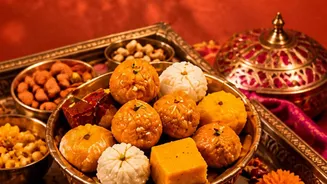
Milk forms the base of most Diwali sweets, but it is also one of the most commonly adulterated items in India. Adulterants can range from harmless water, used to increase volume, to harmful chemicals like detergent, added to create a thicker, whiter appearance.
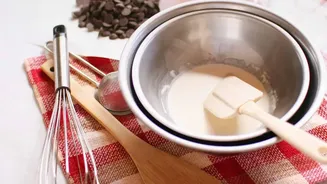
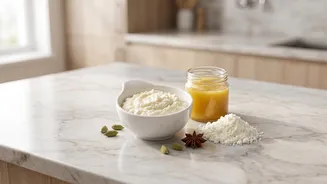
To test for water, place a drop of milk on a polished, slanting surface. Pure milk will flow slowly, leaving a white trail behind, whereas milk diluted with water will run down immediately without a trace. To check for detergent, vigorously shake 5-10 ml of milk in a bottle. If it forms a dense, soapy lather that persists, it’s likely adulterated. Pure milk will only form a thin layer of foam that quickly disappears.
Spotting Impure Khoya (Mawa)
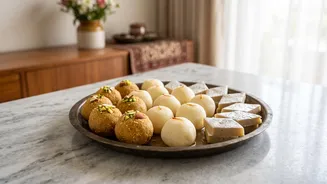
Khoya, or mawa, is essential for treats like barfi and peda. Unfortunately, it's often bulked up with starch, flour, or even blotting paper to cut costs, especially during the festive rush. A reliable way to test for starch is the iodine test, recommended by the FSSAI. Boil a small amount of khoya in water, let it cool, and then add a few drops of iodine solution. If the mixture turns blue or black, it confirms the presence of starch. You can also do a quick sensory check. Pure khoya has a slightly grainy texture and a sweet, milky aroma, and it will feel oily when rubbed on your palm. Adulterated khoya often feels pasty, sticky, or has no smell.
Is Your Ghee Genuine?
Pure ghee lends an unmatched richness and aroma to sweets, but it is frequently adulterated with cheaper vanaspati (vegetable shortening) or other oils. A simple heating test can reveal a lot. Heat a teaspoon of ghee in a pan; pure ghee will melt quickly and turn a dark brownish colour, while adulterated ghee will take longer to melt and turn a light yellow. Another effective method is the freezing test. Place a jar of ghee in the refrigerator. Pure ghee will solidify uniformly into a single, even layer. If it separates into distinct layers, it indicates the presence of other oils. For a starch test, melt the ghee and add a few drops of iodine. A purple or blue colour indicates adulteration with items like mashed potatoes.
The Truth About Silver Vark
The delicate silver foil, or 'vark', that adorns many sweets can sometimes be replaced with toxic aluminium foil. Real silver vark is incredibly delicate and integrates into the sweet. Fake aluminium foil often looks much brighter and thicker. To test it, gently scrape off a piece of the foil and rub it between your fingers or on your palm. Pure silver is so fine that it will disintegrate and almost disappear into your skin. Aluminium, being more robust, will not break apart and will instead roll into a small, greasy grey ball. Another test involves fire: pure silver will burn away and fuse into a shiny ball, while aluminium will burn down into a dark, sooty ash.
Testing Other Key Ingredients
Adulteration isn't limited to dairy. Other staples can also be compromised. Sugar can be mixed with fine chalk powder. To check, dissolve a spoonful of sugar in a glass of water. Pure sugar will dissolve completely, while chalk powder will settle at the bottom. Similarly, spices like saffron are sometimes mixed with coloured threads or corn silk. To test saffron, drop a strand into a glass of warm water. Pure saffron will slowly release its distinct golden-orange colour and aroma, while fake saffron will instantly bleed a bright, artificial red or orange colour. By taking these small precautions, you can ensure the ingredients you use are safe and authentic.