


The Old Way: A Billion-Dollar Bonfire
Imagine building a state-of-the-art airliner, flying it from Delhi to New York, and then rolling it into the ocean. It sounds absurd, but for most of space history, that's exactly how we’ve operated. Each rocket, a marvel of engineering costing hundreds
of millions or even billions of dollars, was a single-use vehicle. This expendable approach made space access incredibly expensive and infrequent. For scientists, this meant every mission was a high-stakes gamble. Proposals for new telescopes or planetary probes would compete for rare, costly launch slots, knowing that failure could set a field of study back by a decade or more. The high cost didn't just limit the number of missions; it also made space agencies risk-averse, often favouring conservative designs over more ambitious, potentially groundbreaking experiments.
The New Logic of Reusability
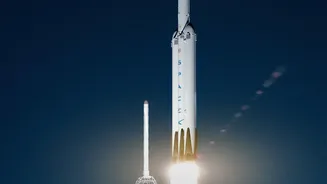
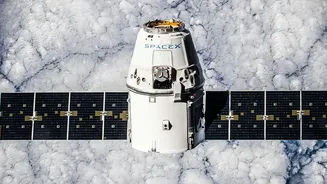
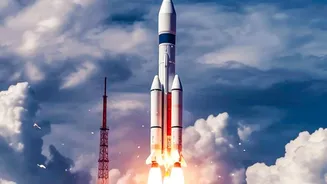
Enter reusability. Popularised by companies like SpaceX with its Falcon 9 rocket, the core idea is to treat launch vehicles less like disposable fireworks and more like aircraft. By designing boosters that can autonomously land back on Earth, be refurbished, and fly again, the immense cost of manufacturing is spread across multiple missions. This has drastically lowered the price of sending a kilogram of payload to orbit. For example, costs have plummeted from the Space Shuttle's estimated $54,500 per kilogram to as low as $1,500 per kilogram on a Falcon Heavy. This isn't just about saving money; it's about changing the fundamental economics of space. Lower costs and higher launch frequency mean more opportunities for everyone, from commercial satellite companies to national space agencies and university science departments.
From a Trickle of Data to a Flood
The most profound impact of reusability isn't just cheaper launches, but the acceleration of science itself. When launch costs fall, it becomes feasible to deploy entire constellations of scientific satellites, not just a single flagship. This creates a more resilient and richer data stream. Instead of one large, vulnerable telescope, astronomers can envision a fleet of smaller ones working in tandem. Planetary scientists can propose more frequent missions to Mars, the Moon, or asteroids, allowing for iterative discovery. Failure becomes less catastrophic and more of a learning opportunity, encouraging bolder experimental designs. This model also allows for the rapid replacement or upgrading of orbital assets, ensuring that the tools scientists use in space can keep pace with technological advancements on the ground.
More Than Just Rockets
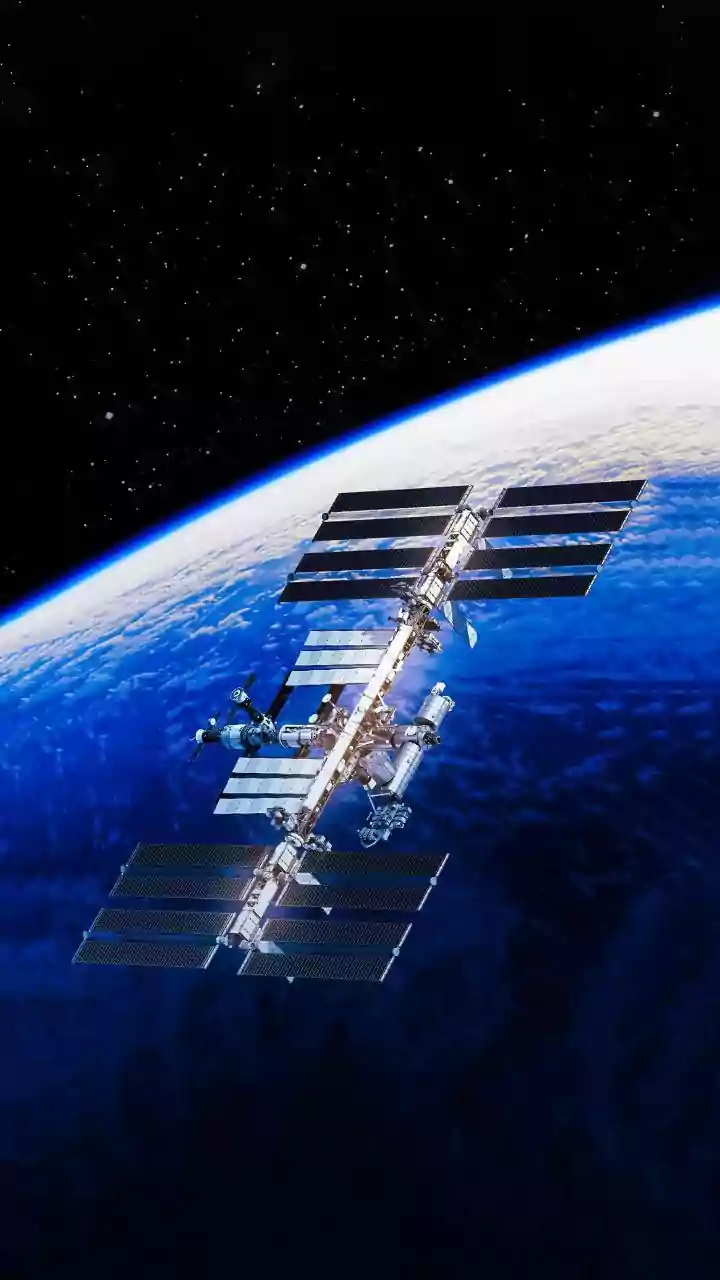
True reusability extends beyond just the launch vehicle. The long-term vision for a sustainable space economy involves a circular approach: spacecraft and satellites designed for in-orbit servicing, refueling, and repair. Imagine robotic missions that can visit an aging space telescope, replace its instruments, or fix a faulty component, vastly extending its operational life. This concept, known as On-orbit Servicing, Assembly, and Manufacturing (OSAM), is actively being pursued by agencies like NASA. It also includes designing spacecraft from the outset with materials that can be recycled or repurposed in orbit, reducing the growing problem of space debris. This moves from a 'launch and leave' mentality to creating a sustainable, lasting infrastructure in space.
India's Leap into the Reusable Era
India is firmly in the race to develop its own reusable launch technology. The Indian Space Research Organisation (ISRO) is actively developing its Reusable Launch Vehicle (RLV), named 'Pushpak'. The program aims to create a two-stage-to-orbit (TSTO) vehicle where the winged first stage can fly back to a runway and land like an aircraft, ready for its next mission. ISRO has already conducted a series of successful technology demonstrations. These include a hypersonic flight experiment (HEX) in 2016 and several autonomous landing experiments (LEX) in 2023 and 2024, where the winged vehicle was dropped from a helicopter and successfully navigated to a runway landing on its own. While ISRO has noted it is not in a direct race with private players, mastering this technology is critical for enabling low-cost access to space and ensuring India's competitive edge in the global space economy.