

Cosmic Crumbs: A Quick Refresher
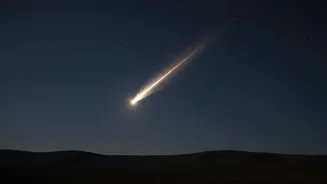
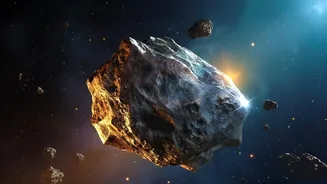
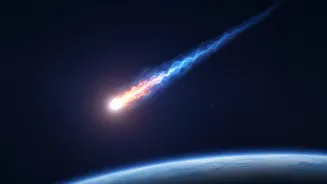
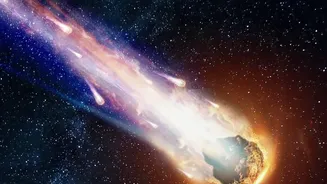
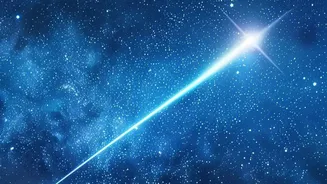
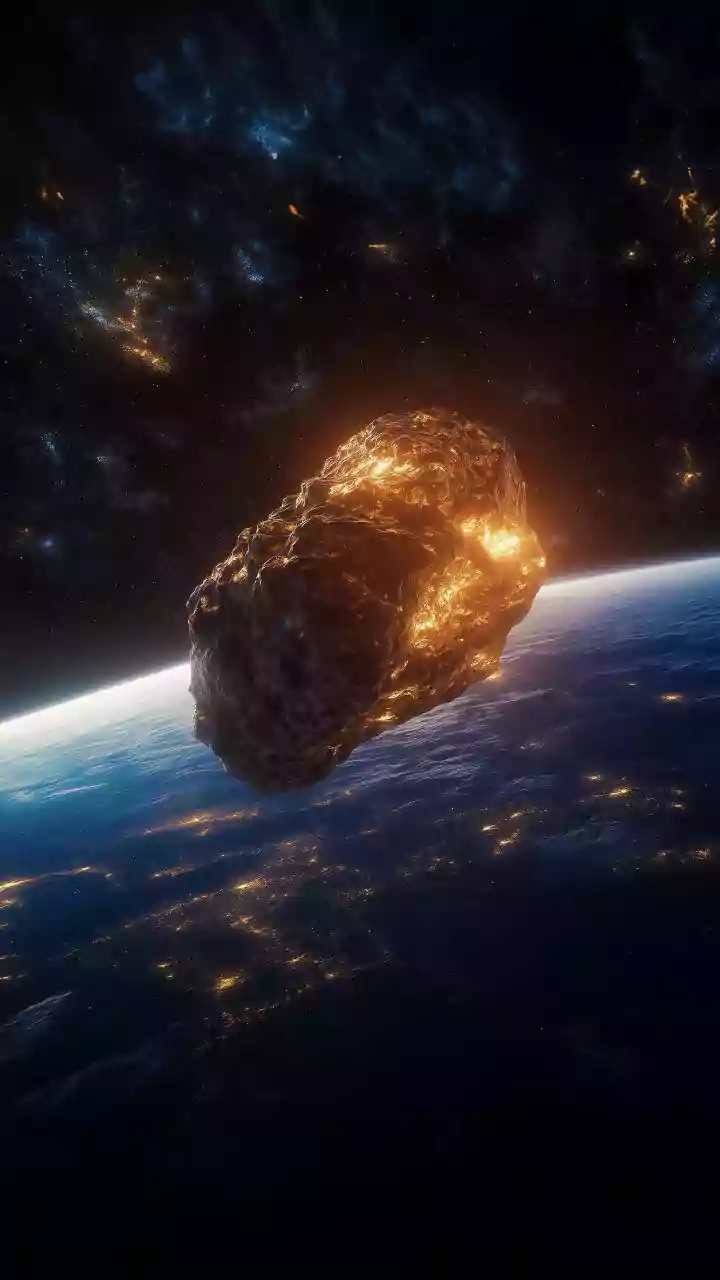
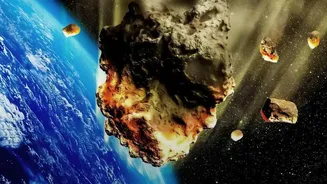
Before we dive into the detective work, let's get our terms straight. That chunk of rock or ice floating in space is called a meteoroid. When it hits Earth's atmosphere and burns up, the fiery streak of light it creates is a meteor. If any part of it survives
the journey and lands on the ground, it's called a meteorite. Billions of these particles, most no larger than a grain of sand, enter our atmosphere every day. While most go unnoticed, the ones we see carry valuable information about where they came from.
The Need for Speed
One of the first things scientists measure is the meteor's velocity. This is a critical piece of the puzzle. Meteoroids originating from within our solar system, such as debris from comets or asteroids, typically enter our atmosphere at speeds ranging from 11 to 72 kilometres per second. This speed is a combination of the object's own orbital velocity around the sun and Earth’s movement through space. However, if an object is clocked at a speed faster than the Sun's escape velocity—roughly 42 km/s at Earth's distance—it's a strong indicator that it isn't gravitationally bound to our star. This suggests a hyperbolic orbit and an exciting possibility: the meteoroid could be an interstellar visitor from another star system.
A Clear Direction of Travel
Direction provides the next set of clues. If you watch a meteor shower, you might notice that all the streaks of light seem to fan out from a single point in the sky. This point is called the radiant. It's an illusion of perspective, similar to how parallel railway tracks appear to converge in the distance. All the meteoroids in a shower are travelling on parallel paths as Earth passes through the debris stream of a parent body, usually a comet. The location of this radiant point tells astronomers which shower they're observing and is often how showers get their names—for instance, the Perseids have their radiant in the constellation Perseus. Any meteor that doesn't trace back to this radiant is known as a 'sporadic' and is considered a random, solitary event.
Finding the Cosmic Address: Orbit
The ultimate goal for researchers is to determine the meteoroid's original orbit around the Sun. By combining the precise measurements of its speed and its atmospheric trajectory, scientists can essentially rewind its journey. Using sophisticated software, they calculate the path the object took through space before it encountered Earth. This calculated orbit is like a cosmic address, allowing them to link the meteoroid back to its source. They can see if its orbital path matches that of a known comet, like Swift-Tuttle for the Perseids, or an asteroid. This process confirms whether a meteor belongs to a known shower or if it's a sporadic piece from the asteroid belt. For extremely fast meteors, this calculation can confirm a hyperbolic orbit, proving it came from beyond our solar system.
The Global Observation Network
This cosmic detective work wouldn't be possible without a global network of eyes on the sky. Organizations like NASA's All Sky Fireball Network and the volunteer-driven Global Meteor Network use hundreds of automated cameras to constantly monitor the atmosphere. These systems triangulate a meteor's position from multiple viewpoints to accurately calculate its speed and trajectory. In addition to cameras, powerful radar systems can detect meteors regardless of weather or daylight, tracking the ionized trail of plasma they leave behind. Some weather radars are even sensitive enough to track larger fragments during their 'dark flight' phase after they've stopped glowing, helping guide recovery efforts for meteorites that reach the ground.