



Understanding July's Dark-Sky Opportunity
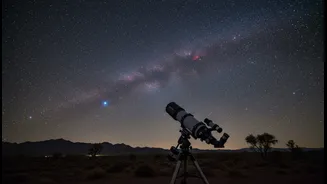
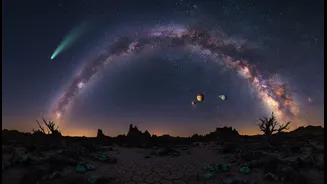
The term “dark-sky window” refers to the period around the New Moon when the sky is at its most unpolluted by moonlight, making it ideal for spotting faint celestial objects. For India, the New Moon falls on July 14, 2026. This creates a prime viewing
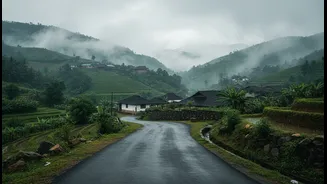
period in the days surrounding this date, when the Moon's sliver is either absent or too small to brighten the night. It is during this time that the Milky Way’s glowing core becomes more visible and fainter stars emerge. While the moonless nights are a gift, the biggest challenge for observers across the subcontinent will be the weather, as July is peak monsoon season for most regions.
What to Look For: A Double Meteor Shower
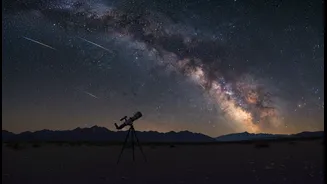
July’s main attraction is a double feature: the Southern Delta Aquariid and Alpha Capricornid meteor showers. Both are active throughout late July and are expected to peak around July 30. The Delta Aquariids are known for a steady stream of faint meteors, producing up to 15-20 per hour in perfect, dark conditions. The Alpha Capricornids produce fewer meteors but are famous for their exceptionally bright and memorable fireballs. Unfortunately, the peak of these showers coincides with a bright Full Moon on July 29, which will wash out many fainter meteors. The best strategy is to look for these shooting stars in the week before the peak, after midnight, when the sky will be darker.
Battling the Monsoon Clouds
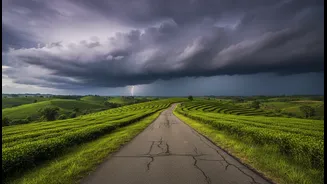
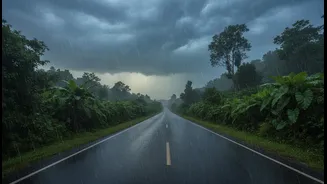
Patience is paramount for any monsoon sky-watcher. Cloud cover is the biggest obstacle, and clear spells can be brief and unpredictable. This is where modern technology becomes an essential tool. Instead of relying on a single forecast, consider using a combination of general weather apps and specialized astronomy apps. Tools like Clear Outside and Astrospheric provide detailed hourly forecasts on cloud cover at different altitudes, transparency (clarity of the air), and 'seeing' conditions (atmospheric stability). These apps can help you identify short windows of clear sky, allowing you to be ready when an opportunity arises. The key is to monitor forecasts frequently and be prepared to act quickly.
Finding the Right Viewing Spot
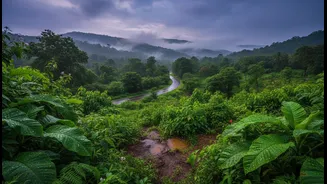
Even with a clear forecast, light pollution from cities can ruin the view. The golden rule of stargazing is to get as far away from city lights as possible. For those facing persistent monsoon rain, certain geographical locations offer a slightly better chance of clear skies. High-altitude regions and areas in a 'rain shadow' (like parts of the Western Ghats or Himalayan deserts) might experience less cloud cover. Locations like Spiti Valley are renowned for their clear, high-altitude skies but are remote. More accessible options during monsoon breaks could include elevated areas like Malshej Ghat in Maharashtra or clearings in Coorg, Karnataka, where breaks in the rain can reveal stunning skies. The goal is to find a safe, open space with an unobstructed view of the sky, away from direct lighting.
Your Essential Stargazing Kit
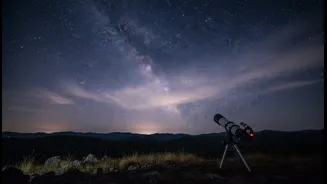
You don't need expensive equipment to enjoy the night sky. The most important tool is your own eyes. Give them at least 20-30 minutes to fully adapt to the darkness for the best experience. A reclining chair or a blanket will make for comfortable viewing. For a closer look at planetary alignments or the Moon's craters, a simple pair of binoculars is highly effective. If you use a flashlight, make sure it’s a red one, as red light doesn't spoil your night vision the way white light does. Finally, have your weather and stargazing apps (like Stellarium or Sky Map) downloaded and ready on your phone to help you identify what you're seeing.