




What Exactly Is El Niño?
El Niño, which means "the little boy" in Spanish, is a naturally occurring climate pattern. It is the warm phase of a larger phenomenon called the El Niño-Southern Oscillation (ENSO). Typically, this cycle recurs every two to seven years and involves
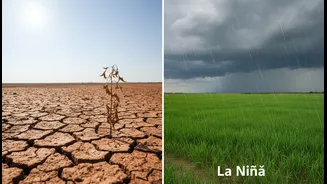
a significant warming of the ocean surface in the central and eastern tropical Pacific Ocean. This isn't just a localised event; this patch of warm water is so vast that it alters atmospheric circulation patterns across the entire planet, influencing weather far and wide. The opposite phase, characterized by cooler-than-average ocean temperatures in the same region, is known as La Niña.
The Pacific-Indian Ocean Connection
To understand El Niño's impact on India, we need to look at a massive atmospheric circulation pattern called the Walker Circulation. In a normal year, trade winds blow from east to west across the Pacific, piling up warm surface water near Asia and Indonesia. This warm water heats the air above it, causing it to rise and form rain clouds, which helps pull moisture-laden winds towards the Indian subcontinent, fueling the monsoon. During an El Niño event, these trade winds weaken or even reverse. The large pool of warm water shifts eastward, away from Asia and towards the Americas. This movement effectively drags the area of rising air and rainfall with it, disrupting the engine that drives the Indian monsoon.
A Weaker, More Erratic Monsoon
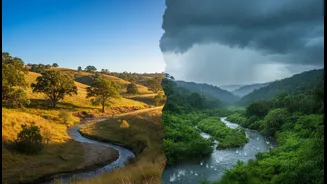
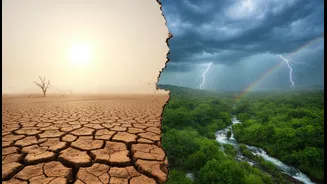
The most direct impact of a strong El Niño is often a weaker southwest monsoon for India. The shift in atmospheric circulation suppresses the formation of rain clouds over the subcontinent, leading to below-normal rainfall. Historically, many of India's significant drought years, such as 2002 and 2015, have coincided with El Niño events. However, the relationship is not a simple one-to-one correlation. Not every El Niño year results in a drought. Paradoxically, while the total seasonal rainfall might decrease, some research shows that the frequency of extreme, short-duration rainfall events can increase during an El Niño. This can lead to a dangerous combination of prolonged dry spells punctuated by intense downpours that cause floods and landslides.
Beyond Rain: The Impact on Temperature
El Niño's influence isn't limited to rainfall; it also has a significant warming effect. El Niño years are often associated with higher-than-average temperatures and more intense heatwaves across many parts of India. The combination of reduced rainfall and clearer skies allows for more solar radiation to reach the ground, pushing temperatures higher. This can lead to increased stress on water resources and a surge in electricity demand for cooling, putting a strain on power grids. Recent analysis from July 2026 suggests that the transition to El Niño could significantly increase the demand for air conditioning, leading to a potential energy generation gap.
The Economic Ripple Effect
Given that about 70% of India's annual rainfall occurs during the monsoon season and agriculture supports a large portion of the population, the economic consequences of a weak monsoon are substantial. A rainfall deficit can lead to delayed crop sowing, reduced soil moisture, and lower yields for crucial kharif crops like rice, cotton, and soybeans. This directly impacts farmers' incomes and can slow down the rural economy. Furthermore, lower agricultural output can push up food prices, contributing to overall inflation, which creates a challenge for the entire economy. A poor monsoon can reduce the agricultural sector's contribution to GDP, dent rural demand, and stoke inflation.