





Understanding the Current Trade Climate
The trade relationship between India and the US has been navigating a complex period. In August 2025, the US implemented significant tariffs, some as high as 50%, on a wide range of Indian goods. This move was part of a broader American strategy to address
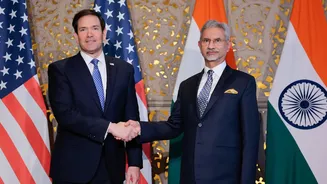
trade deficits and geopolitical factors, including India's energy purchases from Russia. However, recent high-level meetings in October 2026, involving US Secretary of State Marco Rubio and Indian External Affairs Minister S. Jaishankar, have signalled that a deal to revise these terms is 'very close'. The framework for this agreement, first discussed in February 2026, reportedly involves reducing the general tariff rate to around 18%, a substantial drop that could reshape the competitiveness of Indian exports. Despite the optimism, the final details are still under wraps pending legal vetting and an official announcement from both governments.
Which Indian Sectors Are Most Exposed?
The impact of these tariffs isn't uniform across the Indian economy. Certain sectors are more vulnerable due to their high export dependency on the US market. Industries like textiles and apparel, gems and jewellery, auto parts, and some engineering goods have been particularly sensitive to the tariff hikes. When the cost of landing these products in the US increases, Indian exporters face a difficult choice: absorb the cost and reduce their profit margins, or raise prices and risk losing business to competitors from other countries like Vietnam, which may have more favourable trade terms. Micro, Small, and Medium Enterprises (MSMEs), which contribute over 45% of India's total exports, are especially at risk due to their often-limited ability to diversify their customer base away from the US. A reduction in tariffs would provide immediate relief to these sectors, potentially boosting orders and stabilizing employment.
The Supply Chain Ripple Effect
Trade tariffs do more than just affect the final price of an exported product; they create a ripple effect that travels deep into domestic supply chains. A tariff on a finished product, like a piece of machinery, impacts the final sale. But tariffs on intermediate inputs—such as steel, chemicals, or electronic components—can be even more disruptive. Consider a manufacturer in India producing automotive components for export to the US. If a new tariff is placed on American-made microchips that the Indian company needs for its components, its production cost rises. This either forces the company to find a new, potentially less reliable supplier or increases the final cost of its product, making it less competitive. This disruption can lead to production delays, increased inventory costs, and a frantic search for alternative sourcing, impacting everyone from the raw material supplier to the final assembler.
How Businesses Are Strategically Adapting
Indian businesses are not just passively waiting for policy changes; they are actively recalibrating their strategies to build resilience. The volatility in the US trade relationship, coupled with global supply chain instability, has accelerated a push towards diversification. Many companies are exploring new export markets beyond the US to reduce their dependency on a single buyer. Another key strategy is supply chain localization—sourcing more components and raw materials from within India to reduce exposure to international trade friction and shipping uncertainties. Some businesses are investing in technology and efficiency improvements to absorb potential tariff costs without sacrificing their competitive edge. This period of uncertainty is forcing a strategic pivot, pushing firms to become more agile, globally diversified, and less vulnerable to external shocks.
What to Expect Next
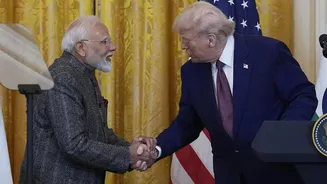
All eyes are on the final announcement of the India-US trade deal. While officials from both nations have expressed confidence that an agreement is imminent, the precise terms and implementation timeline are what truly matter. US President Donald Trump mentioned the deal would be 'much different' from previous pacts, suggesting the final text might hold some surprises. For Indian exporters, the key will be the official list of products and their corresponding tariff rates. The Indian government is pushing for a competitive advantage for its exporters, but the negotiations involve complex give-and-take, with the US seeking greater market access for its own agricultural and industrial goods. Until the deal is signed and ratified, businesses must continue to plan for multiple scenarios, balancing the hope of lower tariffs with the reality of ongoing geopolitical and economic negotiations.