







The Context of Despair
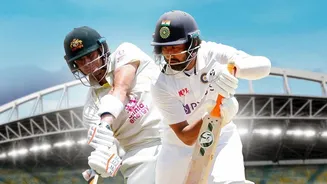
To understand the miracle, you must first understand the hopelessness. It was the second Test of the 2001 Border-Gavaskar Trophy. Steve Waugh's Australian team, considered one of the greatest of all time, was on a record 16-Test winning streak. They had
crushed India by 10 wickets in the first Test in Mumbai and were looking to conquer the 'Final Frontier'—a series win in India. After piling up 445 in their first innings at Kolkata, they bundled India out for a paltry 171. Captain Steve Waugh enforced the follow-on, a decision that seemed to hammer the final nail in the coffin. India was staring at a humiliating innings defeat.
The Partnership That Defied Logic
What followed was perhaps the greatest day in Indian Test history. VVS Laxman, who scored a fighting 59 in the first innings, was promoted to number 3. He was joined by Rahul Dravid when India were 232 for 4, still trailing and with defeat looming. What they did next was superhuman. Laxman and Dravid batted for the entire fourth day of the Test, adding 335 runs without being separated. They battled cramps, fatigue, and a world-class bowling attack featuring Glenn McGrath and Shane Warne. Laxman’s innings of 281 was an exhibition of sublime, wristy strokeplay, at the time the highest score by an Indian in Test cricket. Dravid’s 180 was a masterclass in grit and determination. Their monumental 376-run partnership did more than save the match; it broke the back of the Australian attack and their aura of invincibility.
The Turbanator's Triumph
While the batting heroics of Laxman and Dravid are rightly celebrated, the match was set up and won by a 20-year-old spinner. In Australia's first innings, Harbhajan Singh became the first Indian to take a Test hat-trick, dismissing Ricky Ponting, Adam Gilchrist, and Shane Warne in successive deliveries. This feat briefly halted Australia's charge and gave India a glimmer of hope. After India declared on the final day, setting Australia an improbable target of 384, it was Harbhajan who once again spun a web around the batsmen. He took 6 wickets for 73 runs in the second innings as the mighty Australians collapsed to 212 all out, sealing one of the most incredible victories in cricket history. It was only the third time a team had won a Test after being forced to follow on.
The Birth of a New 'Team India'
This victory was about more than just one result. It was the moment Sourav Ganguly's vision for a new Indian team came to life. Ganguly, a captain known for his aggressive and fearless approach, had been trying to instill a new belief in his side. Before this match, India was often perceived as a team that competed well at home but crumbled under pressure. The Kolkata win shattered that perception. It fostered the belief that India could win from any situation, against any opposition. This was the birth of 'Team India'—a unit that played with passion, aggression, and an unwavering self-belief. It marked the rise of a generation of players like Harbhajan, Zaheer Khan, and Virender Sehwag, who would form the core of a world-beating side.
A Legacy of Resilience
The impact of the 2001 Kolkata Test echoes through Indian cricket to this day. It became a cultural touchstone, a story told to inspire future generations. The 'never-say-die' attitude forged in the heat of Eden Gardens became the team's defining characteristic. Players have often cited that match as the moment that changed the mindset of Indian cricket forever. It taught the team the value of resilience and reinforced the belief that no cause was lost. That single, improbable victory laid the psychological groundwork for future triumphs, including winning the 2011 World Cup and becoming the world's number one Test team. It was not just a win; it was the start of an era.