



The Martian Waiting Game
Exploring Mars has always been a slow, methodical process. The reason is simple: distance. Depending on the planets' orbits, it can take anywhere from four to 24 minutes for a radio signal to travel from Earth to Mars. This means every single command
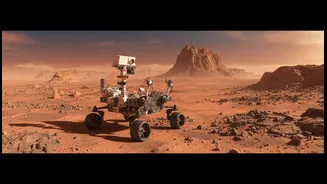
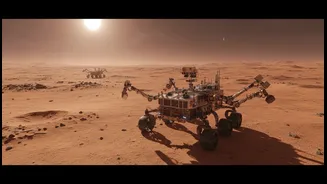
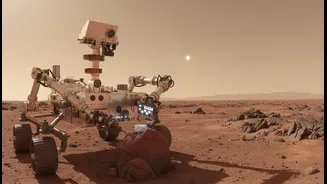
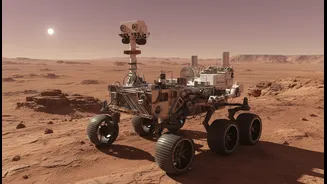
sent to a rover like Perseverance or Curiosity involves a long-distance conversation with a significant delay. Mission controllers on Earth have to painstakingly plan every move, sending instructions and then waiting to see the result. This careful choreography ensures the multi-million-dollar rovers don't drive into a ditch or get stuck in sand, but it severely limits the speed of exploration and the amount of ground that can be covered.
A New Brain for a New World
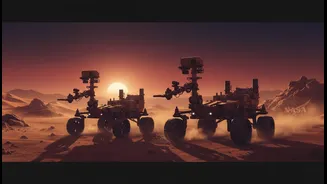
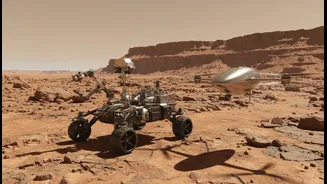
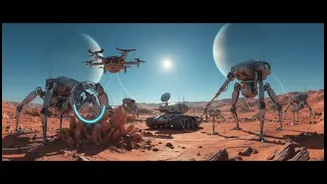
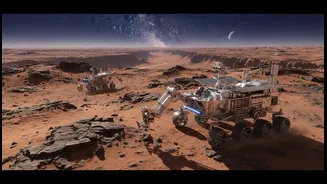
NASA is working to solve this problem by fundamentally changing how its robots think. Instead of just following a pre-written script from Earth, future robotic missions will have the ability to make decisions for themselves. This concept is being spearheaded by projects like CADRE (Cooperative Autonomous Distributed Robotic Exploration). The initiative is designed to test how a team of small, suitcase-sized rovers can work together autonomously, without constant human intervention. The goal is to give robots the ability to perceive their environment, coordinate with each other, and decide on the best course of action to achieve scientific objectives set by their human colleagues back on Earth.
How It Actually Works
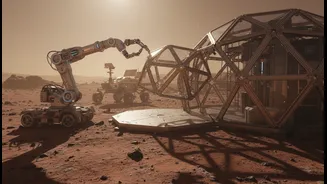
The new approach relies on advanced artificial intelligence and cooperative robotics. In a system like CADRE, which is being tested for a future moon mission, a group of rovers can be given a high-level goal, such as 'explore this one-square-kilometre area'. Using onboard sensors and shared data through a local network, the robots create a cooperative map of the terrain. They can identify scientifically interesting features, spot potential hazards, and then divide the tasks amongst themselves. One rover might investigate an unusual rock formation while another charts a safe path forward, all happening in real-time without waiting for the long communication delay from Earth. Recent tests have even seen the Perseverance rover use AI to plan its own drives on Mars for the first time.
Faster Science, Bigger Discoveries
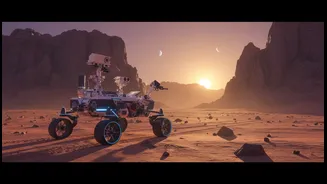
This shift from remote-controlled tools to autonomous scientific partners promises to revolutionize planetary exploration. By eliminating the communications bottleneck, rovers can cover far more ground and collect data much more efficiently. They could investigate transient phenomena like dust devils or frost, which might be gone by the time a human operator on Earth even sees the data. Furthermore, allowing a team of robots to work together enables new kinds of science. For example, they can take simultaneous measurements from different locations to build a 3D map of the subsurface with ground-penetrating radar, a feat impossible for a single rover. This greatly increases the potential scientific return from each mission, accelerating our quest to understand whether Mars ever hosted life.