



Your Personal Time Machine
The universe doesn't operate on our schedule. It operates on the speed of light, a cosmic speed limit that has a fascinating consequence: when we look at distant objects, we are not seeing them as they are, but as they were. The light from these objects has travelled
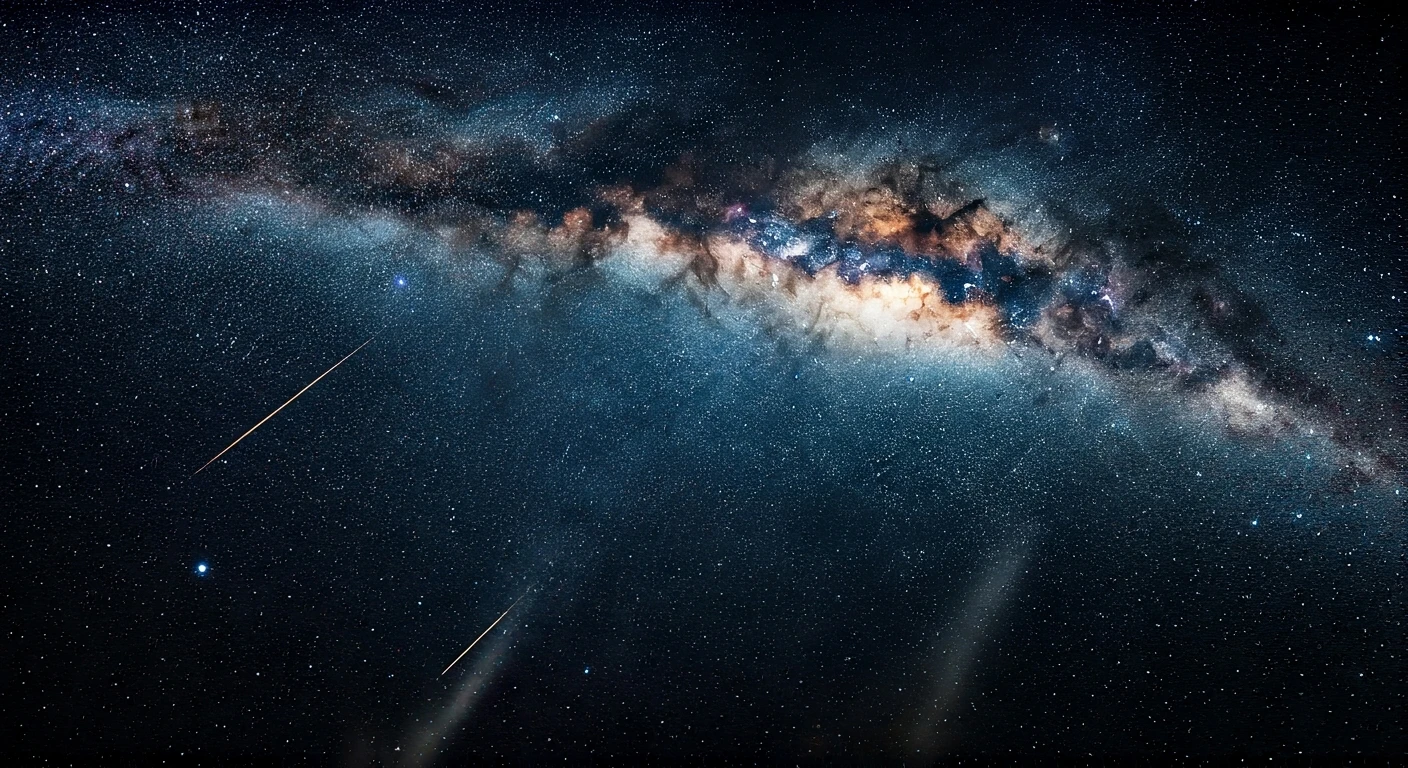
for years, centuries, or even millennia to reach your eyes. This concept, often called 'lookback time', means your backyard on a clear night is the most powerful time machine you will ever encounter. You don't need a fancy telescope or a degree in astrophysics to appreciate this. All you need is a dark patch of sky and a new way of seeing.
Light from the Last Decade
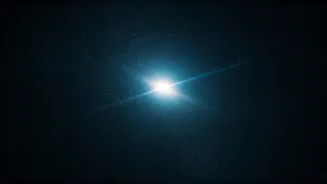
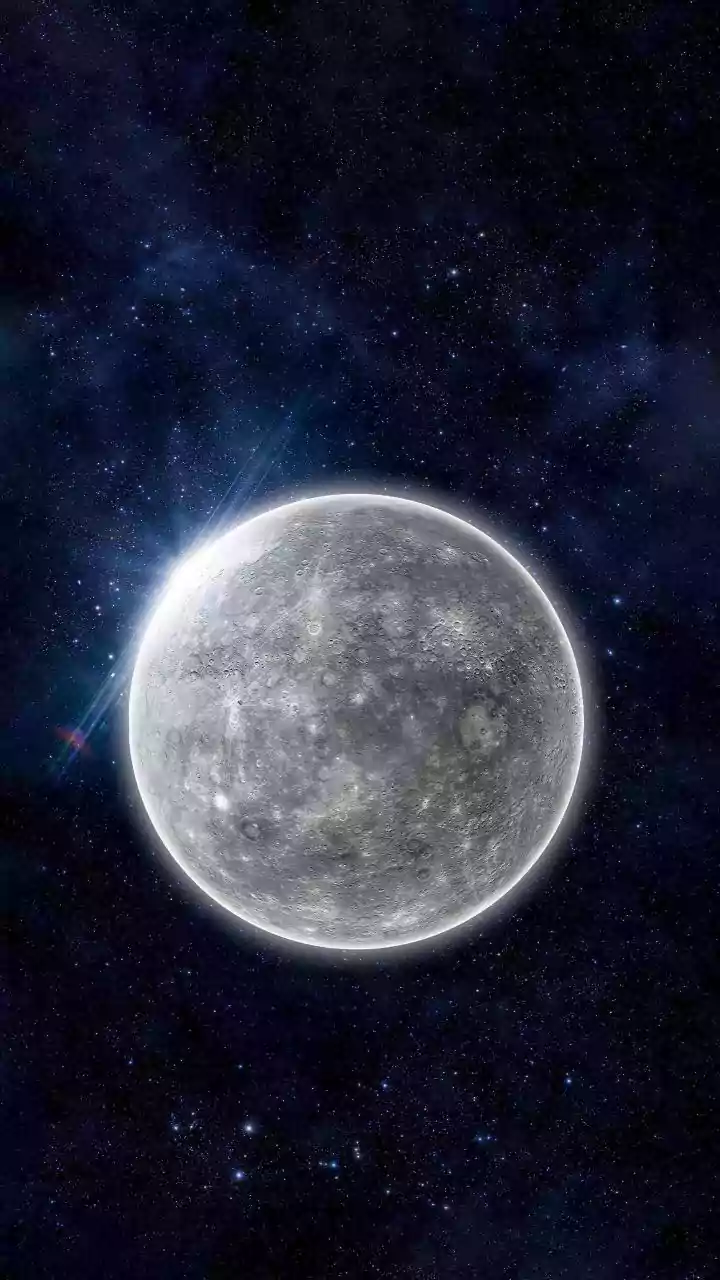
Let’s start with the basics. The Moon isn’t a star, but its light offers a perfect starting point. The pale, reflected sunlight bouncing off its surface takes about 1.3 seconds to reach us. You’re seeing the Moon as it was just over a second ago. Now, find one of the brightest stars. Sirius, the 'Dog Star' in the constellation Canis Major, is a brilliant blue-white jewel. It’s also 8.6 light-years away. This means the light you see from Sirius tonight left the star in late 2015. Think about what you were doing then. That light has been on its journey through space during your entire life since that moment. When you look at Sirius, you are literally looking into the past, waving back at a star from nearly a decade ago.
A Glimpse of Human History
The further we look, the deeper into history we travel. Take Polaris, the North Star. For centuries, it has been the anchor for navigators. Polaris is approximately 430 light-years away. The photons hitting your retina tonight began their journey around the year 1594. While that light was travelling towards Earth, Shakespeare was writing his early plays, the Taj Mahal had not yet been conceived, and the world was a vastly different place. Every time you locate Polaris, you are connecting with light that has been speeding towards you throughout a significant portion of modern human history. It’s a humbling reminder that the cosmos moves on a scale far grander than our own lifetimes.
Witnessing Prehistoric Times
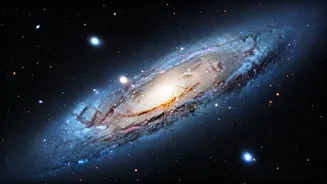
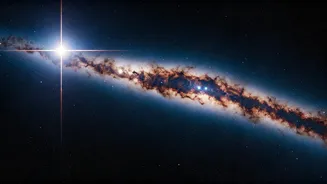
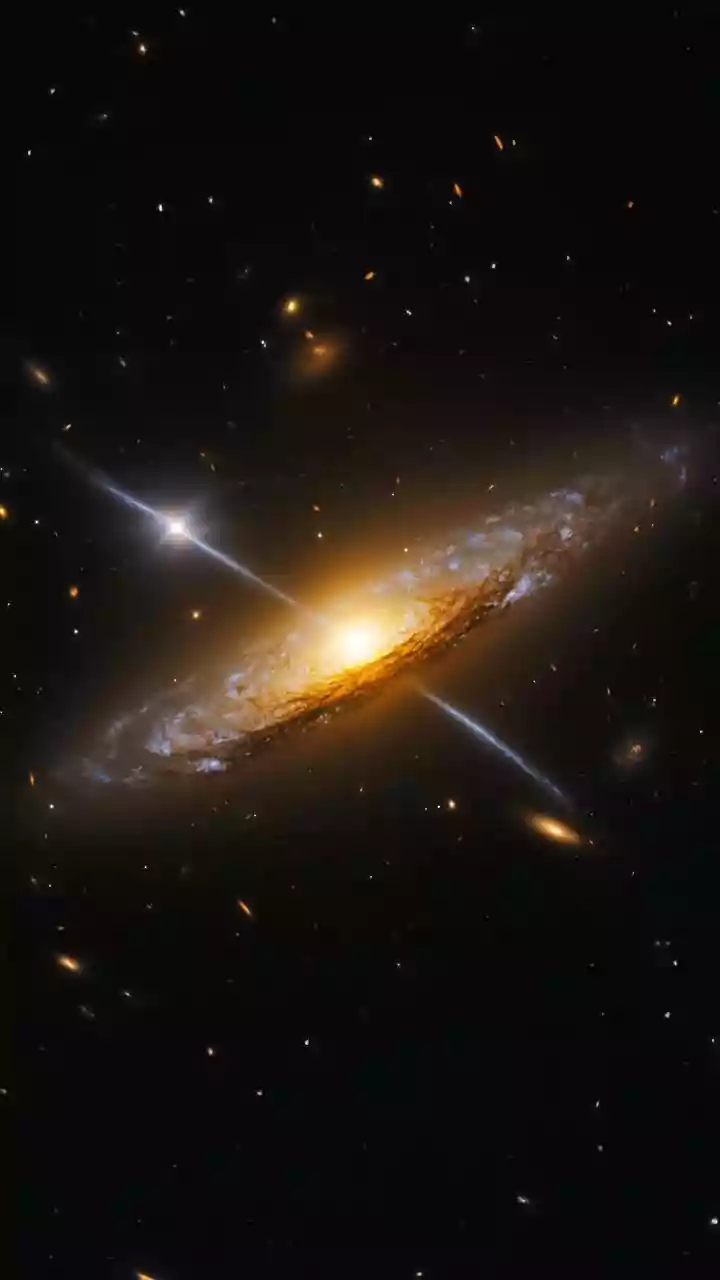
Now for the truly mind-bending part. On a very dark night, far from city lights, you might be able to spot a faint, fuzzy patch of light. This is the Andromeda Galaxy, our closest major galactic neighbour. It is the most distant object the human eye can see unaided. That faint smudge is an entire galaxy of hundreds of billions of stars, and it is 2.5 million light-years away. The light you are seeing from Andromeda tonight left before modern humans, *Homo sapiens*, even walked the Earth. It began its journey when our distant ancestors were just beginning to shape stone tools in Africa. You are seeing a prehistoric universe with your own eyes. It’s not an image in a textbook; it’s a real stream of ancient photons ending their long journey in your eye.
How to See with New Eyes
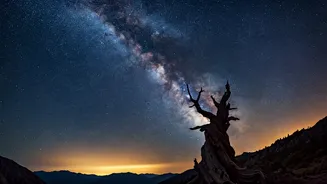
You can experience this tonight. Find a spot away from direct lights and give your eyes at least 15 minutes to adjust to the darkness. You can use a simple stargazing app on your phone (in night mode, to preserve your night vision) to identify a few bright stars or constellations. Don't worry about knowing them all. Pick one. Find out its distance in light-years. Then, simply look at it and contemplate the journey its light has taken. Consider what was happening on Earth when that light began its voyage. This simple mental shift transforms stargazing from a passive activity into an active, deeply personal connection with the history of the universe.