



The Foundation: Perfect Orange Custard
At the heart of these desserts is a beautifully made orange custard. The key to a vibrant flavour is using both the zest and juice of fresh oranges. A basic stovetop custard involves gently heating milk and/or cream, often infused with orange zest to extract
the fragrant oils. In a separate bowl, egg yolks are whisked with sugar until pale and creamy. A bit of cornstarch can also be added to ensure the custard thickens properly. The hot, orange-infused milk is then slowly tempered into the egg yolk mixture, a crucial step to prevent the eggs from scrambling. The entire mixture is returned to the pan and cooked gently, stirring constantly, until it thickens to a consistency that coats the back of a spoon. Finally, fresh orange juice is stirred in off the heat to preserve its bright, tangy flavour.
Elegant Simplicity: Orange Crème Brûlée
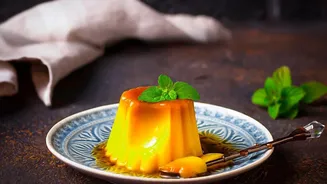
One of the most elegant applications of orange custard is in a crème brûlée. This classic dessert is surprisingly simple to adapt. The custard base is largely the same, relying on egg yolks, cream, and sugar, but with the addition of finely grated orange zest and a splash of juice. The technique of rubbing the orange zest into the sugar before mixing helps release the essential oils for a more intense flavour. The prepared custard is poured into individual ramekins, which are then placed in a water bath (bain-marie) to ensure they bake gently and evenly in the oven. This method results in a silky-smooth set. After chilling for several hours, the custards are sprinkled with sugar and caramelised with a kitchen torch to create that signature crackly, burnt sugar topping, offering a perfect contrast to the creamy orange filling below.
The Showstopper: Orange Custard Tart
An orange custard tart is a visually stunning dessert that’s perfect for gatherings. The process begins with a pre-baked pastry shell, which can be a classic shortcrust, a flaky filo, or a simple crumb base. The prepared orange custard filling is then poured into the cooled tart shell. The tart is baked at a relatively low temperature until the filling is just set, meaning it should still have a slight wobble in the centre. Some recipes call for a custard made with sour cream for an extra tangy, smooth finish. Once cooled and chilled, the tart can be decorated with fresh or candied orange slices, a dusting of icing sugar, or even a dramatic drizzle of dark caramel. It’s a dessert that perfectly balances a buttery crust with a velvety, citrus-infused filling.
A British Classic: The Orange Trifle
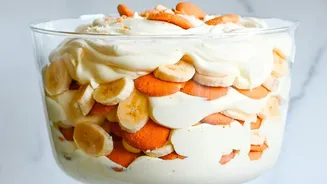
The trifle is a beloved layered dessert, and orange custard fits into it beautifully. A traditional trifle starts with a layer of sponge cake or ladyfingers, often soaked in a liquid like sherry, Grand Marnier, or simply orange juice for a non-alcoholic version. This is often followed by a layer of fruit; in this case, fresh orange segments or a good quality orange marmalade works wonderfully. The cooled orange custard is then poured over the sponge and fruit, filling the bowl and seeping into the layers below. After the custard layer has fully chilled and set, the trifle is topped with a generous layer of whipped cream and perhaps some toasted nuts or chocolate shavings for added texture and flavour. The combination of soft cake, juicy fruit, and creamy custard makes every spoonful a delight.