





A Climate History Book in a Lakebed
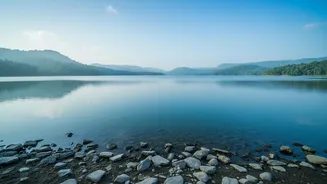
In the heart of India’s Core Monsoon Zone (CMZ), a region stretching across central India that receives the lion’s share of the country’s annual rainfall, lies Raja Rani Lake in the Korba district of Chhattisgarh. Recently, scientists from the Birbal
Sahni Institute of Palaeosciences in Lucknow turned their attention to this unassuming body of water, not for what was in it, but for what was under it. By drilling down and extracting a 40-centimetre-long core of sediment, they retrieved a layered archive of mud that has been accumulating for millennia. Each layer of this sediment core is like a chapter in a natural history book, capturing environmental clues from its time. The scientists were on a mission to read this book, which held records of environmental changes stretching back an incredible 2,500 years.
The Tiniest Time Capsules
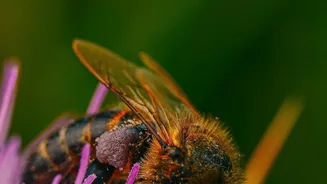
The key to unlocking this ancient climate history lies in palynology, the science of studying microscopic pollen grains. Every year, plants release vast quantities of pollen. While much of it is lost, some falls into lakes and settles on the bottom, where it gets buried in sediment. Thanks to their incredibly tough outer walls, these pollen grains can remain perfectly preserved for thousands of years. By identifying the types of pollen in each sediment layer, scientists can reconstruct what the surrounding vegetation was like. For instance, an abundance of pollen from forest-loving plants suggests a warm and humid climate with plenty of rain, while a higher concentration of grass and herb pollen points to drier conditions. In this way, these tiny grains act as faithful proxies for the climate of the distant past.
A Stronger Monsoon Revealed
The pollen from Raja Rani Lake told a fascinating story. It showed that between roughly 1060 and 1725 CE, the region was dominated by dense tropical deciduous forests. This flourishing forest life points to a climate that was consistently warm and humid, fuelled by a significantly stronger and more intense Indian Summer Monsoon (ISM) than previously believed. This period of powerful monsoons coincides with what is known globally as the Medieval Climate Anomaly (MCA), a time of widespread warming. The study suggests this intense monsoon phase was driven by a combination of large-scale climate factors, including La Niña-like conditions in the Pacific Ocean and increased solar activity, which together pushed more moisture over the Indian subcontinent.
A Bigger Picture Than Weather Stations Offer
This is where the ancient pollen record provides a perspective that modern tools cannot. Instrumental weather records from stations are incredibly precise, but they are also very recent, covering only the last 150 years or so. This is a mere snapshot in the grand timeline of Earth’s climate. The 2,500-year record from the lake sediment provides a much longer baseline, revealing natural cycles of climate variability that occurred long before industrialisation. It doesn't invalidate modern data; instead, it enriches it, showing that the monsoon has always been a dynamic system with periods of greater and lesser intensity. The pollen evidence shows a prolonged period of a strong monsoon during the medieval era, a detail entirely absent from the much shorter instrumental record.
Why This Ancient Record Matters Today
Understanding this deep history is not just an academic exercise. As India faces the modern challenges of climate change, knowing the full range of the monsoon's natural behaviour is critical. This long-term data provides crucial context for our current climate situation and helps scientists build more accurate models to project future trends. By learning how the monsoon responded to past global climate shifts like the Medieval Climate Anomaly, we can better anticipate how it might behave in our own warming world. These insights are vital for long-term planning in agriculture, water resource management, and disaster preparedness for a nation whose fortunes are so closely tied to the rhythm of the annual rains.