


The Limits of the Lone Explorer
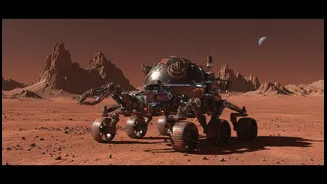
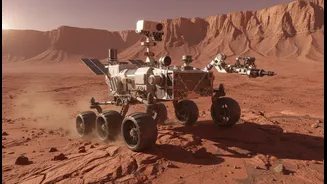
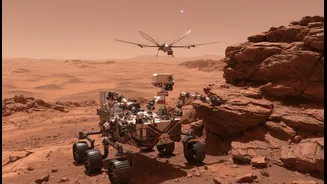
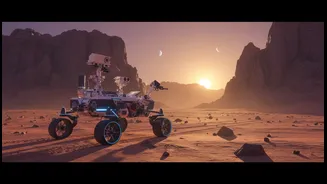
For decades, the model for exploring Mars has been the monolithic rover: a single, large, highly capable robot sent to do it all. From Sojourner in 1997 to the SUV-sized Perseverance, these machines have grown increasingly sophisticated, serving as our lone
emissaries on the Red Planet. They carry a suite of powerful instruments, acting as mobile geological laboratories. However, this all-in-one approach has inherent limitations. The very complexity and expense of these rovers means NASA can only send one at a time, and mission planners must be extremely cautious. A single wrong move, a wheel stuck in deep sand, or a tumble down a steep crater wall could prematurely end a multi-billion-dollar mission. This operational risk means that many of the most scientifically intriguing locations on Mars—such as steep slopes, narrow cave entrances, and rugged highlands—remain tantalizingly out of reach for our current robotic explorers.
A New Strategy: Divide and Conquer
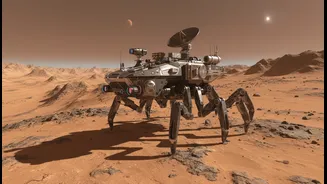
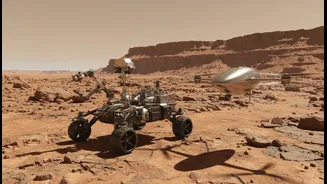
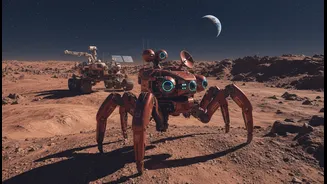
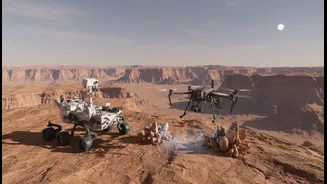
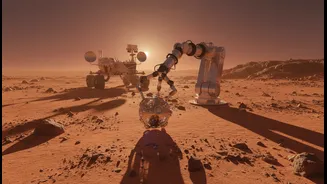
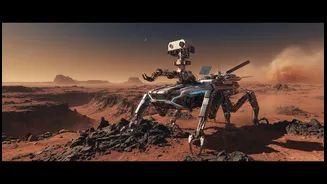
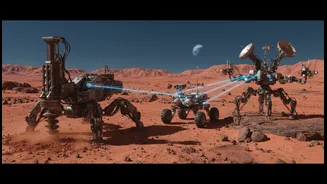
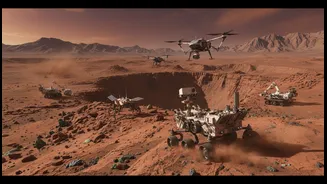
To overcome these challenges, NASA is embracing a new paradigm: distributed and cooperative robotics. Instead of putting all their eggs in one basket, the future of Mars exploration involves deploying teams of smaller, more specialized robots that work together. This strategy, sometimes called a multi-agent system, allows for greater versatility and resilience. Imagine a team that includes a primary rover acting as a mobile base station, while smaller, more agile robots or even aerial drones venture into areas too risky for the main vehicle. This approach allows for parallel investigations, with multiple robots gathering different types of data from various locations simultaneously. This would dramatically accelerate the pace of scientific discovery. If one small unit fails, the mission can continue, a stark contrast to the high-stakes reality of current single-rover missions.
Meet the Robot Teams of the Future
This vision is already taking shape. NASA is actively developing projects like CADRE (Cooperative Autonomous Distributed Robotic Exploration). While its first test mission is slated for the Moon in 2026, the technology is designed for destinations like Mars. CADRE features a trio of shoebox-sized rovers that can autonomously map an area in 3D, communicating with each other without direct commands from Earth for every move. This autonomous teamwork is crucial given the significant communication delays between Earth and Mars, which can be up to 24 minutes one-way. Beyond ground robots, NASA is building on the success of the Ingenuity helicopter. The proposed SkyFall mission, for example, would send three enhanced helicopters to Mars, capable of flying farther and carrying scientific instruments to map subsurface water ice. In July 2026, NASA also awarded contracts to seven private companies under its STRIDE initiative to develop next-generation mobility concepts, ranging from advanced rovers to aerial platforms.
Unlocking Mars’s Final Frontiers
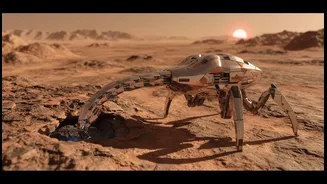
What kind of science does this new approach unlock? The possibilities are vast. A team of robots could create detailed, 3D subsurface maps using ground-penetrating radar from multiple angles, revealing ancient riverbeds or hidden ice deposits that a single rover could never detect. Nimble rock-climbing bots or drones could explore the sheer walls of Valles Marineris, the solar system's largest canyon, or descend into the lava tubes that are prime candidates in the search for signs of past or present life. By distributing the risk, NASA can adopt a more ambitious exploration strategy, sending scouts into a cave or over a ridge to assess the area before committing more valuable assets. This would enable scientists to investigate environments that could have been habitable, directly addressing the core goal of NASA's Mars Exploration Program: to determine if life ever arose on the Red Planet.