
The Universe's Dusty Veil
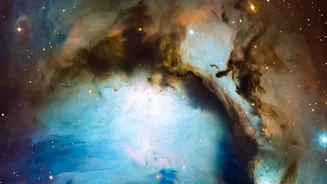
For decades, our view of the cosmos was limited. Telescopes like Hubble, which primarily see visible light, gave us spectacular images, but they had a blind spot. The very places where new stars are born—dense, sprawling clouds of gas and dust called
stellar nurseries—are opaque to visible light. Much like thick smoke can block the view of a fire, these cosmic clouds absorb and scatter the light from the fledgling stars within, leaving astronomers to guess at the processes happening inside. This made studying the earliest phases of star and planet formation incredibly challenging, shrouding a fundamental part of our cosmic history in mystery. To understand how the first galaxies formed and how stars like our own Sun came to be, scientists needed a way to see through the cosmic fog.
Seeing the Invisible with Infrared
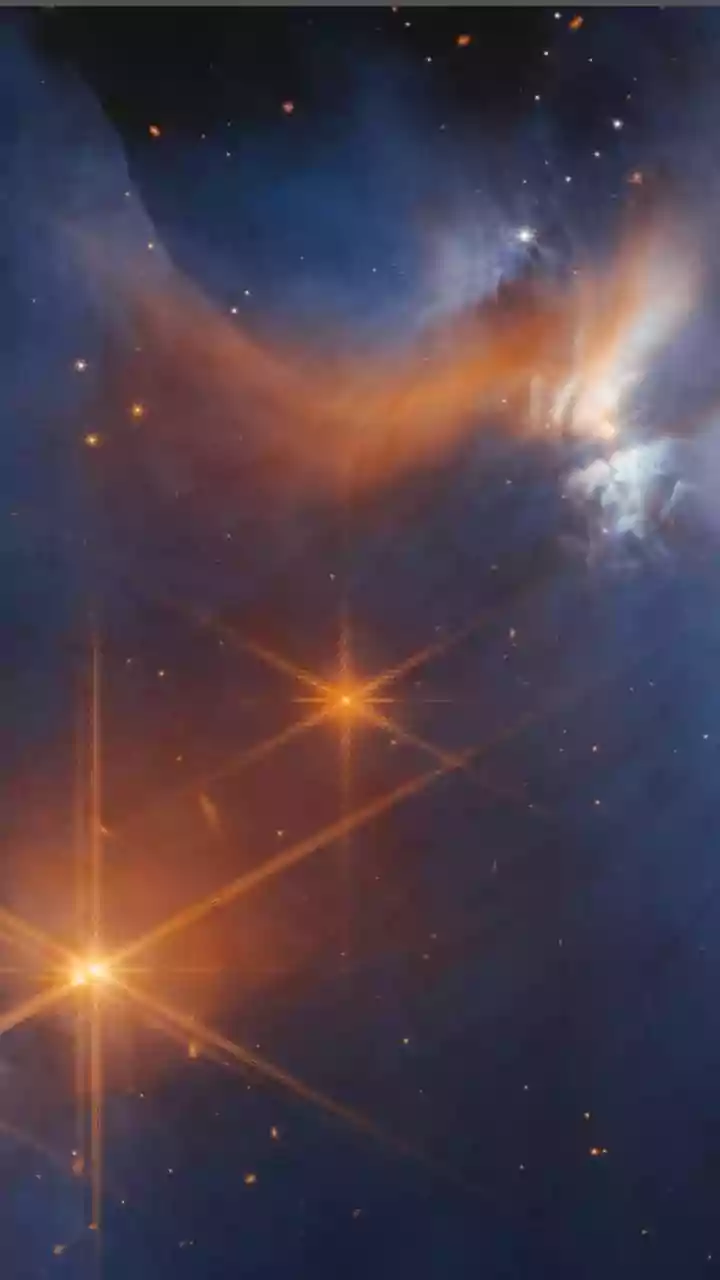
The solution lies in a different kind of light: infrared. Unlike the shorter wavelengths of visible light, the longer wavelengths of infrared radiation can pass more easily through dense clouds of cosmic dust without being scattered or absorbed. This allows a telescope sensitive to infrared to peer inside these stellar nurseries and see the objects hidden within. The James Webb Space Telescope (JWST) was specifically designed for this purpose. It is an infrared observatory, engineered to detect a range of light that is invisible to the human eye but holds the key to two major astronomical quests: seeing through dust and looking back in time. Because the universe is expanding, light from the most distant (and therefore oldest) objects is stretched into longer, redder wavelengths, a phenomenon called cosmological redshift. By capturing this redshifted infrared light, Webb can see the universe's first stars and galaxies as they were forming just a few hundred million years after the Big Bang.
Webb's Infrared Toolkit
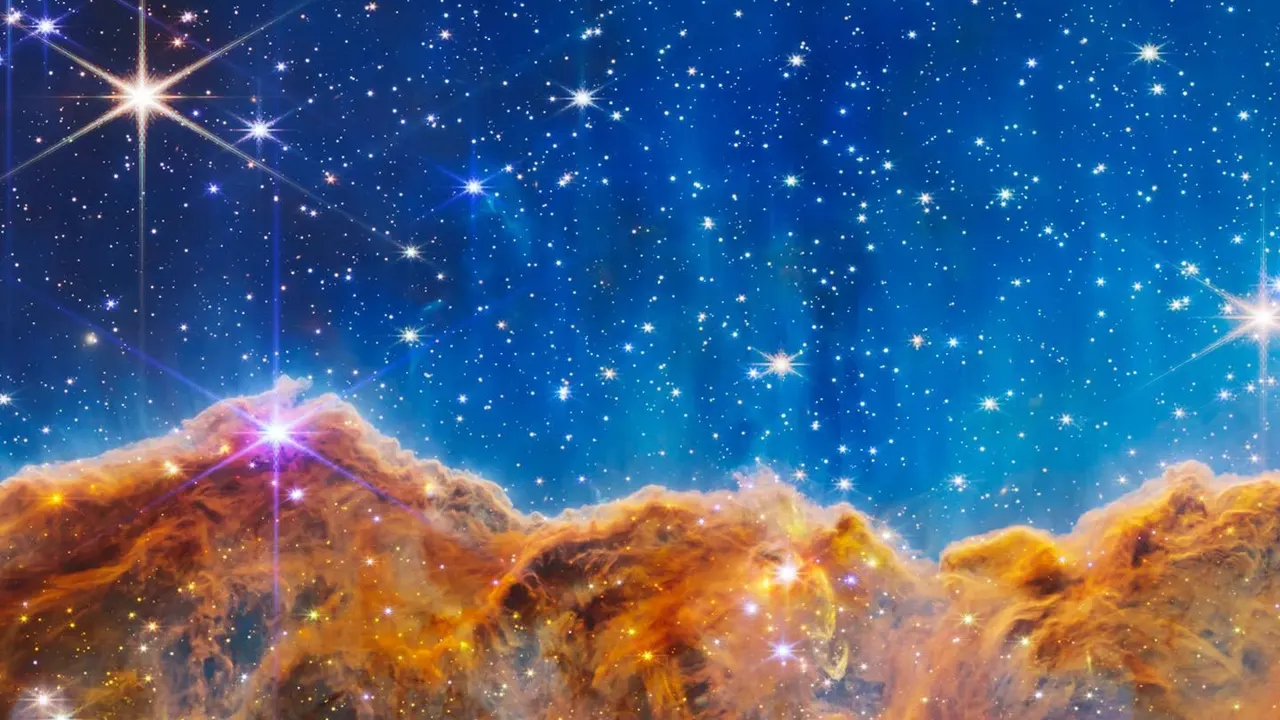
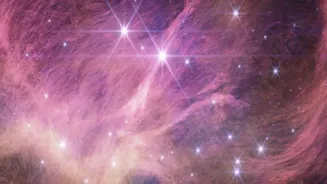
To perform its mission, Webb is equipped with a suite of highly sensitive instruments. The two primary tools for imaging star formation are the Near-Infrared Camera (NIRCam) and the Mid-Infrared Instrument (MIRI). NIRCam is the telescope's main imager, capturing light from the edge of the visible spectrum out to the near-infrared. It excels at piercing through thinner layers of dust to spot newborn stars, revealing details in vast star-forming regions like the iconic Pillars of Creation with unprecedented clarity. MIRI, on the other hand, sees in the mid-infrared range. This allows it to detect the faint, warm glow of the dust itself, which is heated by the protostars forming within it. It can also see through even thicker dust cocoons to observe the very earliest stages of star and planet formation. Together, these instruments provide a comprehensive view of the entire star-birthing process.
A Gallery of Newborn Stars
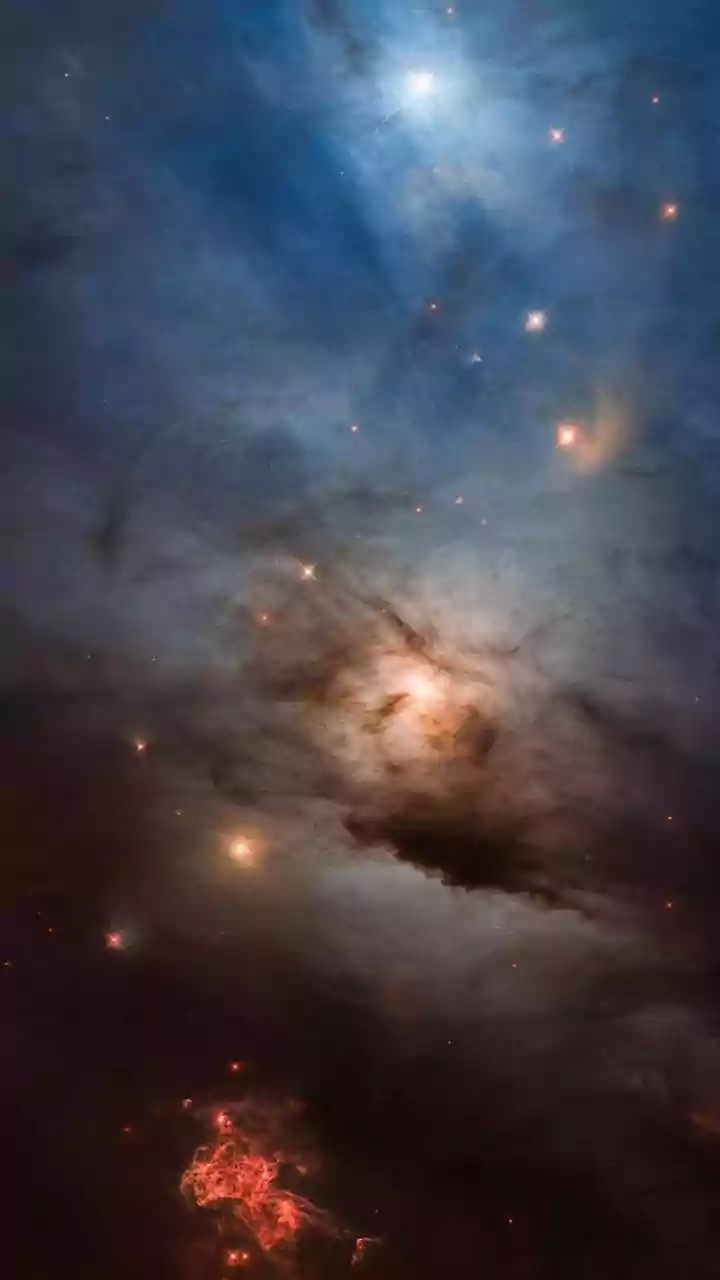
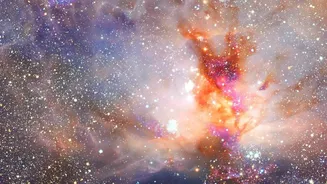
The images and data returned by Webb have been nothing short of revolutionary. Astronomers are now observing protostars—infant stars still gathering mass from their parent cloud—that were previously completely hidden. Webb has revealed that star formation in the early universe may have happened in rapid, intense bursts, with some early galaxies forming stars hundreds of times faster than our Milky Way does today. In regions like the Tarantula Nebula, Webb's images have uncovered tens of thousands of young stars that were previously shrouded from view. It has also found that early galaxies may contain a much larger proportion of smaller, fainter stars than previously assumed, suggesting these galaxies are far more massive than they appear. These findings are not just beautiful pictures; they represent a fundamental shift in our understanding of how cosmic structures are built.
Connecting to Our Cosmic Past
By studying ancient star formation, we are ultimately learning about our own origins. The materials that make up stars, planets, and even ourselves were forged in these cosmic nurseries billions of years ago. Webb is allowing scientists to analyze the chemical makeup of molecular clouds, identifying the ices and organic molecules that provide the raw ingredients for new planetary systems. Understanding how stars formed in the early universe, when there were fewer heavy elements, helps theorists refine their models for how all stars, including our Sun, came into existence. It helps answer foundational questions: Why do we get the distribution of stars we see? And how do different environments give rise to similar types of stars? Each new image from Webb is another piece of the puzzle, connecting us more deeply to the history of the cosmos.