






The Policy That Opened The Floodgates
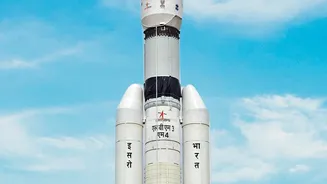
For decades, space in India was the exclusive domain of the Indian Space Research Organisation (ISRO). But a series of landmark reforms, culminating in the Indian Space Policy 2023, has completely redrawn the landscape. This policy formally invited private
companies, or Non-Governmental Entities (NGEs), to participate in end-to-end space activities. This means startups can now legally design, build, and launch their own rockets and satellites, operate ground stations, and even own and disseminate their data. To facilitate this, the government established the Indian National Space Promotion and Authorisation Centre (IN-SPACe) as a single-window agency to authorise, promote, and supervise all private space activities, creating a predictable regulatory environment.
ISRO’s New Role: From Player to Coach
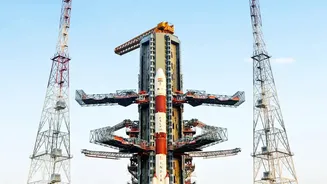
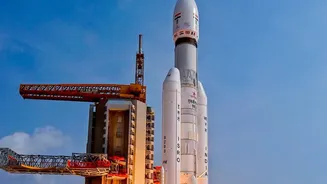
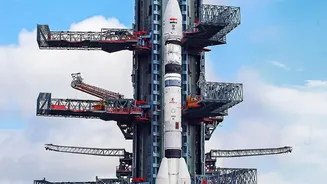
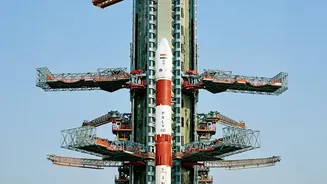
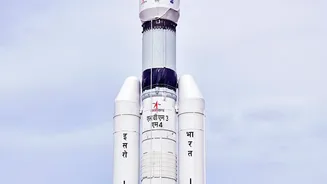
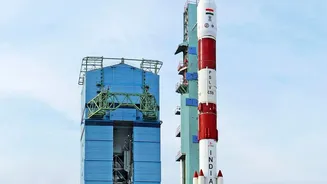
The new policy also redefined the role of ISRO. Instead of handling every aspect of space missions, from manufacturing to launch, ISRO is now transitioning to focus on what it does best: advanced research and development, deep-space exploration, and national security missions. The operational aspects of well-established technologies, like the Polar Satellite Launch Vehicle (PSLV), are being transferred to private industry. ISRO now acts as a mentor and enabler, offering its world-class facilities, technical expertise, and technologies to private companies for a fee. This symbiotic relationship prevents startups from having to reinvent the wheel, drastically reducing their development costs and timelines.
The Rise of 'NewSpace' Economics
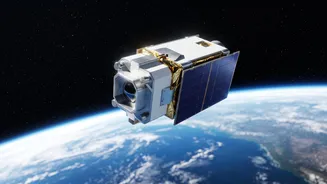
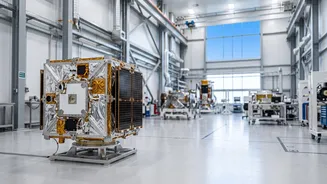
Globally, the cost of accessing space is plummeting, thanks to innovations in reusable rockets and the miniaturisation of satellites. This trend has made space ventures more economically viable than ever before. Indian startups are leveraging this, developing everything from small satellite launch vehicles to constellations of Earth-observation satellites. This focus has moved beyond just launching rockets. Companies like Pixxel are building constellations for hyperspectral imaging, while GalaxEye recently launched a satellite combining optical and radar sensors. These 'downstream' applications—providing data for agriculture, disaster management, logistics, and climate monitoring—are projected to be a massive growth driver for the industry.
A Galaxy of Investment Capital
With a clear policy framework and proven technological capabilities, investors are taking notice. The Indian space-tech sector has seen a significant influx of funding, with total investment crossing $871 million across hundreds of companies. In 2025 alone, startups raised a record $200 million. The government is also catalysing this flow through initiatives like the Fund of Funds for Startups and specific seed funds managed by IN-SPACe. This access to capital is crucial for a sector that demands long development cycles and heavy initial investment, allowing companies like Skyroot Aerospace, Agnikul Cosmos, and Dhruva Space to scale their operations and compete on a global stage.