



The Billion-Dollar Question: Cost
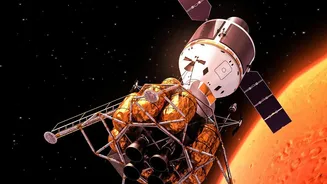
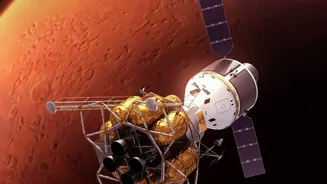
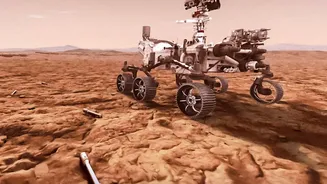
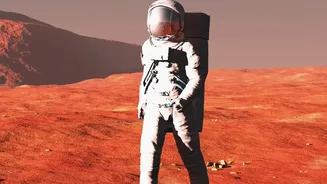
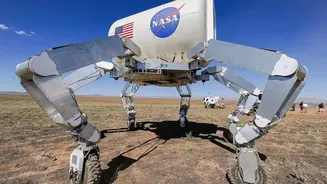
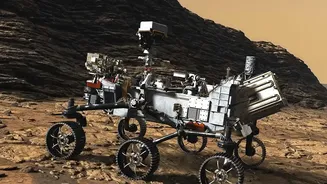
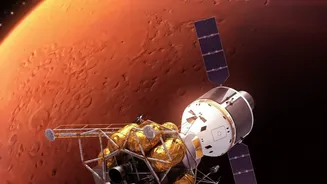
The most significant hurdle for human space exploration is the astronomical cost. Estimates for a single crewed mission to Mars range from $100 billion to as high as $500 billion or more. In stark contrast, a highly complex robotic mission, like NASA’s
Perseverance rover, costs under $3 billion. This vast difference comes down to one simple fact: keeping humans alive in space is incredibly expensive. Astronauts require years of training, life-support systems providing air and water, substantial food supplies, and perhaps most critically, a return ticket. All of this adds immense weight and complexity, which in turn demands more powerful and costly rockets.
Robots: The Frugal Pioneers
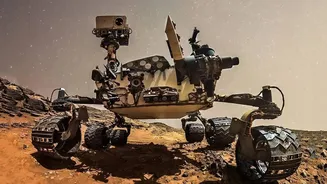
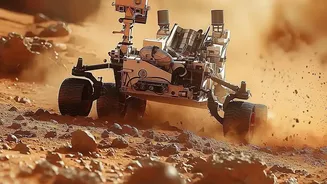
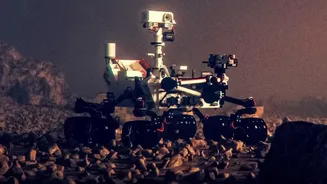
Robotic missions are models of relative efficiency. They don't need life support, food, or a return journey, dramatically reducing launch mass and fuel requirements. Rovers like Curiosity and Perseverance have operated for years on the Martian surface, powered by solar panels or radioisotope thermoelectric generators (RTGs), which provide steady power regardless of dust storms. These machines work tirelessly, gathering data and images for a fraction of the price of a human mission. This cost-effectiveness allows space agencies to fund numerous robotic explorers for the price of one human expedition, diversifying their scientific portfolio and spreading the risk.
The Human Factor: Unmatched Complexity
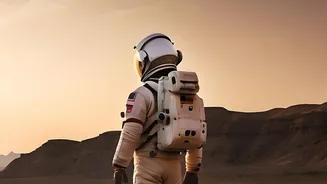
Beyond cost, the complexity of a human mission is staggering. The journey to Mars takes months, exposing astronauts to the severe health risks of deep space radiation from cosmic rays and solar flares. There are also the physiological effects of prolonged weightlessness, including muscle atrophy and bone density loss. On Mars itself, the thin atmosphere provides little protection from radiation and makes landing a massive human-rated vehicle incredibly difficult. Then there are the psychological challenges of isolating a small crew in a cramped environment for up to three years, with communication delays to Earth of up to 24 minutes one way, making real-time conversations impossible.
Robotic Limitations: The Challenge of Autonomy
While robots are durable and cost-effective, they have their own set of complexities. The same communication delay that affects astronauts makes controlling a rover from Earth a slow, painstaking process. A command to move or drill can take nearly an hour for confirmation. This means robots cannot react instantly to unexpected discoveries or dangers. Their actions are limited by their programming and the situations anticipated by their human controllers. While artificial intelligence is improving their autonomy, they still lack the intuition, creativity, and problem-solving skills of a human geologist on the ground. If a complex mechanical failure occurs, there is no way to repair it remotely.
Scientific Return: Speed vs. Endurance
This is where the debate gets truly interesting. Robots offer endurance, collecting vast datasets over many years. The Curiosity rover, for example, has been active for over a decade. However, humans offer unparalleled speed and efficiency. Studies have shown that an astronaut can perform scientific fieldwork and sample collection many times faster than a remote-controlled rover. The Apollo astronauts, in just a few days on the Moon, collected 382 kg of diverse rock samples, a feat far beyond the capabilities of robotic sample-return missions to date. Humans can make intuitive leaps, adapt experiments on the fly, and notice subtle contextual clues that a robot might miss. A human mission is automatically a sample-return mission, providing an immense scientific bounty.