



Mirrors are a designer’s best friend, capable of making a room feel larger and brighter. But wielded without care, they can also create visual chaos. The secret isn't just hanging a mirror; it's about intentional and strategic placement.
Consider the Reflection First
Before you even
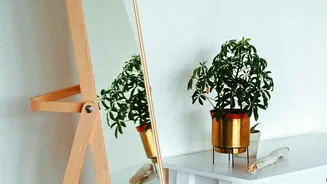
think about lifting a hammer, consider what your mirror will reflect. A mirror's primary job is to bounce back an image, so what it sees is what you'll get double of. If you place a mirror opposite a cluttered bookshelf or a messy corner, you’re only amplifying the chaos. Instead, position it to reflect something beautiful and calming. Aim to capture a view of a window, a favourite piece of art, an attractive light fixture, or a serene, open part of the room. This simple step is the most crucial in ensuring your mirror enhances your space rather than detracting from it.
Get the Size and Scale Right
One of the most common mistakes in decorating with mirrors is choosing the wrong size. A mirror that's too small for a large wall can look like an afterthought, adding to the clutter instead of reducing it. Conversely, a mirror that's too large can overwhelm a small room. A good rule of thumb is to choose a mirror that is roughly two-thirds the width of the furniture it hangs above, such as a console table, sideboard, or sofa. This creates a sense of balance and anchors the mirror to the space, making it feel connected and deliberate rather than random. On a blank wall, a larger mirror is almost always better, as it makes a confident statement and maximizes the illusion of space.
Strategic Placement for Light and Depth
Mirrors are powerful tools for manipulating light. To make a room feel brighter and more open, place a mirror opposite or adjacent to a window. This will catch the natural daylight and bounce it around the room, illuminating darker corners. In rooms without much natural light, mirrors can amplify artificial light sources like lamps and sconces. For narrow spaces like hallways, placing a mirror at the far end can make it feel more expansive. Height is also key. The general standard is to hang a mirror with its centre at eye level, which is typically around 57 to 60 inches from the floor. However, when placing it over furniture, ensure there are at least 4 to 8 inches of space between the bottom of the frame and the top of the piece to avoid a cramped look.
Choose a Frame that Complements, Not Competes
The mirror's frame is just as important as the mirror itself. The frame should complement the existing style of your room, not clash with it. For a modern or minimalist space, a thin metal frame or a frameless design can create a clean, seamless look. In a traditional or rustic home, a warm wood or ornate gold frame can add character and texture. The goal is for the frame to integrate with your decor, helping the mirror feel like a natural part of the environment. An overly elaborate frame in a simple room can look busy and out of place, defeating the purpose of creating a calm, curated space.
Avoid Overcrowding and Awkward Spots
While one large mirror can open up a room, too many mirrors can have the opposite effect, creating a confusing and overstimulated environment. If you want to create a gallery wall of mirrors, treat them as a single piece of art by using consistent spacing and a common element, like frame colour, to unify them. Also, be mindful of where you place mirrors to avoid making people feel uncomfortable. For example, many people dislike watching themselves eat, so hanging a large mirror directly opposite a dining table might not be the best idea. Similarly, mirrors directly facing the front door or a bed are often advised against in Feng Shui and can feel unsettling.