






Moving Beyond a Single Overhead Light
For decades, the standard approach to lighting a living room was a single, central ceiling fixture. While functional, this method often creates harsh, flat light that casts shadows in the corners, making a small room feel even smaller. Modern interior
design understands that to create both atmosphere and a sense of space, you need to think in layers. Relying on one 'big light' flattens a room's depth and fails to adapt to the many functions a living room serves—from a bright workspace during the day to a cozy spot for a movie at night. The secret to unlocking your room's potential is moving away from a single point of light and embracing multiple, softer sources that work together.
The Three Essential Layers of Light
Professional designers build inviting spaces using three distinct types of lighting: ambient, task, and accent. Ambient light is the overall, foundational glow that fills the room, often from an overhead source or wall-washing fixtures. Task lighting is more focused, providing bright, direct light for specific activities like reading or working. Think of a floor lamp by a sofa or an under-cabinet light. Accent lighting is the final, stylistic touch, used to highlight architectural features, artwork, or create visual interest. In a small space, using these three layers together draws the eye around the room, creating depth and preventing the boxed-in feeling that a single, harsh light source can cause.
Modern Ambient Options That Create Space
Today's ambient lighting goes far beyond a simple flush-mount fixture. LED strips are a game-changer for small rooms; tucked away in coves, behind furniture, or under shelves, they provide a seamless, indirect glow that can make a room feel wider and taller. Wall sconces are another excellent tool, as they cast light upwards and outwards, drawing attention to the room's vertical space while freeing up valuable floor and table surfaces. For an even softer effect, floor lamps that direct light upward bounce it off the ceiling for a diffuse, room-filling brightness that eliminates shadows and makes ceilings feel higher. The goal is to wash the walls and ceiling with gentle light, which helps the boundaries of the room recede.
Smart Lighting for Ultimate Versatility
A multi-functional living room requires lighting that can adapt. This is where smart technology offers an easy and powerful upgrade. Smart bulbs, which connect directly to your home's Wi-Fi without needing a complicated hub, allow you to change brightness and even colour with an app or voice command. Brands like Wyze, TP-Link Kasa, and Philips Hue offer affordable, renter-friendly options that simply screw into your existing lamps and fixtures. This means you can transition from bright, cool-toned light for daytime focus to a warm, dim glow for evening relaxation with a single tap. Dimmer switches, whether smart or traditional, are another crucial element for creating a versatile atmosphere.
Choosing the Right Fixture and Temperature
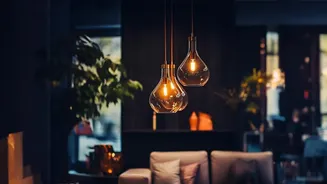
In a small space, the physical fixture is as important as the light it emits. Opt for slim profiles and transparent materials like clear glass that don't take up visual space. An oversized, heavy fixture can feel oppressive, so scale is key. Just as important is the light's colour temperature, measured in Kelvin (K). For a relaxing, cozy haven, choose bulbs with a warm temperature (around 2700K-3000K), which mimics the gentle glow of a sunset. This warm light has a physiological effect, helping your body wind down and making a space feel more intimate. Cooler, bluer lights (4000K and above) are better for alertness and can feel clinical in a living space, so they are best reserved for task-oriented areas.