




Why Wool Needs Special Attention
Before deciphering any labels, it’s helpful to understand what makes wool unique. Each wool fibre is covered in tiny, overlapping scales. When exposed to the twin forces of heat and friction (like in a standard hot wash and tumble dry), these scales open
up and lock together, causing the fibres to seize up. This process, called felting, is what causes irreversible shrinkage and gives the fabric a dense, matted texture. The goal of proper wool care is to clean the garment while keeping these scales smooth and happy, preserving the natural structure and softness of the fibre.
Decoding the Five Main Symbols
Care labels use a standardised system of five basic symbols to communicate instructions across languages. These are the washtub (washing), the triangle (bleaching), the square (drying), the iron (ironing), and the circle (professional cleaning). An 'X' through any symbol means 'do not do this'. For wool, the most critical symbols relate to washing and drying. You'll often see a washtub with a hand in it, which means hand-wash only. A number inside the tub, like '30', indicates the maximum water temperature in Celsius, which should never be exceeded for wool. Lines underneath the washtub symbol signal the need for a gentle cycle; one line means a mild wash, while two lines indicate a very delicate, low-agitation wool cycle.
The Gentle Art of Washing
Always check the label first. If it says 'hand wash', that is the safest method. Fill a basin with lukewarm water (no warmer than 30°C) and add a small amount of a pH-neutral, wool-specific detergent. Normal detergents can contain enzymes that break down the protein fibres in wool over time. Turn the garment inside out to reduce friction on the outer surface, submerge it, and gently press the water through it. Let it soak for about 10-15 minutes, but avoid scrubbing or twisting the fabric. If the label permits machine washing, use the wool or delicates cycle with a low spin speed (no more than 600 rpm) and cold water. Placing the item in a mesh laundry bag provides extra protection from snagging and friction.
Drying Without Disaster
This is where many well-intentioned wool owners go wrong. Never hang a wet wool garment to dry, as the weight of the water will stretch the fibres and ruin its shape. The symbol for 'do not tumble dry'—a square with a circle inside that is crossed out—is almost universal for woollen care. The heat and tumbling action of a dryer are the fastest way to shrink and felt your jumper. Instead, gently press the excess water out; never wring it. The best technique is to lay the garment flat on a clean, dry towel, roll the towel up like a sleeping bag, and press gently to absorb moisture. Then, unroll it and lay the garment flat on a drying rack or another dry towel, away from direct sunlight or heat, reshaping it as needed.
Smart Storage and Upkeep
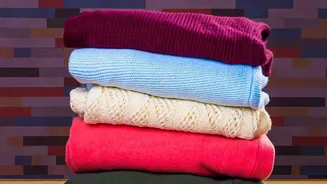
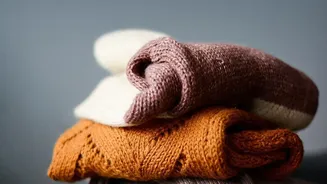
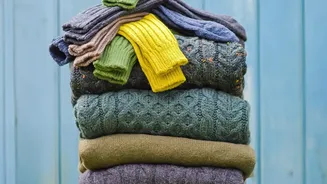
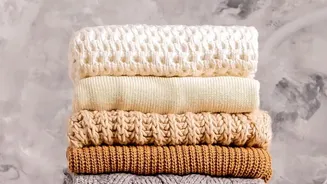
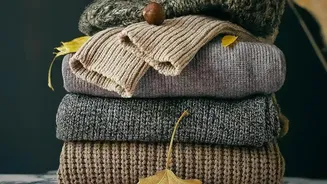
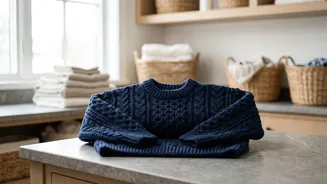
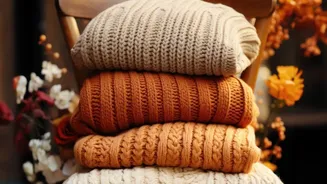
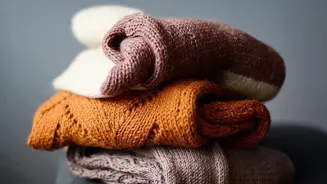
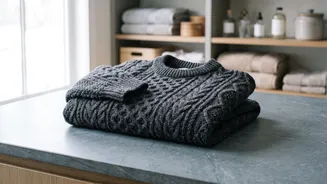
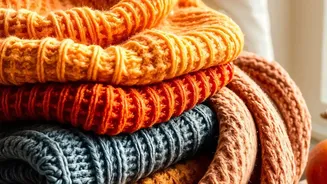
Proper storage is just as crucial as proper washing. To prevent stretching at the shoulders, always fold your woollen clothes rather than hanging them. Before putting them away for the season, ensure they are completely clean, as moths are attracted to lingering skin oils and food particles, not just the wool itself. Store them in a cool, dry place inside breathable cotton bags. Avoid plastic containers, which can trap moisture and lead to mildew. To naturally repel moths, add cedar blocks or lavender sachets to your storage area. If you notice small fuzz balls, or 'pills', forming on the surface from friction, don't pull them off, as this can damage the yarn. Instead, gently remove them with a fabric comb or a battery-operated fabric shaver.