




A Fresh Look at an Old Friend
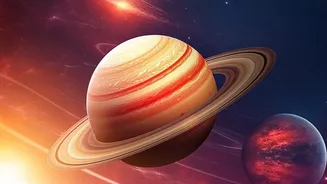
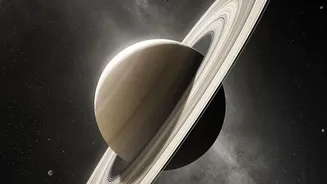
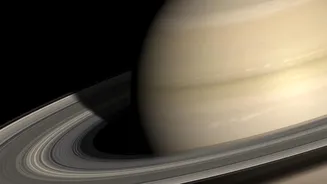
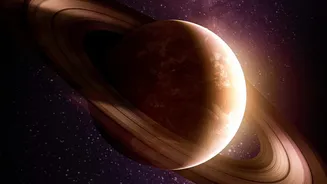
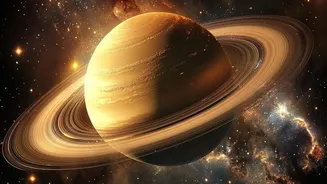
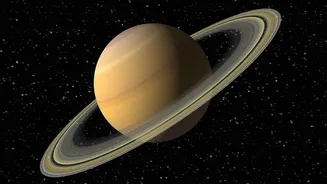
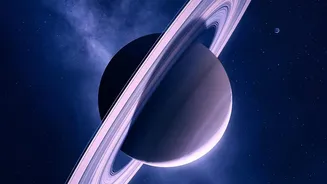
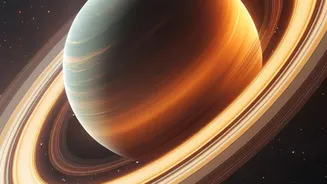
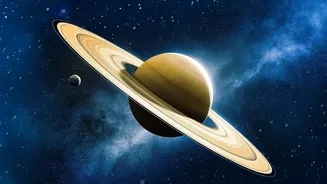
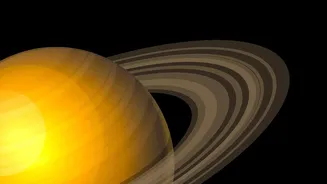
Saturn has been a subject of human fascination since ancient times, but it’s the planet’s stunning ring system that truly sets it apart. Traditionally, scientists believed these rings were likely as old as the planet itself, forming some 4.5 billion years
ago. Composed almost entirely of water ice particles, ranging in size from grains of sand to massive boulders, they were seen as a pristine and ancient remnant of our solar system's formation. However, data gathered by NASA’s Cassini spacecraft, which orbited the planet for 13 years, began to unravel this long-held belief. The surprising cleanliness of the rings—they are about 98% pure water ice—suggested they couldn't possibly be that old, as billions of years of bombardment by micrometeoroids should have darkened them considerably.
The Plot Twist: The Rings Are Young
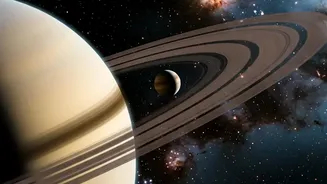
Recent studies have delivered a startling conclusion: Saturn's rings are remarkably young by astronomical standards. Analysis of the rate at which space dust pollutes the pristine ice suggests the rings are no more than 400 million years old. This means they likely formed around the time dinosaurs roamed the Earth, a cosmic blink of an eye compared to Saturn's multi-billion-year history. This finding solved one mystery—why the rings are so clean—but opened up an even bigger one: how did they form so recently? One leading theory, bolstered by supercomputer simulations in 2026, proposes a violent origin story involving a catastrophic collision between Saturn's largest moon, Titan, and another massive, now-vanished moon. This event would have shattered the lost moon, creating the debris that eventually settled into the iconic rings we see today.
A Ring-Planet Interaction Never Seen Before
The mystery deepens with another unexpected discovery, this time from a combined analysis of data from the Hubble Space Telescope and other missions. Astronomers found that Saturn’s rings are actively heating the planet's upper atmosphere. This phenomenon, never before seen in our solar system, is caused by a steady "rain" of icy ring particles falling onto the planet. This influx of material, pulled in by Saturn’s gravity, releases energy and heats the atmospheric gas, causing it to glow in ultraviolet light. While scientists knew the rings were slowly disintegrating, the direct impact on the planet's atmospheric temperature was a complete surprise. This interaction not only changes our understanding of Saturn but also provides a potential tool for discovering ringed planets orbiting other stars, by looking for a similar atmospheric glow.
A Fleeting Beauty
The same data that reveals the rings' dramatic past and present also foretells their future demise. The constant rain of particles into Saturn's atmosphere means the rings are disappearing at a surprisingly fast rate. The Cassini mission measured this 'ring rain' and found that tonnes of ice are draining into the planet every second. At this rate, the rings are expected to vanish entirely within the next 100 to 300 million years. This makes our moment in cosmic history incredibly special; we are living in a precise window of time that allows us to witness the breathtaking beauty of Saturn's rings before they are gone forever. The rings are not a permanent fixture but one of the solar system's most magnificent, temporary treasures.