





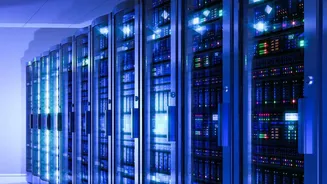
India's digital backbone is set for an unprecedented expansion. A new forecast from Crisil Ratings predicts a massive investment boom in data centres, fuelled by the voracious computing appetite of artificial intelligence.
A Five-Fold Surge in Capacity
According to a recent report
from Crisil, India's data centre industry is on the verge of an investment 'supercycle'. The agency projects that installed capacity will explode, increasing five-fold to approximately 7.5 gigawatts (GW) by March 2030. This phenomenal growth is expected to attract investments of more than Rs 3 lakh crore over the next four financial years. The primary drivers are the widespread adoption of generative AI (GenAI), ongoing enterprise digitalisation, and soaring data consumption across the country. This isn't speculative growth; Crisil notes that nearly half of this upcoming capacity is already committed under long-term contracts, significantly reducing investment risks.
The AI and Hyperscaler Effect
At the heart of this boom is the insatiable demand from artificial intelligence. AI and GenAI workloads are incredibly power-hungry, requiring specialised, high-density computing environments that are fundamentally different from traditional IT needs. Training a single AI model can consume enormous amounts of electricity, and almost all of it turns into heat that needs to be managed. This has led to what some call an 'infrastructure reckoning', where the demand for AI is colliding with the physical limits of power and cooling. This need is being met by hyperscalers—global cloud giants like AWS, Microsoft Azure, and Google Cloud—who are pre-committing to hundreds of megawatts of capacity in India specifically for their AI workloads. These hyperscalers are expected to lease between 75-80% of India's data centre capacity by 2030, up from about 60-65% in 2026.
The Real-World Bottlenecks
While the demand is clear, building these advanced digital facilities is a race against significant physical constraints. Crisil highlights that the pace of expansion critically depends on timely power connectivity, regulatory approvals, and disciplined project execution. Power is emerging as the main bottleneck. The report notes that nearly three-fourths of the upcoming 6 GW of capacity will be concentrated in Mumbai, Hyderabad, and Visakhapatnam. By 2030, the power demand from data centres in these cities could equal a substantial portion—as much as 60% in Mumbai and 80% in Visakhapatnam—of their entire current peak electricity demand. This puts immense pressure on local grids and makes transmission upgrades essential to avoid delays and cost overruns. Other major challenges include securing suitable land and ensuring water availability for advanced cooling systems.
India's Competitive Edge
Despite the hurdles, India holds several structural advantages that make it an attractive global data centre hub. According to Crisil, development costs in India are around 20% lower than in competing Asia-Pacific markets, thanks to more competitive land, construction, and labour costs. When combined with lower power tariffs, this allows data centre operators in India to offer rental rates that are 30–35% lower than in peer markets. Furthermore, the ability to develop large campuses powered by renewable energy is a major draw for global hyperscalers, who are increasingly focused on meeting ambitious sustainability goals. The high utilisation of existing facilities, at around 90%, and long contract tenures of $15–$20$ years provide strong revenue visibility for developers, further boosting investor confidence.