








The End of the Double-Hop Journey
For years, international travel for millions of Indians living outside the major metropolitan areas meant a tedious two-step process: a domestic flight to a crowded hub like Mumbai or Delhi, followed by a long layover and a second check-in for the overseas
leg. That frustrating reality is beginning to change. Starting July 15, 2026, international flights are resuming from Indore's Devi Ahilya Bai Holkar Airport after a nearly five-month hiatus. Air India Express is launching a direct service to Abu Dhabi, a move that does more than just reconnect central India with the UAE. By linking directly to Abu Dhabi's Zayed International Airport, passengers from across Madhya Pradesh gain seamless access to a major global transit hub with onward connections to more than 80 cities worldwide. This strategic shift allows travellers to bypass the congestion of India's traditional metro airports, saving time and simplifying their journey. The new route replaces a previous service to Sharjah, with experts noting Abu Dhabi offers a more streamlined gateway for business professionals, students, and tourists.
Navi Mumbai: A Pressure Valve for a Saturated System
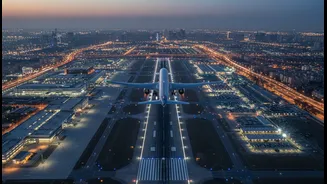
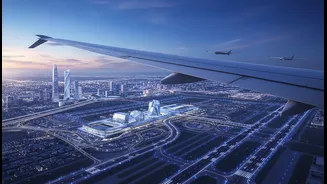
While Indore represents the empowerment of a Tier-2 city, the new Navi Mumbai International Airport (NMIA) tackles a different but related problem: the severe capacity crisis at legacy hubs. Mumbai's existing Chhatrapati Shivaji Maharaj International Airport (CSMIA) has been operating at nearly 87% of its design capacity, leaving little room for growth and causing frequent congestion. The much-anticipated NMIA is poised to act as a critical pressure valve. After commencing domestic operations in late 2025, the airport is scheduled to launch its first international flights on July 15, 2026. Fittingly, the inaugural flight will be an Air India Express service to Abu Dhabi, mirroring the airline's strategy in Indore. This launch marks the beginning of a new era for the Mumbai Metropolitan Region, creating a dual-airport system designed to handle the region's soaring air traffic demand. Experts project that such alternate airports will handle 20-25% of their region's total traffic by 2030, fundamentally altering India's aviation landscape.
A New Blueprint for Indian Aviation
The developments in Indore and Navi Mumbai are not isolated incidents but key components of a larger national strategy. The Indian government has been actively promoting regional air connectivity through policies like the revamped Viksit UDAN scheme, which aims to develop infrastructure and encourage airlines to operate in underserved Tier-2 and Tier-3 cities. Airlines are enthusiastically embracing this vision. By establishing direct international routes from non-metro cities, carriers like Air India Express and IndiGo are tapping into vast, underserved catchment areas. They are recognizing that the demand for global travel is no longer concentrated in a handful of megacities. This strategy diversifies airline revenue streams and builds brand loyalty in fast-growing markets. It represents a pivot from the traditional hub-and-spoke model, where smaller cities feed into larger ones, to a more distributed network where multiple Indian cities have their own direct link to the world.
The Economic Ripple Effect
The benefits of this aviation decentralization extend far beyond passenger convenience. Airports are powerful economic engines, and the establishment of new international gateways stimulates local and regional economies. The new connectivity is a boon for trade, making it easier for businesses in central India to connect with global markets. It also boosts tourism, both inbound and outbound. For the large Indian diaspora and families of students studying abroad, these direct flights offer a more accessible and emotional connection home. Furthermore, the infrastructure development surrounding new airports like NMIA is expected to create entire economic corridors, attracting investments in logistics, manufacturing, and hospitality. As these new routes mature, they will not only ease the burden on old airports but also foster more balanced economic growth, spreading opportunities far beyond the traditional metro centers.