


The Contenders: A Tale of Two Legends
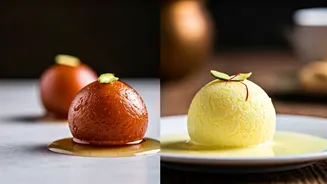
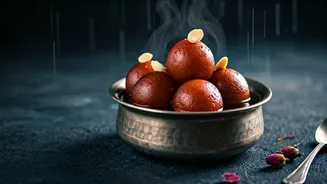
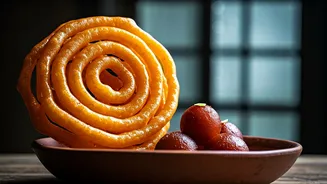
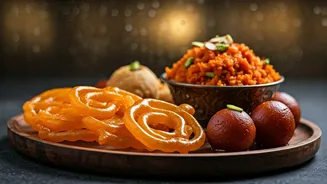
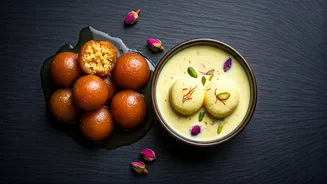
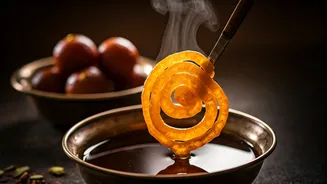
In one corner, we have the undisputed champion of festive indulgence: the Gulab Jamun. These are soft, fried balls made from milk solids (khoya) or milk powder, dunked into a fragrant, warm sugar syrup often infused with rose water and cardamom. [2, 15]
When served warm, they offer a feeling of pure, unadulterated comfort, making them a fixture at celebrations from Diwali to weddings. [18, 19] In the other corner stands the elegant and sophisticated Rasmalai. Hailing from the eastern part of India, this dessert is a picture of delicacy. [17] It consists of soft, flattened discs of chhena (freshly curdled cheese) that are gently cooked in sugar syrup and then soaked in a thickened, sweetened milk (rabri), which is flavoured with saffron, cardamom, and garnished with nuts like pistachios and almonds. [3, 9, 13]
Round 1: The Origin Story
The history of these sweets is as rich as their flavour. Gulab Jamun has roots that trace back to medieval India, with a distinct Persian influence brought by the Mughals. [17, 22] The name itself is a giveaway: 'Gulab' (rose) refers to the rose-water-scented syrup, and 'Jamun' is a nod to the Indian black plum, which the fried balls resemble in shape and colour. [17, 21] It is believed to be an evolution of a Persian sweet, adapted and perfected in the royal kitchens of India. [21, 22]
Rasmalai, on the other hand, is a proud product of Bengali confectionery genius. [17] Its name literally translates to 'juicy cream' ('Ras' for juice and 'Malai' for cream), which perfectly describes the experience of eating it. [17] It's a more recent innovation compared to the Gulab Jamun, evolving from another Bengali classic, the Rasgulla, and represents the region's mastery over milk-based sweets. [13, 24]
Round 2: The Texture and Flavour Face-Off
Here’s where the clash truly intensifies. A Gulab Jamun offers a dense, melt-in-your-mouth experience. [24] The exterior is slightly firm from being fried to a golden brown, while the inside is soft, almost cake-like, having soaked up the sugary syrup. [7, 12] The flavour is intensely sweet and rich, dominated by the warm notes of cardamom and the floral hint of rose. [2]
Rasmalai provides a contrasting sensation. The chhena discs are incredibly light and spongy, designed to absorb the creamy milk sauce they are bathed in. [13, 24] Each bite releases a burst of the cool, fragrant milk. The flavour is more subtle and complex—creamy, milky, and nutty from the garnishes, with the luxurious aroma of saffron taking centre stage. [11] It is served chilled, making it a refreshing counterpoint to the warmth of the Gulab Jamun. [13]
Round 3: The Ultimate Monsoon Verdict
So, which sweet wins the monsoon crown? The argument for Gulab Jamun is strong. On a damp, chilly evening, a bowl of warm Gulab Jamun is like a hug from the inside. [14] Its richness and warmth are the perfect antidote to the monsoon blues, making it an incredibly satisfying comfort food. [14, 15] It's the dessert you crave when you're curled up listening to the rain.
However, Rasmalai puts up a surprisingly strong fight. While many crave warmth, the monsoon season in India is also famously humid. In the sticky, muggy weather, a chilled bowl of Rasmalai can be incredibly refreshing. Its lightness feels less heavy than a deep-fried sweet, and the cooling sensation can be a welcome relief. Some might even argue that while warm pakoras and chai are essential, a cool dessert provides the perfect balance.