




The Soul of the Snack
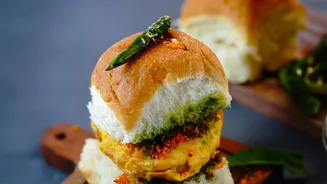
Before we dive into recipes, it's essential to understand the role of green chutney, or hari chutney, in the Vada Pav ecosystem. It’s not just a spread; it’s a crucial balancing act. It provides a fresh, cooling counterpoint to the spicy, dry garlic chutney (lasun
chutney) and cuts through the richness of the fried potato vada. Slathered on the fluffy pav, it moistens the bread and infuses every bite with a burst of vibrant, herby flavour. Without it, the Vada Pav is simply not complete.
The Coriander-Chilli Foundation
At its heart, nearly every green chutney begins with a non-negotiable base: fresh coriander leaves and green chillies. This combination provides the foundational fresh, herbaceous, and spicy notes. Tender stems of coriander are often included as they are packed with flavour. The choice and quantity of green chillies are your first customisation point—use a spicier variety or increase the quantity for a fiery kick, or deseed them for a milder warmth. Ginger and garlic are also common additions, lending a pungent depth that rounds out the base flavour.
Approach 1: The Purist's Coriander-Mint
One of the most popular approaches involves the addition of fresh mint leaves (pudina). The classic ratio is often two parts coriander to one part mint, but this can be adjusted to your preference. Adding mint introduces a cooling sensation and a sharp, sweet aroma that beautifully complicates the chutney's profile. This version is incredibly refreshing and is a favourite in many households and chaat stalls. To maintain the bright green colour, some chefs recommend blending the herbs with a few ice cubes or ice-cold water.
Approach 2: The Tangy and Sharp
Every good green chutney needs an acidic element for that characteristic 'zing'. Lemon juice is the most common choice, providing a clean, bright sourness that also helps preserve the chutney's vibrant green colour. However, this is another area ripe for experimentation. In some regions, tamarind (imli) is used for a deeper, sweeter tang. During mango season, raw mango (kairi) is often blended in for a sharp, uniquely seasonal sourness. Some recipes also call for amchur (dry mango powder) or chaat masala for an extra layer of tangy complexity.
Approach 3: The Thick and Hearty
While restaurant chutney is often liquidy, the chutney for Vada Pav and sandwiches needs a thicker, more spreadable consistency to avoid making the pav soggy. This is where thickeners come in. Roasted chana dal (putani) or roasted peanuts are popular additions, lending a nutty flavour and a creamy texture. Some Mumbai street vendors famously use a slice of plain white bread or even fried besan bits (chura) to achieve that perfect, clingy consistency. A less common but equally effective regional variation, particularly in South India, involves adding grated coconut for body and a subtle sweetness.
Finding Your Perfect Blend
The beauty of green chutney lies in its adaptability. There is no single 'correct' recipe. Some swear by adding a pinch of sugar to balance the flavours, while others add a whole onion for a pungent bite. Kolhapur is famous for its 'thecha' style chutney, a coarse, pounded mixture of just green chillies, garlic, and salt, offering an intense burst of heat. The key is to start with the basics—coriander, chillies, and lemon—and build from there. Taste as you go and don't be afraid to experiment with different combinations.