





The Science of Test Panic
That feeling of your mind going blank during an exam, your heart racing, and a wave of dread washing over you? That’s test anxiety, a form of performance anxiety. It’s a very real physiological and psychological response. When you perceive a high-stakes
situation like a board exam or a competitive entrance test (like NEET or JEE), your body can trigger a 'fight-or-flight' response. This floods your system with adrenaline, making it difficult to access the information you’ve spent months learning. The fear isn't just about the test itself, but what it represents: parental expectations, competition, and future career paths. Acknowledging this as a common biological reaction, not a personal failing, is the first step toward managing it.
How Practice Fights Fear
The most effective antidote to performance anxiety is familiarity. The more you expose yourself to a stressful situation in a low-stakes environment, the less power it holds over you. This is the core principle behind mock tests and revision. By repeatedly practising the act of recalling information under pressure, you train your brain to stay calm and focused. Each successful recall builds a small amount of confidence. It rewires your response from 'I'm going to panic' to 'I've done this before, and I can do it again.' The problem is, organising mock tests or finding a patient partner for a practice viva can be difficult. This is where a new kind of helper comes in.
Your AI Tutor for Mock Orals
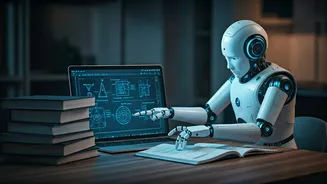
Imagine facing a viva or an oral exam. The fear of being judged can be paralysing. Conversational AI tools (like ChatGPT, Gemini, and others) can act as a non-judgmental mock examiner. You can instruct the AI to take on a persona and grill you on a specific subject. This private, repeatable practice is invaluable. You can stumble, forget an answer, and simply try again without any embarrassment. This allows you to identify weak spots in your knowledge and, more importantly, practice thinking on your feet. Try this prompt: *“You are a strict chemistry professor conducting a viva for Class 12 students. Ask me five challenging questions about organic chemistry, one by one. After each answer I give, provide feedback on my accuracy and clarity.”*
Generate Unlimited Practice Quizzes
Textbooks and guidebooks have a finite number of questions. Once you’ve gone through them, you start memorising the answers, not the underlying concepts. This is where AI excels. You can ask it to generate an endless supply of practice questions on any topic, at any difficulty level. This technique, known as active recall, is one of the most powerful learning strategies. Instead of passively re-reading notes, you are actively forcing your brain to retrieve information, which strengthens neural pathways. Use a prompt like: *“Create a 10-question multiple-choice quiz on the major events of the Indian independence movement from 1920 to 1947. Make the questions moderately difficult and provide an answer key at the end.”*
Get Concepts Explained Simply
Sometimes, the barrier to confidence isn't a lack of studying but a single, stubborn concept that you just can’t seem to grasp. A teacher might not have the time to explain it in five different ways, but an AI does. You can ask it to simplify complex topics, use analogies, or explain it from a different perspective. This removes the mental block and the anxiety that comes with feeling left behind. Gaining a solid understanding of a difficult topic is a huge confidence booster that ripples through the rest of your preparation. Try: *“Explain the concept of thermal equilibrium in physics using a simple analogy involving two cups of tea.”*
A Word of Caution
While AI is a powerful tool, it is not a perfect one. It is crucial to remember that these models can 'hallucinate'—that is, they can generate incorrect or nonsensical information with complete confidence. You must treat your AI helper as a supplementary tool, not a primary source of truth. Always cross-reference its answers and explanations with your official textbooks, class notes, and teachers. The goal is to use it for practice and perspective, not to replace proven, reliable study materials. Think of it as a sparring partner, not the ultimate coach.