


Mathura Ke Pede: A Divine Offering
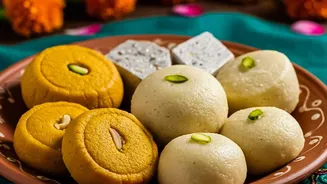
No Janmashtami celebration is complete without acknowledging Mathura, the birthplace of Lord Krishna. Mathura Ke Pede are an iconic prasad, intrinsically linked to the city. These aren't just any milk pedas; they have a distinct, slightly coarse texture
and a beautiful caramelized brown colour. This comes from roasting khoya (milk solids) on a low flame for an extended period until it darkens and develops a rich, nutty aroma. The roasted khoya is then mixed with powdered sugar and flavoured with cardamom. The result is a melt-in-your-mouth sweet that feels both rustic and divine, embodying the simple purity associated with Krishna's homeland.
Gopalkala: Maharashtra’s Savoury Prasad
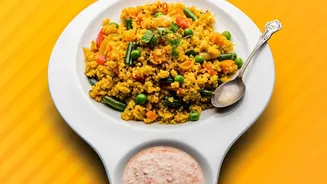
Moving west to Maharashtra, the celebrations often feature a unique savoury dish called Gopalkala. This special prasad is deeply connected to the lively Dahi Handi festivities. It's a simple, no-cook mixture that represents the meal Krishna shared with his cowherd friends. The base is poha (flattened rice), which is mixed with curd, chopped cucumber, grated coconut, and sometimes pomegranate seeds or peanuts. The dish is then tempered with ghee, cumin seeds, and green chillies. Gopalkala is light, refreshing, and a perfect example of how festival food can be both delicious and symbolic, representing community and sharing.
Taler Bora: Bengal’s Palm Fruit Fritters
In West Bengal and other parts of Eastern India, Janmashtami coincides with the season of the sugar palm fruit (Tal). This gives rise to a beloved seasonal delicacy: Taler Bora. These are sweet, deep-fried fritters made from the fragrant pulp of the ripe palm fruit. The pulp is mixed with rice flour, semolina, grated coconut, and sugar or jaggery to form a thick batter. Small dollops are then fried until they turn a deep golden brown, resulting in a snack that is crispy on the outside and soft and fluffy on the inside. Taler Bora is a quintessential Janmashtami offering in Bengali households, showcasing the region's ability to turn seasonal produce into a festive treat.
Vella Seedai: Tamil Nadu's Crispy Sweet Balls
Travel down to Tamil Nadu, and you'll find households busy preparing Vella Seedai for Krishna Jayanthi. These are small, crispy, sweet balls made from rice flour and jaggery (vellam). The dough is often flavoured with sesame seeds, grated coconut, and cardamom. Preparing seedai is considered an art, with care taken to ensure they don't burst while frying—a common kitchen challenge. These crunchy delights are not just a treat; they are playfully associated with Lord Krishna's childhood antics and his love for butterballs. Their small, round shape and delicious crunch make them a favourite among both children and adults during the festival.
Dhaniya Panjiri: Punjab’s Healing Prasad
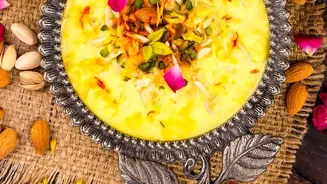
A truly unique prasad, especially popular in Punjab and North India, is Dhaniya Panjiri. Unlike most sweets made from flour, this one is made from ground coriander seeds. The coriander powder is roasted in ghee until it becomes aromatic, then mixed with powdered sugar, chopped nuts like almonds and cashews, and makhana (fox nuts). Dhaniya Panjiri is more than just a sweet; it has cooling properties and is known to be good for digestion, making it an ideal food for devotees to consume after a day of fasting. Its distinctive flavour and health benefits make it a thoughtful and significant offering on Janmashtami.
Panchamritam: South India's Nectar of the Gods
While Panchamrit is a pan-Indian offering, the South Indian version, known as Panchamirtham, has its own unique character. Instead of being a liquid drink, it is often a thick, pulpy mixture. The five core ingredients—banana, jaggery, honey, ghee, and rock sugar—are mashed together. Often, dates, raisins, and a pinch of edible camphor are added, creating a divinely fragrant and flavourful offering. This no-cook preparation is famously associated with the Palani Murugan Temple but is also widely prepared for Janmashtami. It embodies the idea of a sacred, nectar-like offering fit for the gods.