







The Colours and Their Cost
The vibrant reds, blues, and greens that light up the night sky are created by a cocktail of heavy metals and chemical compounds. Strontium produces reds, copper creates blues, and barium gives us green. These metal salts are combined with oxidizers,
which are chemicals needed to produce the oxygen for the explosion. A common oxidizer used is perchlorate. While essential for the pyrotechnic effect, these substances don't simply vanish into the air. They are released as a fine cloud of particles and gases, much of which eventually settles back down to earth.
From Sky to Stream
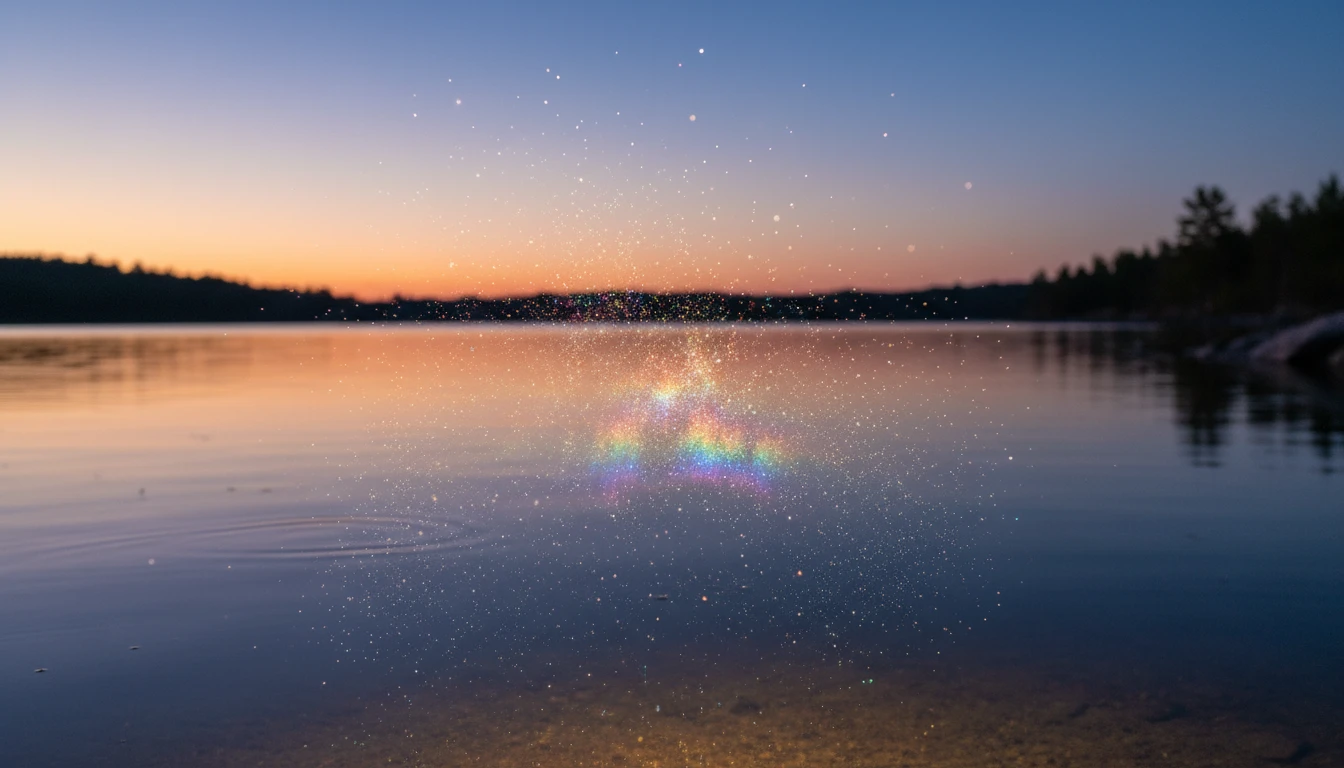
The journey from a firework's explosion to our waterways is a straightforward one. Airborne particles, including unburnt fuel and chemical residues, are carried by the wind and deposited on land, buildings, and directly onto water surfaces. Debris from spent firecrackers, such as charred packaging and leftover additives, also accumulates on the ground. When it rains, or during cleanup efforts, these contaminants are washed into storm drains, which often lead directly to rivers and lakes. Studies have shown that this residue can release metal ions like potassium and manganese, significantly altering water chemistry. This process means that even displays happening far from a waterbody can contribute to its pollution.
The Ripple Effect on Aquatic Life
Once in the water, these chemicals can have a profound impact. Perchlorate is a particular concern because it is highly soluble in water and can disrupt thyroid function in fish, amphibians, and other animals. The thyroid gland is crucial for normal growth and development. Studies have shown that even low concentrations can lead to developmental problems in fish larvae. Heavy metals like copper and barium don't break down easily and can accumulate in aquatic organisms. These chemical changes can disturb the delicate balance of microbial communities in the water, affecting the entire ecosystem from the bottom up.
A Question for Our Drinking Water
The contamination doesn't necessarily stop at lakes and rivers; it can also impact groundwater, a critical source of drinking water for many communities. Research following firework events has detected significant spikes in perchlorate levels in both surface water and groundwater wells. In one study, perchlorate levels in a lake were measured at up to 1,000 times the normal background level after a fireworks show, taking between 20 and 80 days to return to normal. While water treatment facilities are designed to handle many contaminants, the sudden influx after a large-scale event can pose a challenge. This has led to growing concerns and further research into the link between fireworks and drinking water quality.
Towards Cleaner Celebrations
The environmental impact of fireworks has not gone unnoticed. Researchers and companies are exploring greener alternatives to traditional pyrotechnics. Some newer options replace perchlorate with nitrogen-rich compounds that are considered safer. Another innovative approach uses compressed air to launch pyrotechnics, significantly reducing the amount of smoke and associated pollutants. Beyond technology, simple practices can make a difference. Thoroughly cleaning up all debris, including casings and any unburnt materials, immediately after a display can prevent many pollutants from being washed into waterways. As awareness grows, the hope is for a future where the joy of celebration doesn't come at the expense of our environment.