


The Search for Authenticity
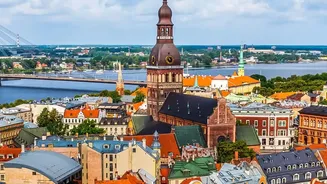
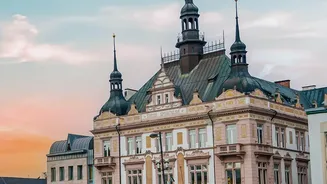
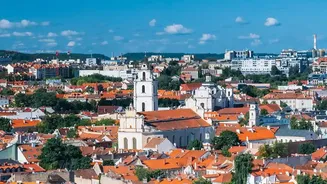
The travel media landscape is saturated with guides promising to reveal Europe's 'best-kept secrets'. From Brno in the Czech Republic to the coastal city of Porto, the 'underrated' tag is a powerful lure for those seeking to escape the crowds of Rome
or Paris. But the appeal goes deeper than just avoiding long queues. The search for an underrated city is often a search for a more authentic experience, a place that hasn't been completely reshaped by the demands of mass tourism. It’s a desire to connect with a destination on its own terms, to find local culture that feels genuine rather than performed for visitors. This quest is less about finding a place no one has heard of and more about finding one that still feels like itself.
A Tale of Two Cities
Consider the classic Italian dilemma: Rome versus Bologna. Rome is a city of world-defining monuments, home to the Colosseum, the Vatican, and three millennia of history that you can physically touch. It is, by any measure, essential. But it also comes with significant crowds and an infrastructure straining under the weight of its own fame. Bologna, by contrast, is quieter and often more affordable. It is celebrated for having what many consider Italy's best food scene and a beautifully preserved medieval centre that you can explore without battling tour groups. For a first-time visitor, Rome's historical gravity is undeniable. But for a traveller focused on food, atmosphere, and a calmer pace, Bologna feels 'underrated' precisely because its immense charms aren't overshadowed by blockbuster sights. It offers a different, more lived-in version of Italy.
The 'Not Bruges' Factor
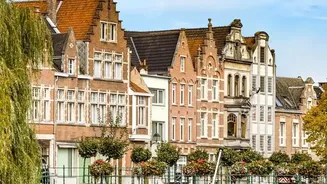
The definition of 'underrated' is often relational; a city earns the title by not being its more famous neighbour. A perfect example is Ghent in Belgium. While just a short train ride from Bruges, it offers a starkly different experience. Bruges is stunningly beautiful, a fairy-tale city of canals and medieval architecture. However, many feel its historic core has been hollowed out by tourism, becoming more of a theme park than a living city. Ghent has the same canals and medieval towers but retains the vibrant, rebellious soul of a university town where locals actually live, work, and socialise. It's a city that feels alive, not just preserved. Travellers who choose Ghent over Bruges aren't just seeking fewer people; they're seeking a place with a palpable, independent character.
Value, Expectation, and Surprise
Sometimes, 'underrated' is simply a matter of exceeding expectations. It's about the pleasant surprise of discovering a place that offers incredible value for the experience. Ljubljana, the capital of Slovenia, is a prime example. It is a charming, walkable city with a beautiful river, a castle on a hill, and a friendly, laid-back atmosphere. While it may not have the sprawling grandeur of other European capitals, it delivers a high-quality experience—great food, beautiful scenery, easy navigation—often at a lower cost than its more famous counterparts. A city is underrated when the richness of the experience far outweighs its global reputation and price point, leaving visitors feeling like they've stumbled upon a special secret.
The Real Meaning is Personal
Ultimately, the idea of an 'underrated' city is deeply subjective. In an age of infinite information, no truly great place is a complete secret. The term has become a shorthand for our personal travel desires: for quiet, for value, for authenticity, or for a connection that feels uniquely our own. A destination might appear on a dozen 'underrated' lists, but it only truly earns the title when it resonates with you personally. The most memorable trips often happen when we step away from the prescribed 'must-see' circuit and allow a place to reveal itself on its own terms. The city that surprises and delights you, the one that you connect with beyond its landmarks, is the one that is, for you, perfectly underrated.