

Start with the Right Container
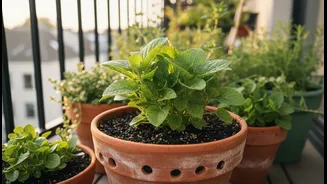
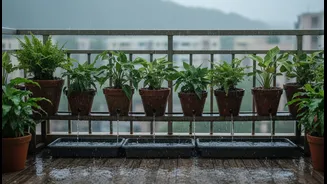
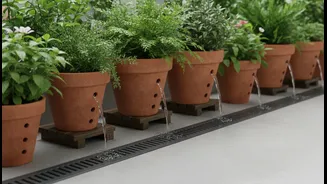
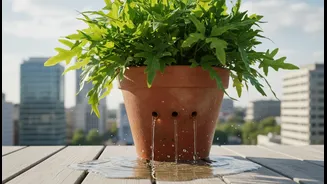
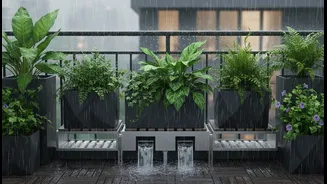
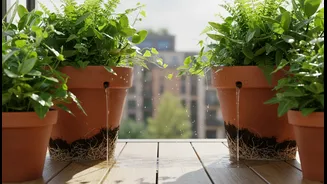
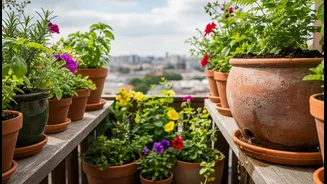
The first line of defence against waterlogging is the pot itself. Every pot used for outdoor plants needs drainage holes. Without them, water has no way to escape, quickly leading to root rot. When choosing between materials, terracotta and plastic are
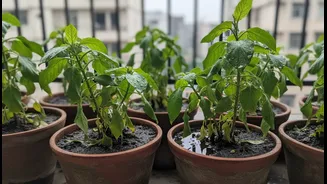
the most common. Unglazed terracotta pots are porous, allowing both air and water to pass through the walls. This helps the soil dry out faster, making them a forgiving choice for plants that prefer drier conditions. Plastic pots, on the other hand, are non-porous and retain moisture for longer. They are lightweight and affordable, but require you to be more careful with watering, as they won't let excess moisture evaporate through the sides.
Craft the Perfect Potting Mix
Never use garden soil in your pots. It is too dense, compacts easily, and will suffocate your plant's roots in a container environment. Instead, use a quality potting mix designed for containers. These mixes are lightweight and engineered for the perfect balance of moisture retention, aeration, and drainage. Look for mixes containing ingredients like coco coir or peat moss (for moisture), and perlite or vermiculite for aeration. Perlite is a lightweight volcanic glass that creates air pockets and improves drainage, while vermiculite holds more moisture while still aerating the soil. For a simple DIY mix, try combining two parts compost, two parts coco coir, and one part perlite.
Debunking the Gravel Myth
For years, gardeners were told to add a layer of gravel or broken pot shards to the bottom of containers to improve drainage. It seems logical, but science and experience have shown this to be a myth. Adding a coarse layer below a fine-textured potting mix actually hinders drainage. Water does not move easily from the fine soil particles to the coarse gravel layer, creating a saturated zone of soil just above the gravel—right where the plant's roots are. This 'perched water table' effectively reduces the usable soil depth and can promote root rot. The best way to improve drainage is to use a well-aerated potting mix throughout the entire pot.
Elevate Your Pots for Better Airflow
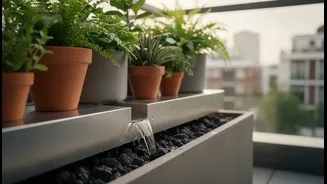
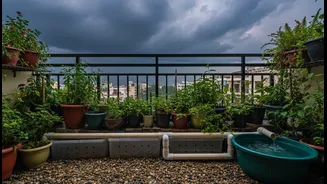
One of the simplest yet most effective drainage solutions is to lift your pots off the ground. When a pot sits flat on a balcony floor, water can get trapped underneath, blocking the drainage hole and keeping the base constantly wet. Using pot feet or risers elevates the container, creating an air gap that allows water to drain freely and air to circulate. This simple step helps prevent root rot, protects your balcony surface from stains, and can even deter pests like slugs. You don't need fancy equipment; plastic bottle caps, leftover tiles, or even pieces of brick can do the job.
First Aid for Waterlogged Plants
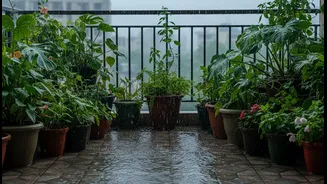
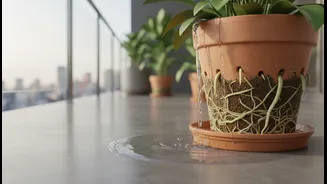
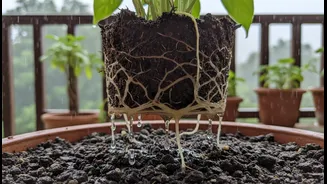
What if, despite your best efforts, a heavy downpour leaves a plant waterlogged? Act quickly. First, if possible, move the plant to a sheltered spot to prevent it from taking on more water. Gently tip the pot to let any excess water drain out. If the soil is completely saturated, you may need to carefully remove the plant from the pot. Check the roots; healthy roots are firm and white, while rotted roots will be brown, mushy, and may have a foul smell. Trim away any rotted roots with clean shears. You can then repot the plant in fresh, well-draining soil. Avoid watering again until the top few inches of the soil feel dry to the touch.