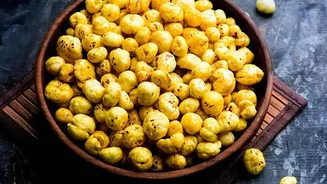






As the weather cools, two seasonal favourites appear in our markets: the humble sweet potato (shakarkandi) and the classic chestnut. Both are delicious, but how do they stack up nutritionally? Let's break down their key differences.
The Vitamin A Showdown
When it comes to Vitamin
A, there is a clear and dramatic winner: the sweet potato. Orange-fleshed sweet potatoes are one of nature's most potent sources of beta-carotene, the antioxidant compound our bodies convert into Vitamin A. Just one medium-sized sweet potato can provide well over 100%, and sometimes up to 400%, of your recommended daily intake. This vitamin is crucial for maintaining healthy vision, supporting a strong immune system, and promoting good skin health. Chestnuts, on the other hand, contain only trace amounts of Vitamin A. While they offer other benefits, if you are looking to boost your Vitamin A levels, the sweet potato is unquestionably the superior choice.
A Head-to-Head on Fibre
The fibre comparison is more of a close race. Both sweet potatoes and chestnuts are good sources of dietary fibre, which is essential for digestive health, managing blood sugar levels, and promoting a feeling of fullness. A 100-gram serving of sweet potato typically contains around 3 to 4 grams of fibre. A similar portion of roasted chestnuts provides a comparable amount, with some data showing it slightly higher at around 4.3 grams. The fibre in both helps to slow the absorption of sugar into the bloodstream and supports a healthy gut microbiome. So, while chestnuts might have a slight edge depending on the preparation, both are excellent choices for increasing your daily fibre intake.
Beyond the Headline Nutrients
Looking beyond the headline, other nutritional differences emerge. Chestnuts are unique among nuts for their high Vitamin C content; a serving of raw chestnuts can provide a significant portion of your daily needs, though this amount decreases with cooking. They are also a good source of B vitamins, copper, and manganese. Sweet potatoes also contain Vitamin C and are a fantastic source of potassium, which is vital for regulating blood pressure and heart health. In terms of calories, sweet potatoes are the lighter option, with around 86 calories per 100 grams, whereas chestnuts are more calorie-dense at roughly 200-245 calories for the same amount, largely due to their higher carbohydrate content.
Impact on Blood Sugar
For those managing blood sugar, the preparation method is key. When boiled, sweet potatoes have a moderate glycemic index (GI), meaning they release sugar into the bloodstream more slowly. This is thanks to their complex carbohydrates and fibre content. Baking or roasting can raise their GI. Chestnuts also contain complex carbohydrates and fibre that help stabilise blood sugar levels. However, some comparisons suggest that sweet potatoes, particularly when boiled, may be a slightly better option for blood sugar management than chestnuts. Ultimately, portion control and cooking method are the most important factors for both.
In the Kitchen
In India, the sweet potato, or shakarkandi, is a beloved street food, often roasted and sprinkled with chaat masala. It is incredibly versatile, working well in both savoury and sweet dishes. You can mash it, add it to curries for a subtle sweetness, or bake it into healthy desserts. Chestnuts, while perhaps less common in daily cooking, are a wonderful addition to stuffings, pulaos, and even desserts. Ground chestnut flour is a gluten free alternative for baking. Both foods absorb flavours well, offering a wealth of culinary possibilities beyond their simple roasted forms.