


An Invisible Threat from the Sun
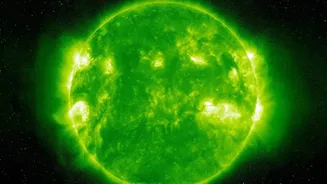
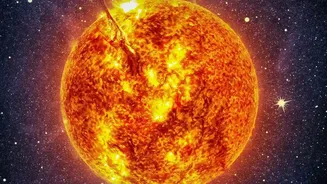
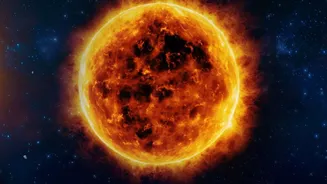
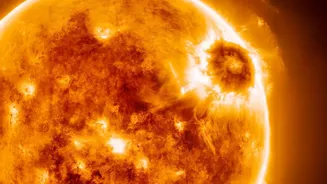
When we think of the Sun, we think of light and life. But our star also has a violent side. It constantly emits a stream of charged particles called the solar wind. Sometimes, massive explosions on its surface, known as solar flares or coronal mass ejections
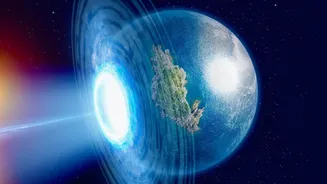
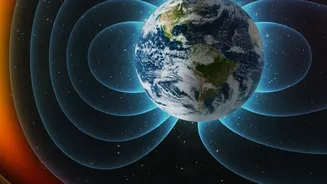
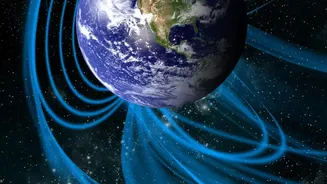
(CMEs), hurl billions of tons of plasma and radiation into space. When these eruptions are aimed at Earth, they cause what we call space weather. While the most beautiful effect is the aurora, or northern lights, the impact on our technology can be severe and disruptive. These solar storms can interact with Earth's magnetic field, creating geomagnetic disturbances that our modern society is increasingly vulnerable to.
The High-Tech Infrastructure at Risk
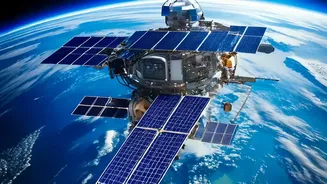
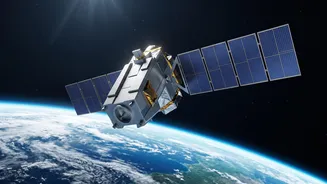
The effects of a major space weather event are not theoretical. In March 1989, a geomagnetic storm caused a nine-hour blackout for six million people in Quebec, Canada, after it tripped the region's power grid. These storms can induce powerful, uncontrolled currents in long conductors like power lines, potentially damaging critical transformers. But the risk extends far beyond the power grid. Satellites, the unsung heroes of our connected world, are highly vulnerable. Solar radiation can damage their sensitive electronics, while increased atmospheric drag from a storm can alter their orbits, risking collisions. This puts everything from television broadcasting and financial transactions to weather forecasting and military surveillance at risk. Furthermore, the ionospheric disturbances caused by solar flares can scramble GPS signals, affecting not just navigation apps but also the precise timing required by many industries, including aviation and finance.
The Art of Forecasting Solar Storms
Much like forecasting weather on Earth, predicting space weather involves constant monitoring and sophisticated modelling. Scientists use a network of ground-based and space-borne observatories to watch the Sun for warning signs. They look for the development of complex sunspot groups, which are often precursors to solar flares. When a CME erupts, forecasters at agencies like the US-based Space Weather Prediction Center (SWPC) and the Met Office in the UK analyse its speed and trajectory. Using models like the WSA-Enlil, they predict if, when, and how severely the storm will impact Earth, typically providing a one-to-four-day advance warning for CMEs. This critical lead time is what allows infrastructure operators to prepare and mitigate potential damage.
From Forecast to Action
A space weather forecast is only useful if it leads to action. With advance warning, electric grid operators can take protective measures, such as reducing load on the system or temporarily taking some equipment offline to prevent damage from induced currents. Airlines can reroute flights that would normally cross polar regions, where the Earth's magnetic field offers less protection and where radio blackouts and radiation exposure are more likely during a storm. Satellite operators can command their spacecraft to enter a protective 'safe mode' or delay sensitive manoeuvres until the storm has passed. These mitigation strategies, all triggered by a reliable forecast, form an invisible shield that quietly protects the services we depend on every day.
India’s Sentinel: The Aditya-L1 Mission
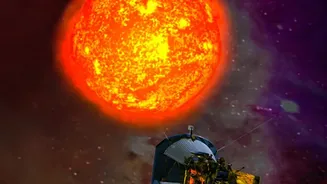
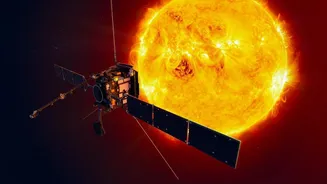
India has firmly established its presence in this critical global effort with the Aditya-L1 mission. Positioned at the Lagrange point 1 (L1), about 1.5 million kilometres from Earth, ISRO's solar observatory has an uninterrupted view of the Sun. This vantage point allows its seven specialised payloads to monitor solar activities in real-time, observing everything from the photosphere and corona to the solar wind itself. Data from Aditya-L1 is crucial for understanding the dynamics of solar eruptions and provides vital early warnings. The mission is a cornerstone of India’s ambition to develop its own robust space weather prediction program, enhancing national resilience and contributing invaluable data to the global scientific community.