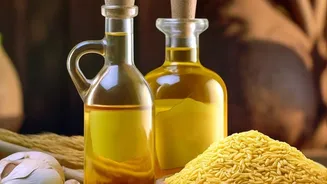







The Price Pinch: How Much Have Costs Risen?
The price surge is not just a feeling; it's a fact confirmed by recent data. According to government reports from August 2026, the price of packed sunflower oil has jumped by over 18%, while palm oil has increased by 14%. Other popular oils have also
seen significant hikes, with soya oil up by nearly 12% and even traditional favourites like groundnut oil and mustard oil increasing by 9% and 7% respectively. This is a sharp contrast to other kitchen staples like pulses and grains, which have remained relatively stable. Overall, vegetable oil prices have climbed by nearly 20% over the last year, putting a noticeable strain on household finances just as the festive season approaches.
Why Your Cooking Oil Is Suddenly More Expensive
A combination of global and domestic factors is behind this price rise. A major reason is India's heavy reliance on imports. The country buys nearly two-thirds of its edible oil from other nations, making it the world's largest importer. This exposes Indian consumers to international market shifts. Key suppliers like Indonesia and Malaysia are diverting more palm oil towards producing biodiesel for their own fuel needs, reducing the amount available for export as food. At the same time, geopolitical tensions, including the conflict in West Asia, have increased crude oil prices, which in turn raises shipping and production costs for everything, including edible oils. Add to this the unpredictable weather patterns linked to El Niño, which can affect oilseed harvests in major producing countries, and you have a perfect storm for higher prices.
What the Government Is Doing
The government is aware of the burden on consumers and is considering measures to provide relief. One option being actively discussed is a cut in import duties on vegetable oils. In September 2026, reports indicated that officials were weighing a potential 5% reduction in the basic import duty. However, this is a delicate balancing act. While a duty cut could lower prices for consumers, it might also reduce the income of local oilseed farmers, whom the government wants to encourage to increase domestic production. Furthermore, a previous duty cut in May 2025 did not fully translate into lower retail prices, as global suppliers raised their rates in response to Indian demand.
Smart Swaps: Choosing a Budget-Friendly Oil
While you can't control global markets, you can make smarter choices at the grocery store. Mustard oil remains one of the most budget-friendly options, especially in North and East India, due to strong domestic production. Its pungent flavour also means you might need less of it. Soybean oil is another cost-effective choice suitable for general-purpose cooking in large families. While traditionally seen as more premium, groundnut oil can still be an affordable choice when used mindfully. Consider rotating between two or three different oils based on what you’re cooking and which ones are on offer.
Practical Tips to Reduce Oil Consumption
Making small changes in your cooking habits can lead to significant savings. Instead of pouring oil freely from the bottle, start using a measuring spoon to control the quantity. Investing in good non-stick cookware can drastically reduce the amount of oil needed for dosas, cheelas, and sautés. Consider alternative cooking methods like baking, grilling, steaming, or air-frying for snacks like samosas and pakoras, which are traditionally deep-fried. Using an oil spray or a silicone brush to lightly coat your pan is another effective way to get an even layer with much less oil. Finally, for curries with a layer of oil on top, you can skim the excess off before serving.