

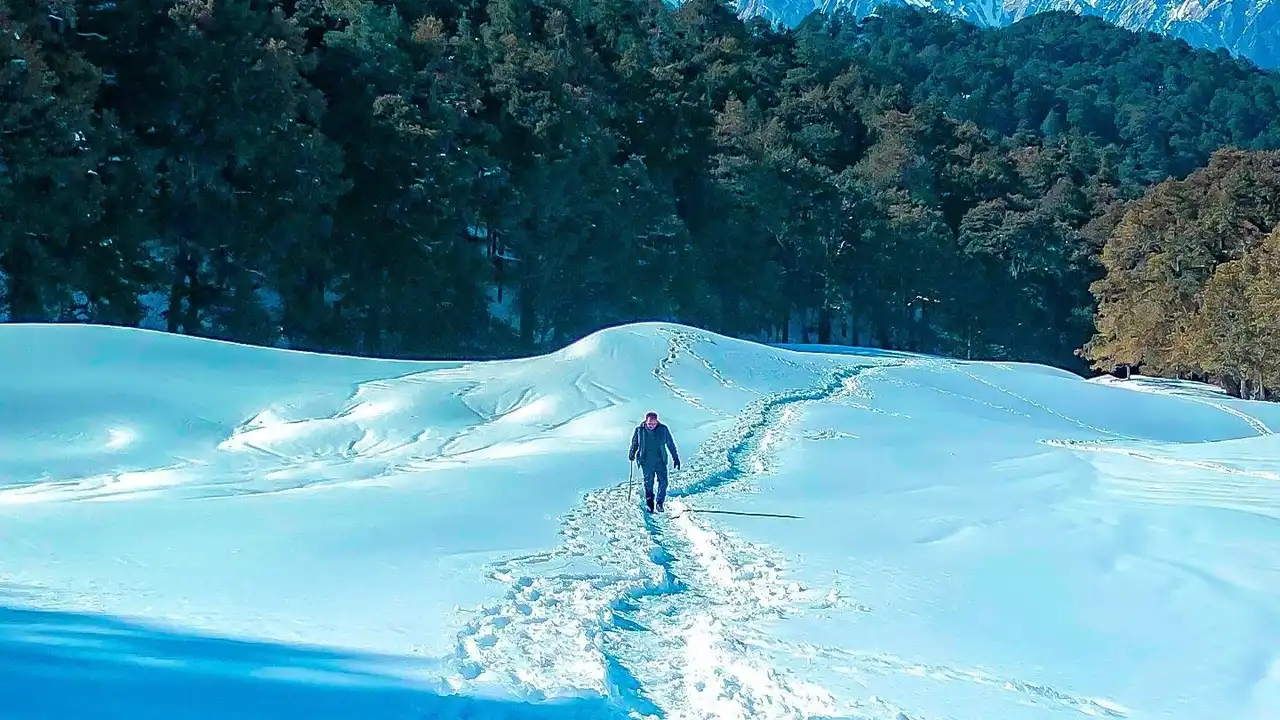
The Great Atmospheric Wash
The primary reason for the exceptional clarity is simple: the monsoon rains act as a massive, natural air filter. For months, from roughly June to September, heavy rainfall scours the atmosphere, washing away dust, aerosols, and other pollutants. These
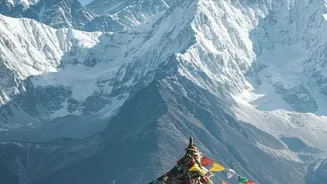
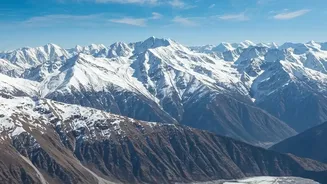
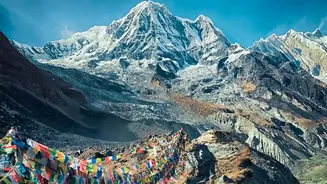
suspended particles are a major cause of haze, scattering light and reducing visibility. As rain droplets form and fall, they capture and bring these particles down to the ground, a process known as wet scavenging. By the time the monsoon recedes in late September, the air across the Himalayan foothills is left remarkably clean and transparent, creating a perfect canvas for the majestic peaks to reveal themselves.
Lower Humidity, Sharper Light
Beyond just cleaning the air, the departure of the monsoon brings about a significant drop in humidity. Monsoon air is laden with moisture, or water vapour, which, even when clean, can refract and scatter light, subtly blurring distant objects. The post-monsoon period, particularly October and November, is characterized by drier, cooler air. This dry air holds less water vapour, allowing light to travel more directly from the distant snow-capped peaks to your eyes with minimal distortion. This lack of atmospheric moisture is what gives the views their characteristic 'crisp' and 'sharp' quality, making the mountains seem closer and more detailed.
The Golden Window for Views
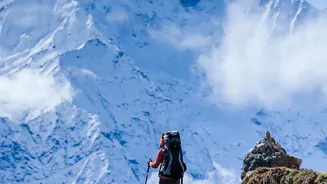
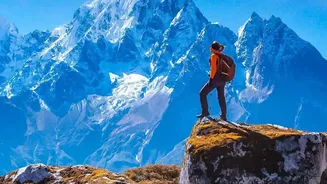
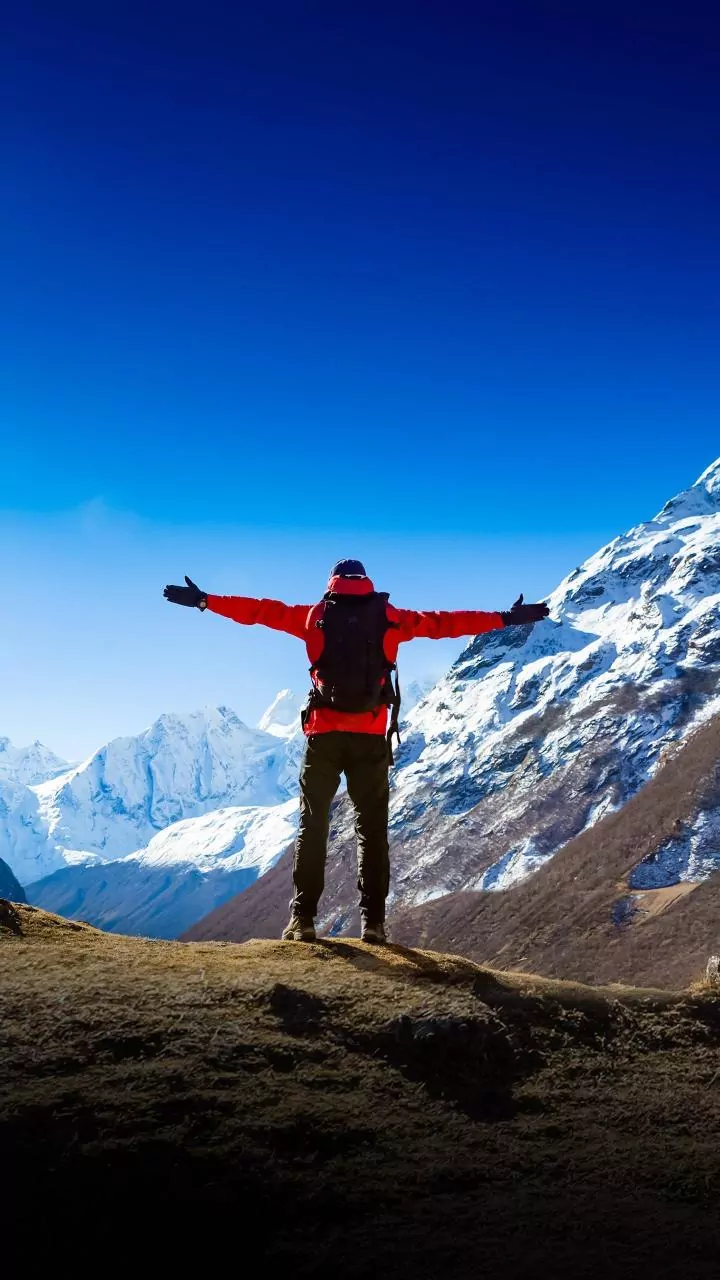
The months of October and November represent a 'golden window' for Himalayan sightseeing. After the monsoon has scrubbed the air clean and before the onset of winter brings its own weather patterns—like haze from temperature inversions or increased snowfall—the atmospheric conditions are exceptionally stable. This period offers the best of both worlds: the lush, rejuvenated landscapes left behind by the rains and the clear, settled weather perfect for trekking and photography. The sky is often a deep, cloudless blue, providing a stunning contrast to the white peaks.
Where to Witness the Spectacle
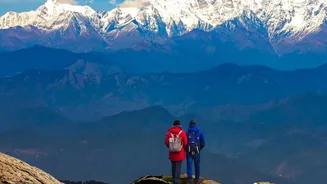
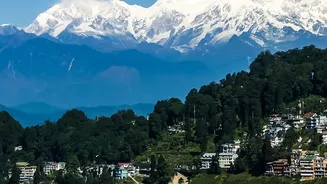
Across the Indian Himalayan states, numerous vantage points become prime destinations during these months. In Uttarakhand, treks like the Kuari Pass, Chopta-Chandrashila, and Har Ki Dun offer breathtaking panoramas of major peaks like Nanda Devi and Trishul. Auli is particularly renowned for its broad Himalayan views in November. In Himachal Pradesh, the Triund trek near McLeod Ganj provides stunning views of the Dhauladhar range, while routes like the Hampta Pass showcase a dramatic shift in landscapes under clear skies. Further east, Sikkim's Goechala trek offers phenomenal views of Kanchenjunga, with the post-monsoon air making the world's third-highest peak feel within reach.
More Than Just Clear Skies
The appeal of the post-monsoon season extends beyond just visibility. The land itself is at its most beautiful. The monsoon revitalizes the forests and meadows, leaving them a vibrant green that slowly transitions into the golden hues of autumn. Waterfalls, fed by the rains, are still active, and rivers run full and clear. The weather is also incredibly pleasant for outdoor activities, with mild daytime temperatures ideal for hiking and cool, crisp nights perfect for stargazing. This combination of stunning views, beautiful landscapes, and comfortable weather makes it an unparalleled time for anyone wanting to experience the Himalayas in their full glory.